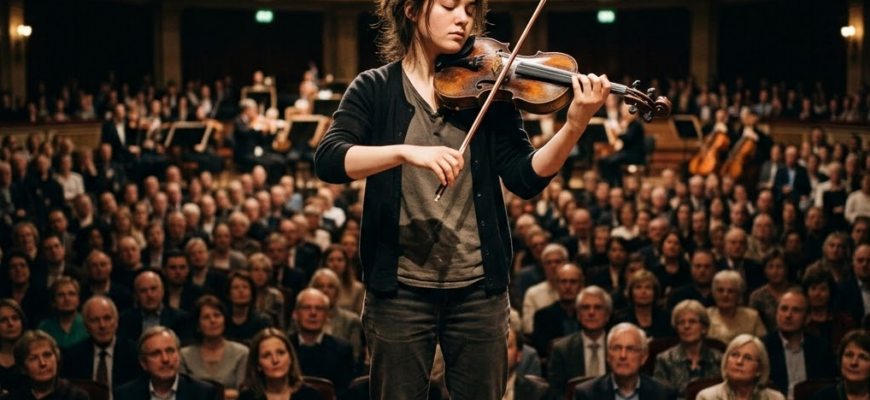
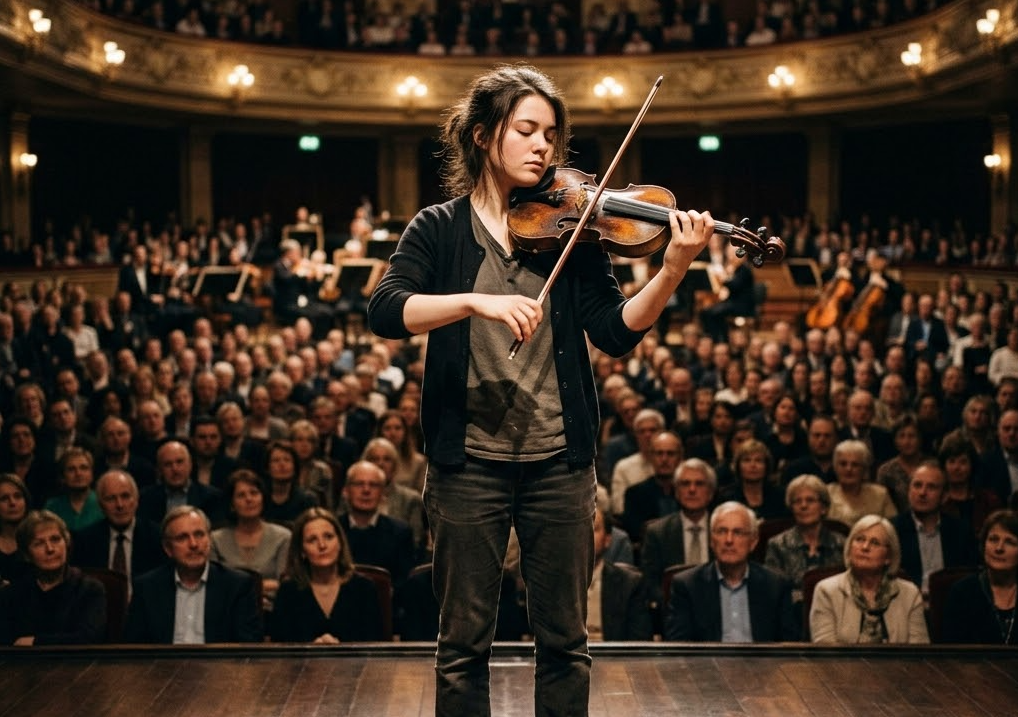
People were laughing at her old violin even before the performance began, but no one could have predicted how it would end…
The grand concert hall was packed to capacity. The final of the annual young musicians’ competition had brought together the best performers from across the country. Dozens of talented contestants had already taken the stage: gleaming pianos, expensive instruments, perfectly chosen outfits, and confident smiles created an impression of a level that seemed almost unattainable.
When the host announced the next contestant, the room suddenly grew louder — not because of excitement, but because of disbelief. A girl appeared at the stage entrance wearing a simple, slightly worn dress. In her hands she carried an old violin case, frayed along the edges as if it had been opened and closed thousands of times.
— Is this the competition final or a charity event? — someone whispered loudly from the back rows, and several people burst into laughter.
— I think she came to the wrong stage… — another voice added more boldly.
Laughter rolled through the hall like a wave — quiet, yet humiliating, as though the entire audience had already decided they were about to witness a failure.
The girl stopped in the center of the stage. Her fingers tightened slightly around the handle of the case, but her face remained calm. She placed the instrument down carefully, almost tenderly, as if she feared not the stage but the judgmental eyes of others.
Even one of the judges leaned toward a colleague and whispered:
— Can anyone even play on an instrument like that here?
A smile appeared on his face, but there was no kindness in it.
Sensing the tension, the host nevertheless said:
— Please introduce yourself.
— Lila.
— And you’ll be performing on that violin?
For a second, the hall fell silent, as if waiting for her to become embarrassed or give up.
— Yes, I will — she replied calmly.
A few chuckles were heard again. Someone shook their head.
— Well… good luck — the host said, less confidently than usual.
Lila raised the violin to her shoulder. At that moment, the mockery faded away — not out of respect, but out of curiosity. Everyone wanted to witness her “failure.”
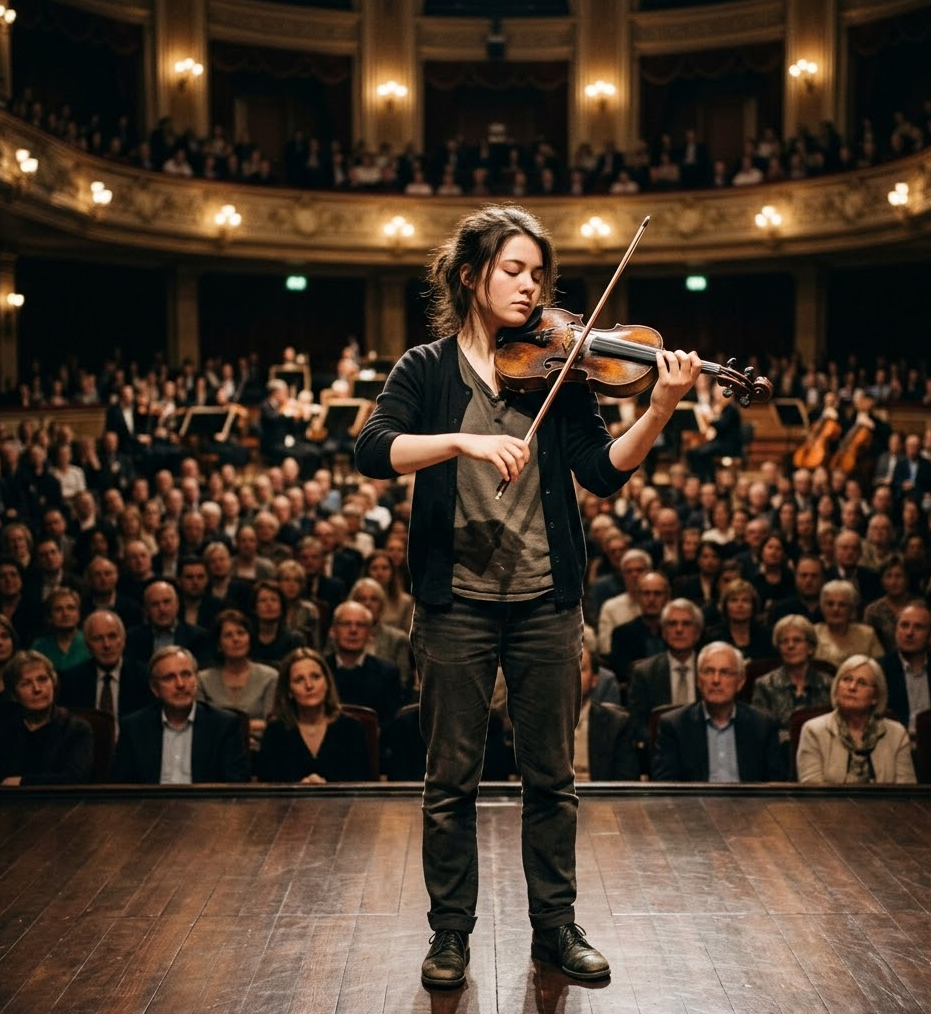
But the first note cut through the hall so sharply that someone involuntarily held their breath.
It wasn’t just pure — it was alive. As if the violin that had been dismissed moments earlier as “old junk” had suddenly found a human voice.
Smiles began to disappear one by one. Someone lowered their gaze, unable to understand what was happening. Someone else straightened up in their seat, listening attentively for the first time.
And the laughter, which had been so confident and loud only moments before, vanished completely.
The music grew, filling the hall with layers of emotion: there was pain that refused to hide, joy that had survived loss, and strength that could only be born through long experience.
The longer Lila played, the more it seemed that it wasn’t the audience that had laughed earlier — it was shame moving through the rows, forcing people to avoid one another’s eyes.
When the final note dissolved into silence, no one dared break it immediately. That silence lasted longer than the applause after any other performance that evening.
And then the hall erupted.
People rose to their feet one after another, as if they could no longer remain seated. The applause was no longer a gesture of politeness — it was an admission of guilt.
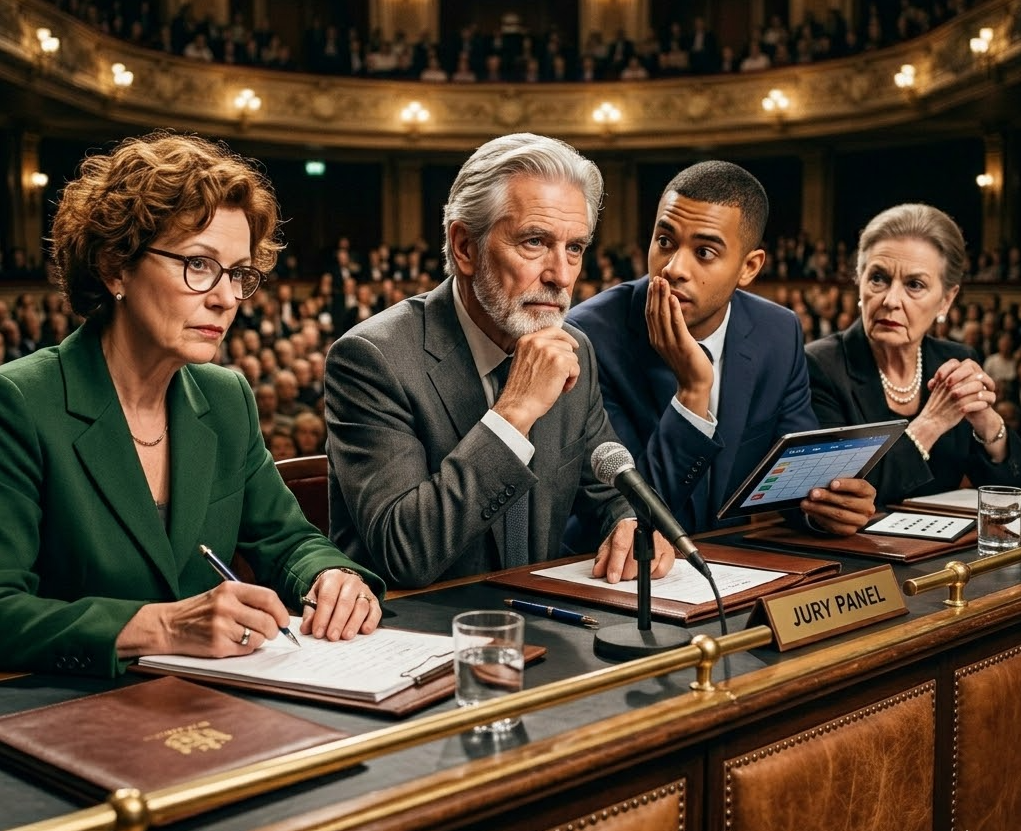
The head of the jury picked up the microphone.
— That was… extraordinary.
And for the first time that evening, there was no confidence of a judge in his voice — only the astonishment of a person who had just changed his mind.
Lila stood quietly, lowering her eyes slightly.
— Thank you.
— Why did you choose that particular violin?
She gently ran her fingers across the worn wood.
— Because it belonged to my grandfather.
The hall fell silent once again.
— Was he a famous musician?
— No. He played in places where almost no one listened. He taught children. And he never considered that something insignificant.
A pause followed.
— When he died, people told me I should sell the violin. That it was worthless. But I couldn’t.
She lifted her gaze.
— He always used to say: if people don’t listen to you, it doesn’t mean you’re playing badly. It means you simply haven’t found those who will hear you yet.
At that moment, no one was smiling anymore.
After the jury’s deliberation, the decision was unanimous. Maximum points.
But the real turning point came later.
As people began to leave the hall, a well-known conductor who had been watching the competition from a private box approached Lila.
— I haven’t heard a performance like that in a long time, — he said. — Would you like to play in the youth orchestra?
She froze.
— Me?..
— Yes. And you’d better not waste time hesitating.
Late that evening, Lila left the building carrying the same old violin case. No one was laughing anymore. Now people looked at her differently — the way people look when they realize they were wrong.
The violin remained old. But for the first time, its “old age” was no longer a reason for ridicule.
It had become proof.
Lila looked up at the night sky and smiled softly.
Only then did the audience that had laughed at the beginning understand that they had heard more than just music.
They had heard an answer.