This species, which was once on the brink of extinction, now has a chance for recovery thanks to the efforts of Australian scientists. Thanks to the researchers’ determination, the animal that nearly disappeared from the wild has regained a chance for survival.
Once numerous populations of eastern quolls began to dwindle. Today, only a few groups remain, mainly in the southwest of Australia. These marsupials, the size of a cat, play an important role in maintaining ecological balance by controlling the populations of invertebrates, reptiles, and birds.

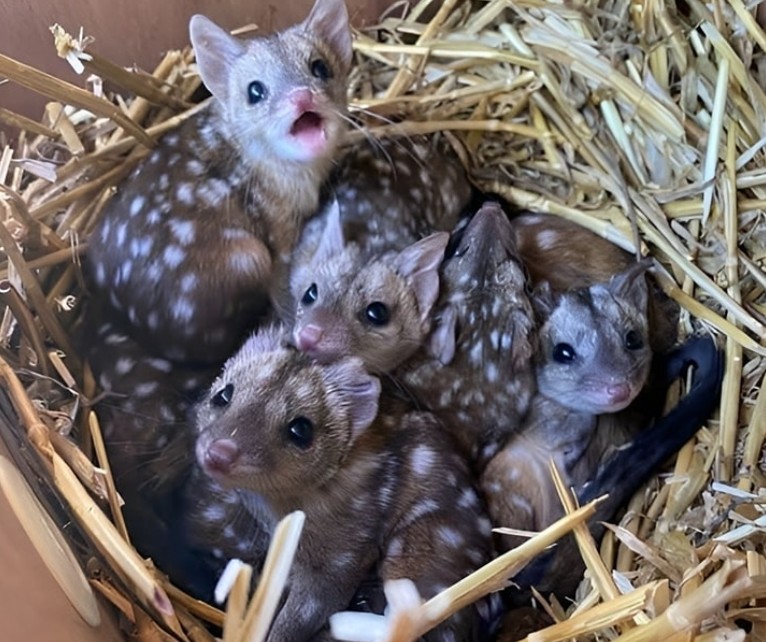
In search of species recovery, scientists devoted months to reintroducing eastern quolls to the Gibson Mountain reserve, where they had once gone extinct. Recent observations confirming the appearance of newborn quolls show that their efforts have not been in vain: the animals have successfully adapted to the new environment and are actively reproducing.

Monitoring has shown that the quolls have adapted well. Georgina Anderson, the lead ecologist at AWC, is optimistic about the progress of the program, noting that the presence of young animals in the pouches is a clear indicator that the species has the potential for growth.
One of the most interesting animals in the program is a quoll named Aang—a large and confident member of the group. He frequently appears in camera trap photos, exploring new areas and taking advantage of baited traps.

This is an inspiring example of how the efforts of researchers can bring an endangered species back to life. We hope that soon this species will be widely distributed across Australia!