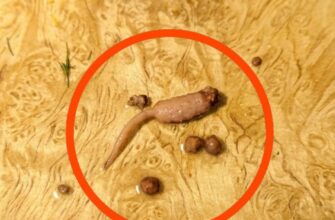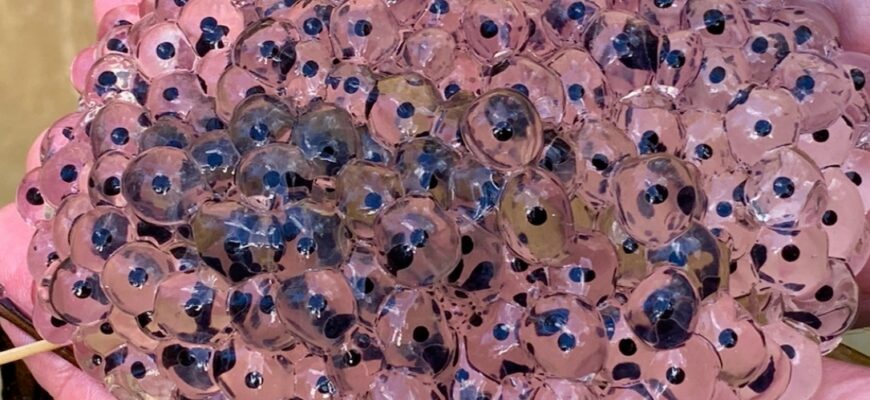

One morning, a 64-year-old farmer named Tomasz, who lives in the countryside and grows soybeans, noticed something unusual during his morning round. After a recent rainfall, dozens of tiny, translucent eggs with a bluish tint had appeared on a patch of land.
Tomasz was surprised, as he had never seen such eggs before. They were too large to belong to insects, yet too small to be bird eggs. Not wanting to touch them, he took some photos and sent them to a biologist at the local university.

The very next day, a group of scientists arrived at the site. After inspection, they explained that the eggs most likely belong to a rare species of tree frog, which has been appearing more frequently in this region due to the mild climate and high humidity.
According to the biologists, the female may have laid the eggs on the moist soil after the rain, guided by the temporary accumulation of water. This is unusual behavior, but it is not dangerous and, according to the experts, may be a form of adaptation to changing environmental conditions.

Tomasz watched the situation with interest. After a few days, some of the eggs indeed began to develop. He prepared a safe water container for the little creatures so they could complete their life cycle.
This story became an interesting example of how nature can surprise us in the most unexpected places—even on an ordinary farmland field.