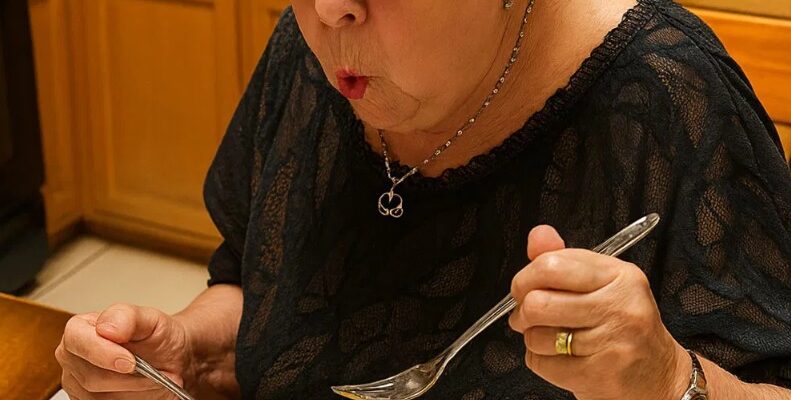

That evening, I really tried my best. Despite being tired and in my condition — I was seven months pregnant — I prepared a homemade dinner for the whole family: my husband, our children, and my mother-in-law who came to visit. I made everything from scratch: roasted meat, a vegetable side dish, salad, and homemade cake for dessert. I wanted the atmosphere at the table to be warm and pleasant. I really tried — for the family.
While setting the food on the plates, I left my portion in the kitchen. I decided to quickly finish one task first — I had to hang the laundry and put the child to bed. I was gone literally for a few minutes.
When I came back — my plate was gone.
At first, I thought maybe my husband put it away somewhere. But it turned out that someone had simply… eaten it. My mother-in-law calmly, without a hint of embarrassment, said that she finished my portion because she wanted a second helping. And this was despite her own plate being full — just like everyone else’s.
I was speechless. Of course, I didn’t want to make a scene. I thought: maybe she really was hungry. It happens. I still tried to keep the warmth in the home and not take everything too personally.

But after a few minutes, she approached me with a container and asked me to pack the leftovers for her to take home.
At that moment, I had to gently but firmly say that I was keeping the leftovers for myself. After all, I didn’t even get a chance to eat.
My mother-in-law’s reaction was surprising. She declared that I should have cooked more, “just in case,” and that a guest, especially an elder, should have priority. I didn’t argue, but inside I felt a bitter aftertaste.
Later that evening, seeing how upset I was, my husband very calmly and politely sent his mother a message. Without accusations. Just a suggestion that it would be nice if she apologized, so there would be no misunderstandings or hard feelings.
I thought that would be the end of it. But the next day, my mother-in-law posted on social media, presenting the whole situation completely differently. In her version, I was rude, selfish, and — as she wrote — “putting food above respect for elders.” Some of her friends supported her in the comments — clearly knowing the story only from her perspective.

I felt very hurt. I didn’t judge anyone, didn’t hold grudges, didn’t start an argument. I simply ended up without dinner — even though I was the one who fed everyone.
A few days later, the story unexpectedly appeared on an online forum. Someone had described it — without names, but with details. The post sparked a huge reaction. Hundreds, and then thousands of comments. And almost all — in my defense.
People wrote that even if it’s family, the hostess and her efforts deserve respect. That a pregnant woman who prepared dinner for everyone deserves at least a plate of food. That being a guest is not just about privileges, but also about tact, attentiveness, and gratitude.
It touched me deeply. I realized how important it is to feel that someone understands you. Even if not everyone in the family knows how to show it.

This situation taught me a few important lessons.
First — kindness and care don’t always come back from those we give them to. But that doesn’t mean we should stop being kind.
Second — sometimes it’s strangers who show unexpected empathy — simply because they watch from the outside and know how to listen.
And most importantly — respect cannot be demanded. It is born out of mutuality, trust, and the ability to see each other. Especially within a family.
Now, when I prepare dinner, I first set aside a portion for myself. Not because I’ve become selfish — but because I also deserve care. At least my own.