My parents mocked me at the family gathering — until a helicopter landed: “Admiral… We need you.”
My uncle Robert’s farm that day was overflowing with paper plates, “church-lady style” potato salad, and those little conversations where everyone compares their achievements to everyone else’s.
I had only come back because my grandmother was celebrating her eightieth birthday — and because she still called me “my steady girl.”
I had always been the steady one. The quiet one. The one you could count on.
The one who sends money when the roof leaks.
The one who paid for Diane’s schooling when her scholarship wasn’t enough.
The one who never expects a thank you.
But reliability, I eventually learned, is like air: invisible when everything is fine, unbearable when you no longer need it.
So there I stood on the lawn, a glass of iced tea in one hand and a generous dose of patience in the other, when the parade of good news began.
Marcus’s promotion.
Diane’s new house.
Heads nodded, hands applauded.
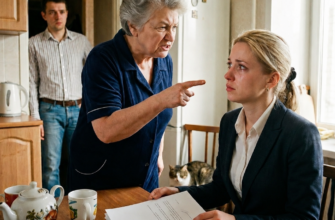
Then Aunt Linda turned to my parents:
— And your daughter? How’s she doing?
My mother’s smile didn’t reach her eyes.
— Oh, she’s still unemployed, she said, like a light joke.
My father added:
— Maybe she can finally help with the dishes!
A general laugh swept across the tables like a gust of wind.
It could have been nothing. A simple jab.
But it wasn’t.
It was the conclusion of years of quiet humiliation — after the bank transfers, after deployments, after all those conversations where they carefully omitted the truth:
“She’s still finding her way.”
I didn’t correct them.
You can’t shout louder than a story people have decided to believe.
I simply moved toward the farmhouse kitchen, watching the gathering continue without me.
The children played ball, someone strummed a guitar, and the afternoon had that golden Virginian light that makes everyone softer than they really are.
And then the sound arrived.
First distant, like thunder rumbling.
Then clearer, stronger — the regular wump-wump-wump of a military helicopter that silences all conversation.
Heads lifted, napkins flew.
Above the trees, a helicopter appeared, low and precise, lifting a shower of dust and leaves.
It made a circle, then landed in the field, sending paper plates flying like panicked birds.
The side door opened.
An officer in a flawless uniform stepped out, walking straight through the silent crowd.
He stopped in front of me, looked me straight in the eyes, and declared in a clear voice that cut through the rotor noise:
— Admiral… We need you.
A freezing silence fell over the lawn.

Conversations died out. Even the wind seemed to hold its breath.
I felt all eyes converge on me — those that just seconds ago had been laughing.
My father let out a small, nervous laugh.
— Admiral? You must be mistaken.
But the officer did not look away.
— No, sir. We know exactly who she is.

I straightened up. Instinct took over — that reflex forged by years of service, orders shouted in the rain, decisions made between heartbeats.
The mask fell. Gone was the obedient girl they thought they knew.
I stepped forward, hands clasped behind my back, and simply said:
— Situation?
The officer nodded.
— Urgent, ma’am. A classified rescue operation. Your team won’t move without you.
Behind me, my mother brought her hand to her mouth.
My uncle muttered a curse under his breath.
The helicopter still vibrated, growling like a caged beast.

I turned one last time to them — to this family that had never really wanted to know who I was.
— You see, I said softly, I wasn’t unemployed. I was simply on leave.
Without another word, I climbed aboard.
The rotor’s gust lifted tablecloths, sent napkins flying, and shook their certainties.
The aircraft rose, carrying with it the overlooked girl — and leaving their suddenly silenced laughter on the ground.
The admiral, she, was returning to her post.