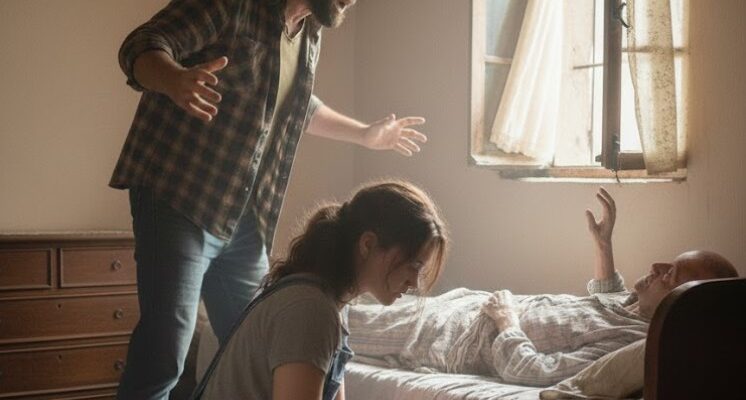

My world turned upside down in one day. The argument started over completely trivial things. My father-in-law quietly asked to close the window — it was hard for him to breathe after another chemotherapy session. He lay in the armchair, the blanket had slipped off his knees, and on the table beside him — pills, drops, syringes.
— It’s cold here… — he said quietly. — Close the window.
My husband stood in the doorway, frowning, and said:
— It smells like a hospital. I can’t stand it. That smell has soaked into everything.
My father-in-law raised his eyes but didn’t object. He had almost completely stopped arguing.
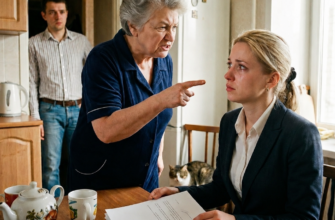
— It’s only temporary — I said. — It’s hard for him. You can see that.
— I see that our home has turned into a sickroom — my husband replied sharply. — I’m tired. I want to live normally.
He spoke loudly. And just three weeks ago he had promised his father to be there for him.
— That’s your father — I said quietly.
— He’s lived his life. Now it’s my turn.
Those words hung in the air. My father-in-law turned toward the wall, quietly, almost submissively.

After two days my husband packed his father’s things and said:
— I found a care home. There are specialists there.
I didn’t let him take him there.
— He’s coming with me — I said firmly.
My husband shrugged. I rented a tiny room above an old garage: a narrow window, peeling plaster, a creaking bed. I worked two jobs — during the day in a shop, at night I took online translation orders. The money went to medicine, treatments, and a caregiver on weekends.
My father-in-law never complained.
— You’re a good girl — he once said. — Better than we deserved.
After eight months, he passed away.
The night before his death he held my hand. He breathed heavily, barely moving his lips. Then, almost in a whisper, he said:
— Behind the old mirror… in my workshop. Break the wall.
I didn’t have time to ask what it meant. He closed his eyes and never woke up again.

After the funeral I went to the workshop. My husband didn’t come — he had “too many things to do”. I locked the door from the inside. A mirror hung on the wall. I took it down. Behind it was an old, carefully plastered part of the wall. Slightly smoother than the rest.
I took a hammer. First strike — dull. Second — a crack. Third — the plaster crumbled.
Inside I saw… a wooden case, old, worn, with brass corners.
Inside were watches. Golden, heavy, with enamel and small sapphires. On the inner side an engraving in French and a date: 1896.
My father-in-law never said that his grandfather had been a watchmaker at the imperial court and that these watches were the only thing that survived the revolution.
I sat down on the floor because I understood: this is not an ordinary treasure.
After a month the experts valued the watches. The amount I received was unbelievable.
There was also a note in the case:
“He values the new. Another values the old. That means it should be in the right hands.”
I started to cry. Not because of the money. But because the man who had been thrown out for the “smell of medicine” had silently kept a treasure — and gave it not to his son, but to the one who stayed with him.