My parents gave everything to my brother — and I erased them from my life.
The notary handed me a copy of the property register extract. I looked at the “owner” column and couldn’t believe my eyes. There it was — my brother’s name, Marek.
My hand didn’t tremble. I didn’t cry. Inside, there was emptiness, as if all emotions had suddenly drained out of me — resentment, expectations, hope. Only silence remained. I carefully folded the paper, put it into my bag, and stood up.
“Anna, is everything alright?” the notary asked cautiously.
“Yes. Thank you.”
I went outside and sat on the nearest bench. People were walking by, someone was laughing, someone was talking on the phone. The world was living its ordinary life.
And mine — at that moment, it seemed to have ended. Or rather, the part of it that had lasted twelve years had ended.
I am forty-six years old. I work as a chief cost engineer in a construction company. The salary is stable, but there are no luxuries. For nine years, I have been renting a studio apartment. Modest, but cozy.
I don’t own an apartment. Or rather, I was always sure that I would — my parents’ three-room apartment.
For many years, they repeated:
“Anna, everything will be divided equally. Between you and Marek.”
Marek is four years younger than me. He has a wife and two children. He visits rarely. He calls on holidays. He hardly ever sent money to our parents — he has loans, a family, expenses.
And I was always there.
Every Saturday — at my parents’ place. Groceries, the pharmacy, the clinic, everyday matters. When my father had heart surgery, I took leave and lived with them for two weeks: cooking dietary meals, keeping track of medications, driving him to check-ups.
When my mother broke her hip, I came to her every day after work for three months. I gave injections, changed dressings, helped her stand up, fed her with a spoon.

I didn’t consider it a sacrifice. They were my parents. I simply did what I believed was right.
Sometimes friends would ask:
“Aren’t you tired?”
I would reply:
“It’s temporary.”
But “temporary” stretched into twelve years.
The news came by accident. A neighbor mentioned that she had overheard my mother’s phone conversation: the apartment had been transferred to Marek as a gift. A month ago.
At first, I didn’t believe it. Then I checked.
The extract confirmed it: donors — my parents. Recipient — my brother.
I read the document several times. Everything was officially prepared. No mistakes. No coincidence.
Twelve years of care.
Every Saturday.
Every vacation spent not by the sea, but renovating their apartment.
Every zloty spent on medication.
Every sleepless night when my father’s blood pressure spiked.
And the result — the apartment entirely for Marek.
The next day, I came to my parents’ place as usual, carrying bags of groceries.
Mom opened the door with a smile:
“Anna! Come in, I baked a cake.”
I walked in and set the bags down.
“We need to talk.”

I placed a copy of the document in front of them.
Mom turned pale. Dad looked away.
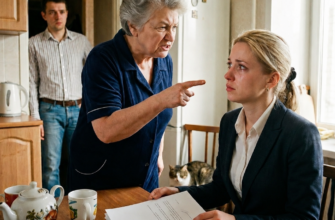
“We wanted what was best…” Mom began. “Marek has children. They need stability. You’re alone, it’s easier for you…”
“Easier?” I asked calmly. “Nine years of renting is easier?”
“But you work. You can save money.”
“And Marek doesn’t work?”
Silence fell.
“We thought you would understand,” my father said. “He’s a man, he has responsibility…”
“And who am I?”
Mom suddenly became agitated:
“We love you!”
“Then why did you make this decision behind my back?”
There was no answer.
At that moment, I understood one simple thing: my help had been treated as something normal. A duty. Not a choice.
I stood up.
“The groceries are in the kitchen. That was the last time.”
“What, are you cutting us off?” Mom asked in a trembling voice.
“No. I’m cutting myself off from the role you gave me.”
That evening, Marek called.
“What did you do? Mom is crying!”
“I didn’t do anything. I’m just leaving this arrangement.”
“What arrangement?”
“The one where you get the property, and I get the responsibilities.”
He was outraged, said I was overreacting, that it was only about an apartment.
But it wasn’t about the apartment.
A few months passed. For the first time in many years, I went on vacation simply because I wanted to — not because “you have to manage to rest between hospital visits.”

I started saving money. I analyzed my budget. I moved to a cheaper apartment.
It felt strange. On Saturdays, I would wake up and not know what to do.
At first, the silence was frightening. Then it became freedom.
In the autumn, Marek wrote to me:
“The parents are ready to change the agreement. Half will be yours. Will you come back?”
It was fair. Honest.
But I understood: to return meant taking everything on myself again. Becoming the “reliable daughter” who endures everything once more.
I replied:
“Thank you. But no. I’ll manage on my own.”
I don’t need half an apartment if it means returning to my old role.
I forgave my parents. Truly. But forgiving doesn’t mean continuing to sacrifice yourself.
Now they contact Marek more often. He arranged help for them.
And for the first time, I am living my own life.
I’m not taking revenge. I don’t hate.
I simply chose myself.
And you know what?
I feel at peace.
Not because I received something.
But because I stopped paying with my life for someone else’s comfort.