
I married an older woman for money and a roof over my head — but after her funeral, the lawyer handed me a box with the words: “This is what you truly wanted.”
When I first stepped into Evelyn’s house, I smelled cinnamon, old books, and something else that hadn’t been in my life for a long time — peace. Back then, I didn’t yet understand how dangerous peace can be for a person who has only learned how to survive.
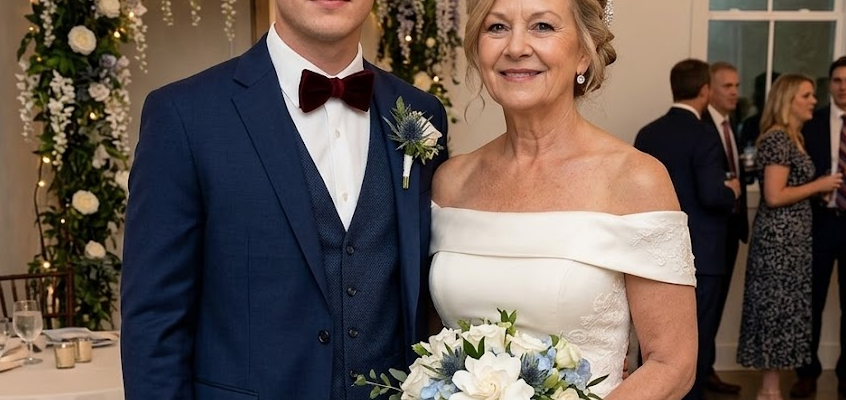
Evelyn was seventy-one. I was twenty-eight. She lived alone in a large blue house on a quiet street where neighbors watered their flowers in the evening and knew each other by name.
I lived in an old pickup truck behind a supermarket, hid my clothes in plastic bags, and every morning shaved in the gas station bathroom so I could look “normal” for another job interview.
At that time, I had already stopped counting how many times life had slammed the door in my face. Debts. Late payments. Bailiffs. Construction jobs where wages were delayed. Then layoffs. Then more. Sometimes one bad month is enough to start sinking. I had too many in a row.
I met Evelyn by chance. I helped her put groceries into her car outside a store. She thanked me and offered me a ride. I refused, but she insisted at least on coffee.
Her kitchen was warm. Not just physically — it was alive. Old photos hung on the fridge. Plants stood on the windowsill. Apple pie smelled in the oven.
I sat at her table and suddenly realized how exhausted I was from loneliness. Back then I didn’t call it loneliness. I called it hunger.
After a few weeks, Evelyn began inviting me more often. At first for dinner. Then for no reason. Sometimes she asked for help around the house: changing a lightbulb, fixing a squeaky door, moving heavy boxes in the garage.
I agreed. Not because I was a good person. But because after work she always said:
— Stay for dinner.
And I stayed.
The first person who understood where this was going was Jesse. We had worked together in a warehouse years earlier. He was the kind of person who turns other people’s pain into a joke before you even feel it.
That evening we were sitting in a cheap bar.
— I’m getting married — I said.
Jesse froze. Then burst out laughing.
— To who?
— To Evelyn.
He almost choked on his beer.
— To that rich widow from the blue house?!
I asked him to lower his voice, but he just smiled.
— Bro… that’s not marriage. That’s neatly packaged homelessness.
I didn’t answer. Because part of me knew he was right.
— So what’s next? — he asked. — Wait a few years, get a house, a car, a bank account, and live like a human?
— I just need a chance to get back on my feet.
— Of course — he scoffed. — Everyone says that.
That night I couldn’t sleep in my car. Not out of shame. But because for the first time in a long while, I felt like I had a way out.
A month later Evelyn proposed marriage. No romance. No ring in a restaurant. She simply said in the kitchen:
— We’re both alone, Damon. Maybe it will be easier together.
I should have refused. But instead I looked at her house. The soft lamp light. The clean tablecloth. The fridge full of food.
— Yes — I said.
Two weeks before the wedding, Evelyn placed a folder in front of me.
— What is this?
— A prenuptial agreement.
I laughed nervously.
— Seriously?
She took off her glasses and looked at me for a long time.
— Loneliness doesn’t make a person stupid, dear.
The house remained hers. The savings too. If anything happened — everything would go to her niece Claire and a charity foundation.
— Do you think I’m after your money?
Evelyn was silent for a long time.
— I think when a person is afraid, they can convince themselves of almost anything.
I felt my face burn with heat. But I still signed.
Because I convinced myself people change. That they grow attached over time. That older people sometimes change their decisions.
After the wedding I moved in with her permanently. And the longer I stayed, the more I hated myself for starting to get used to it.
Evelyn never treated me like a servant. She bought food I liked. Left notes on the fridge. Sometimes she fell asleep in the armchair while watching films.
She bought me shoes.
— Yours leak — she said calmly.
She bought me a coat.
— I don’t need pity.
— Call it taking care of floors — she smiled.

Sometimes I had the feeling she could see right through me.
In a small restaurant, the waitresses adored Evelyn. She remembered their children’s birthdays, brought soup to someone who was sick, sent cards to neighbors.
People softened around her. Except me. Because every time someone smiled at her, I felt like a fraud.
One day during lunch she asked:
— Why do you tense up when people are kind to me?
— I don’t tense up.
— You do. You tap your fingers on the table.
I looked away.
— Sometimes I feel like you’re counting how many people will be disappointed when they learn the truth.
I froze.
— And you always look guilty when you realize you need something.
I suddenly stood up and left. Not because I had to. But because I couldn’t stand her gaze.
Evelyn never made scenes. She didn’t push. She gave space so a person could change on their own. And that was the worst part.
One night I heard a noise on the stairs. Evelyn was sitting on the steps, breathing heavily.
— It’s okay — she whispered.
I helped her up. For a moment she leaned into me completely — small, tired, fragile.
In the kitchen I made tea and forgot to turn on the water.
She laughed softly.
— Worst tea of my life.
For the first time in a long while, I smiled sincerely.
My phone vibrated.
“So how’s your retirement fund doing?”
I looked at Evelyn. She was sitting opposite me, wrapped in a blanket, smiling.
— Everything okay?
— Yes. Jesse is an idiot.
And then I wrote:
“Everything’s great. When she’s gone — I’ll be set for life.”
Shame hit me immediately. But only for a few seconds.
I turned off the phone and pretended nothing had happened.
Three days later, in the morning, Evelyn dropped a spoon. I turned around and saw her gripping the counter.
— Evelyn?
Her lips were trembling, but she couldn’t speak. Her knees gave way. I managed to catch her before she fell.
In the hospital everything happened quickly.
The doctor said in a tired voice:
— Her heart couldn’t take it.
I looked at my hands and thought only that just that morning she had spread jam on toast.
The funeral was three days later.
I wore the coat she had bought me. Claire noticed immediately.
— Of course you chose exactly that.
— It’s cold outside.
— No — she replied coldly. — You’re still just using my aunt.
Those words hurt more than I expected. Because deep down, I knew she was right.
But one thought kept bothering me: the will.
The next day I sat opposite Evelyn’s lawyer — Mr. Carson.
He read the documents.
The house went to Claire. The savings to the foundation.
I swallowed.
— And me?
The lawyer looked at me.
— Mrs. Evelyn left you one thing.
He placed an old shoebox on the table.
— She said: “This is what he truly wanted.”
My hands trembled as I opened it.
On top was a printout.
My message to Jesse.
“When she’s gone — I’ll be set.”
Everything inside me collapsed.
The lawyer calmly explained that that evening the phone had been left on the table and Evelyn saw the message. She knew everything. From the beginning.
But she never said anything.
Under the printout were checks.
For shoes. For a coat. For car repairs. For a dentist. For my debts.
On each one, her notes:
“Here you lied.”
“Here you wanted to confess.”
“Here you were honest.”
On the last check, for the coat I wore at the funeral:
“You looked so guilty when I realized you were cold. That was the first truly honest expression I saw on your face, Damon.”
I covered my face with my hands.
— Is this punishment?
— No — the lawyer said quietly. — It was her last attempt to save you from yourself.
In her letter Evelyn wrote:
“You probably think I left you with nothing. But I left you the truth. And that is the only thing that cannot be sold or lost.”
She admitted she knew everything from the beginning. She knew why he was with her. How he looked at her medication. How he counted the days between doctor visits. How he smiled too hard.
But she also saw other things.
How he helped neighbors for free. How he sat with her in hospitals even though he hated them. How he tried to care for her, even though he didn’t know why.
“You were not entirely good — she wrote. — But you were not empty either.”
And then she gave him a choice.
To disappear with his shame or start over.
I no longer looked for easy paths or hid behind excuses. Work, debts, a small room — it became my reality, but for the first time it was honest.
I stopped lying. To people and to myself.
Sometimes I walked past quiet streets and remembered her house and that letter.
She didn’t leave me money.
She left me a choice — and I finally made it.
I changed.
And I never went back to who I was before.