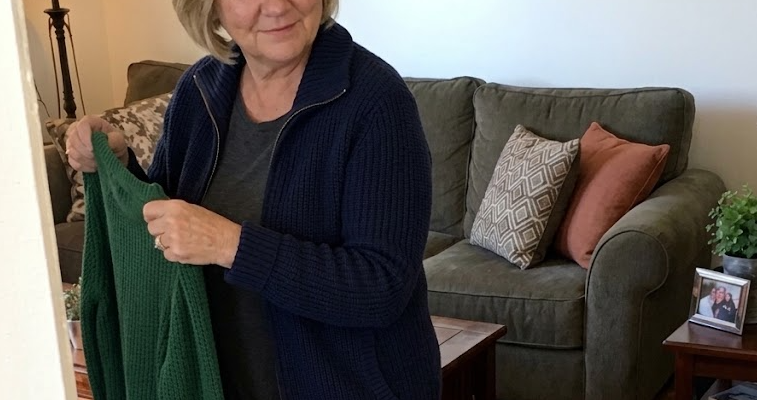

Every time my mother-in-law, Marlen, took another bag of my clothes, I trusted her when she assured me that she would donate everything to charity. For almost six months, I was convinced that she was genuinely helping people in need.
I had no particular reason not to trust her. Marlen had always been an active volunteer: she participated in food drives, school events, church projects, and charity clothing collections.
So when my husband Ethan and I moved into a smaller house, I wasn’t surprised at all when she offered to help me organize my wardrobe.
Our new home was cozy, but the closets were definitely smaller. Boxes were stacked in almost every room, shoes lined the wall in the bedroom, and eventually I had to admit the obvious fact: I had far more clothes than I actually needed.
One Saturday, I sat on the bedroom floor sorting things into three piles: things I still wore; things I hoped to wear again someday; and things I should have gotten rid of a long time ago.
Marlen looked at the mess and smiled.
— There’s an organization near my house that collects women’s clothing — she said. — They help women who need things for job interviews and starting new jobs. Don’t throw anything away.
It sounded like a great idea to me.
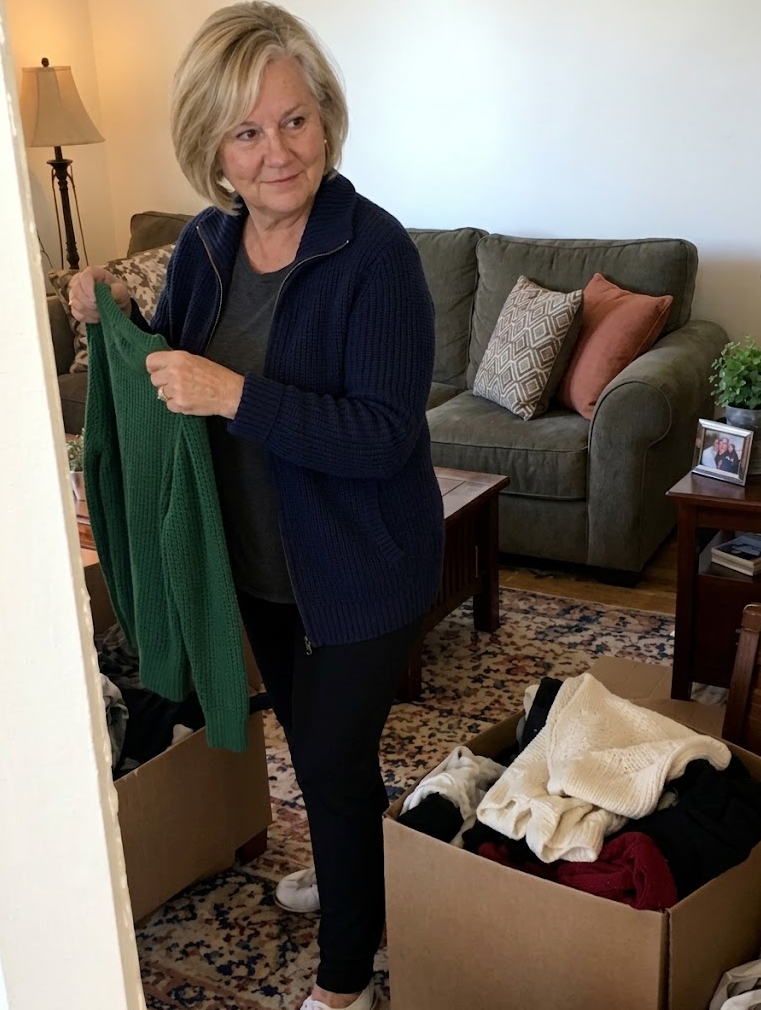
She quickly filled two large bags with jeans, sweaters, blouses, dresses, shoes, and several coats.
There were things I barely wore. For example, a black dress I used to wear to business dinners. Or a soft gray sweater that spent most of its time hanging in the closet. I also gave away a pair of elegant heels that looked great but left my feet aching after only twenty minutes.
When Marlen came to pick up the bags, I actually felt relieved.
A few weeks later, she asked if there was anything else I could get rid of.
There was.
Then she asked again.
Over time, it became our routine. I’d clean out another drawer or find a box of old things, put everything into a bag, and Marlen would happily take it away.
Ethan even joked that somehow I’d managed to hide enough clothes for two people in one closet.
But after the fourth or fifth bag, Marlen started asking some rather strange questions.
— Do you still have that navy-blue dress you wore to Brian’s anniversary?
— What about those brown shoes with the low heels?
— Maybe you have some good coats you don’t wear anymore?
One time, she even asked about a cream cardigan I’d worn several years earlier.
I laughed.
— How do you even remember my clothes better than I do?
Marlen smiled and said that one of the women at the organization was about my size. That’s why she tried to remember things that might fit her, so she could choose something suitable for her.
It sounded perfectly logical.
I even felt a little embarrassed that I had started suspecting something strange in the first place.
Then my green coat disappeared.
It wasn’t worth a fortune, but it had special meaning to me.
Ethan had given it to me during our first winter together. I wore it almost everywhere. We wore it on our first weekend trip out of town, took walks on cold mornings, and once got completely soaked in a massive downpour.
There was still a small coffee stain on one of the pockets — I’d spilled it one morning while getting into Ethan’s pickup truck.
I searched the entire house.
The coat was nowhere to be found.
Then I remembered that around the time Marlen had taken another bag, I had left a pile of things beside the laundry room.
I asked her about the coat.
She was silent for a moment.
— Oh, honey… I think it accidentally ended up with the things meant for charity.
I was disappointed, but I tried not to make a big deal out of it.
— Can you check if it’s still there?
Marlen hesitated again.
— I’ve already donated everything. Things like that get given away very quickly there.
I said it was fine.
Although, honestly, I didn’t feel fine about it at all.
For the next two weeks, I tried to forget about it.
Then Ethan went to his mother’s house to help her move an old dresser. He said he’d be back in about an hour.
But he didn’t come home until almost four hours later.
He walked into the kitchen without even taking off his jacket, put his keys on the table, and looked at me.
— Do you remember that green coat you thought my mom had donated?
I immediately felt uneasy.
— Of course.
— She didn’t donate it.
I stared at him.
— What?
Ethan sat down across from me.
— When I got there, I saw your coat in the guest room. It was lying on a chair.
I felt my anger rising again.
— So she just kept it for herself?
— That’s what I thought at first too. But then I saw something else.
There were several large plastic containers in the guest-room closet.
One of them was open.
Inside were my clothes.
The navy-blue dress.
The brown shoes.
The cream cardigan.
Blouses, scarves, and even a handbag I’d once given to Marlen.
I slowly exhaled.
— She wasn’t donating anything.
Ethan shook his head.
— No.
I was furious.
She had been coming to my house, watching me sort through my things, telling stories about women who supposedly needed clothes, and then taking everything for herself.
But Ethan wasn’t finished.
— The clothes aren’t the worst part.
He told me that while he was talking to Marlen, a woman came down the stairs.
Ethan recognized her immediately.
Tara.
His ex-girlfriend.
She was wearing my navy-blue dress.
For several seconds, I simply stood there in silence.
And suddenly, all of Marlen’s strange questions began to make sense.
The dress.
Shoes.
The cardigan.
The coat.
Finally, Marlen confessed.
Tara had returned to the city about seven months earlier. She had lost her job and had recently ended a difficult relationship. She and Marlen had stayed in occasional contact, so Tara turned to her for help.
Marlen began helping her.
Then she noticed that Tara and I were roughly the same size.
And that’s when she started giving Tara my clothes.
Except she told Tara that the clothes had come from a charity collection.
Tara had no idea who the clothes actually belonged to.
When she learned the truth, she immediately apologized and offered to return everything.
But Marlen still tried to justify herself.
— She needed them more — she said.
Those words hurt me the most.
Because by then, it wasn’t about the clothes anymore.
Marlen had decided that her judgment mattered more than mine. She believed she could make decisions about my belongings simply because she thought someone else needed them more.
That evening, I called her.
— I was helping someone who was genuinely going through a difficult time — she said.
— You could have simply asked me.
— I knew you might say no.
— That’s exactly the point.
There was silence on the other end.
— You weren’t trying to help me — I said. — You simply didn’t want to hear me say the word “no.”
This time, Marlen said nothing.
The next morning, Ethan went back to her house and brought back everything that still belonged to me, including the green coat.
Tara packed my things herself.
Inside the coat pocket, I found a folded note. Tara apologized and explained that she genuinely hadn’t known the clothes belonged to me.
I believed her.
With Marlen, it was much harder.
For several weeks, I tried to keep my distance from her. Ethan also barely contacted her.
Later, she came to our house and apologized for the first time without trying to justify herself.
She admitted that helping Tara made her feel needed and important. So she convinced herself that good intentions gave her permission to lie.
But good intentions don’t make a lie right.
Eventually, I forgave Marlen.
However, rebuilding the trust we once had proved much more difficult.
Now, whenever Marlen suggests giving something of mine to someone else, I simply smile and tell her that I will decide for myself what I want to give away and who I want to give it to.
And the green coat?
I still wear it.
Not because it’s expensive or particularly fashionable.
But because it reminds me of one simple thing:
Even if someone is convinced that they are doing the right thing, they have no right to make decisions for another person.
Kindness stops being kindness when it takes away another person’s right to choose for themselves.