An elderly woman, dressed in a worn and modest dress, entered a luxury restaurant. Behind her, the doors closed, and the warm light of the chandeliers illuminated the room with white tablecloths and gleaming tableware. At the entrance, the receptionist stopped her, reserved and stern:
— Grandma, this is a very expensive place. Are you sure you’ll be able to pay?
— I know, I have money — the woman replied calmly, not hiding a slight smile.
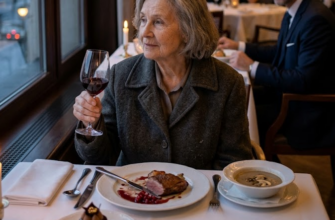
The receptionist hesitated, then, with slight reluctance, led her to a table by the wall. Along the way, the woman caught the gazes of other guests — some showing curiosity, some with a hidden smile. The atmosphere of wealth and opulence seemed almost to repel her presence.
Sitting at the table, the woman looked around: shining glasses, exquisite dishes, whispered conversations. She gently touched the table with her hand, as if to make sure: “I am here.”
When the waiter approached, the woman looked up and quietly asked:
— What is the cheapest item on the menu?
— I can offer you vegetable soup — he replied cautiously — but I’m afraid it might seem expensive to you.
— That’s fine, please bring the soup — she said calmly, with a slight smile, as if reassuring herself that a small joy was possible.
Hearing this, several men at the neighboring table burst out laughing. Others joined in — some whispered with ironic smiles, some laughed openly.

Laughter passed through the room:
— The poor woman came to eat among the rich — whispered the guests, watching her with irony.
The woman, however, paid no attention. She tilted her head slightly, closed her eyes for a moment, and inhaled the aroma of the soup. Inside her, memories simmered — of long years spent with her husband, of dreams, of quiet evenings when they had planned to come to this restaurant one day, though at the time it seemed impossible.
The waiter, a young man, noticed that people were laughing and quietly approached:
— Excuse me, Grandma… They’re laughing at you. I’m very sorry about them.
The woman smiled faintly, looking at him with warm eyes:
— Don’t worry, dear. I don’t mind. The most important thing is the dream.
— What dream? — he asked in surprise.
— When my husband was alive, we often walked past this restaurant and said: “One day we’ll come in here.” He passed away… And I saved a little money to make our dream come true at least once.

The waiter froze, unable to say anything. His eyes filled with tears, and he turned away, pretending to write down the order. Quietly, he watched as the woman carefully ate her soup, savoring every sip.
When the soup was finished, the woman took out an old wallet, carefully arranged her money, and asked for the bill.
— Today, I’ll pay for your dream — the waiter said quietly, leaning toward her. — And I hope that when I grow old, someone as kind as you will be beside me.
In the room, where laughter had echoed just a minute ago, silence fell. People lowered their eyes, feeling shame and embarrassment. Someone whispered with an apologetic expression, someone simply stared at the floor.
The woman stood, smiled at the waiter, and slowly walked toward the exit. Her steps were light, confident, calm. She had done what she had wanted her whole life, fulfilling a promise of memory and love.
And behind her remained a special silence — quiet, almost trembling, in which, for the first time that evening, one could hear more than the clinking of glasses and music: the beating of a human heart, reminding everyone present of kindness, memory, and the value of small joys.