
In the silence of the large house, behind the heavy curtains, almost no sunlight could penetrate. The eternal dusk seemed to swallow all sounds and smells, leaving only the barely audible echo of the servants’ steps and the quiet sobs of two-year-old Klara.
Count Joaquín de la Vega, having recently lost his wife and newborn son, lived in this house like a shadow of himself. His face was like a carved mask, his eyes extinguished, and his heart shattered into thousands of pieces. He walked through the empty corridors like a man who had lost his inner foundation, clinging to the last remnants of strength to maintain the house and care for his daughter.
Klara refused to eat, didn’t sleep, and her crying was soft, almost soundless — a grief that words could not express. Five nannies had already come and gone, but none could stay. Some left on their own, others were dismissed by Count Joaquín with barely a glance. Each failure was a blow to his soul, a reflection of the helplessness he could not bear.
“She doesn’t notice me,” the count once told the priest. “Even when she cries, she doesn’t look for me.”
The priest only nodded, not knowing what to say. But Count Joaquín decided to act. On the eleventh day after the funeral, he put on simple clothes, took the carriage keys, and set off for the city. His goal was simple but painful: to find a person who could bring life back into his daughter’s eyes.
He walked through the bustling streets, looking into houses where caring governesses and caretakers worked. Among many people, his gaze stopped on a woman sitting in the shade of an old tree at the town market: calm, confident, with a straight posture and a proud look. Her presence stood out: no fear, no worry — only inner strength. This was Camilla, 24 years old.
“Do you know how to take care of children?” asked Count Joaquín, feeling his tension ease a little.
“Yes,” she replied simply, calmly. “I can sing, I know songs, I can read.”

The count felt an unusual warmth and trust radiating from the woman. He invited her to come with him, explained the situation, and offered her a chance to try working together. Camilla agreed, understanding that her knowledge and care were not meant for obedience, but for saving a child’s soul.
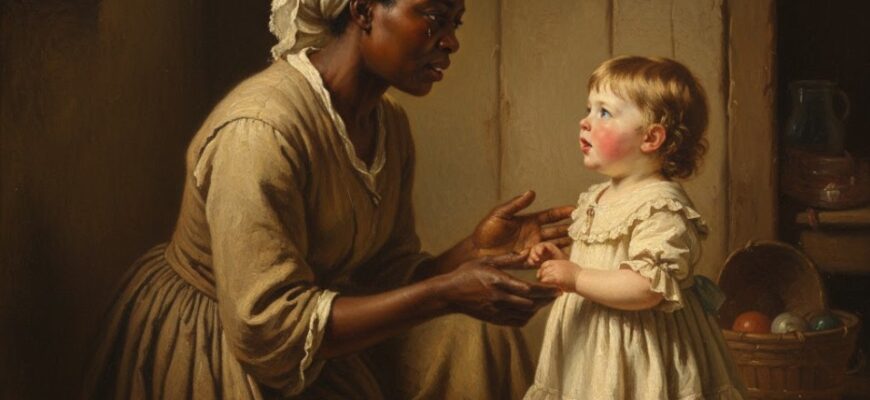
When Camilla entered Klara’s home for the first time, she acted gently and respectfully, not forcing closeness, but simply started humming songs in a quiet, unfamiliar language. Klara lifted her gaze, did not cry, just listened. It was the first sign that life might return to that house.
Days turned into weeks, and Camilla gradually earned the girl’s trust. She brought small toys, told stories about animals, trees, and seas — all in whispers, with respect for the silence. By the end of the first week, Klara allowed her to come close, sat beside her, and for the first time fell asleep on Camilla’s lap.
Count Joaquín watched from afar. His heart slowly softened, the inner ice melting. He realized that this was no ordinary helper, but a person with her own mind and experience. Camilla could teach, guide, but never dominate.
One day, the count quietly asked:
“Where do you come from?”
Camilla told him she had been born free. Her father was a Portuguese man, owner of a shop in Morelia, and her mother — a Black woman, also free. After her father’s death, her life changed abruptly: her documents were destroyed, her property taken, and her mother soon died. Camilla was moved from family to family many times, but her spirit remained unbroken.
The story sounded unbelievable, but the count saw the truth in her eyes. She did not seek pity, nor did she ask for rescue. She spoke because she knew truth was strength, and silence — a punishment.
Count Joaquín began his own investigation. He sent letters to Morelia, requested documents, and arranged meetings with nuns and former shop employees. Each discovery confirmed: Camilla had truly been born free, and her rights had been unlawfully restricted.
After a few weeks he returned with evidence, documents, letters, and testimonies. When Camilla learned that her freedom had been officially recognized, she allowed herself to relax for the first time. She was no longer bound by someone else’s will; she stayed of her own choice, to teach and care for Klara.
The house changed. Klara laughed again, ran through the garden, and showed interest in the world. Camilla became not only her teacher, but also Count Joaquín’s trusted companion. Their relationship was no longer “master and servant.” It had become mutual care, respect, and trust.
The servants, neighbors, and townspeople initially commented on Camilla’s unusual status, but soon they got used to it. Count Joaquín no longer bowed to society’s expectations — he followed truth and justice.
The evenings grew longer, but no longer empty. The count and Camilla often sat in the library, reading old books, talking about life, songs, and the stories Camilla told Klara. Each day brought new joys: Klara’s first laugh upon waking, her first story about seeing birds in the garden, her first drawing showing Klara, Count Joaquín, and Camilla — together, like a real family built on care, respect, and trust.
The house was no longer gloomy. Light once again passed through the heavy curtains, bringing hope with it: love, care, and justice can triumph even in the darkest times. A true family is not created only through formal bonds, but through attention, respect, and sincere commitment.