
My grandchildren visited me only at Christmas — for the money. Only last year did I finally understand who truly loves me.
I was 87 years old when I learned a lesson that forever changed my view of family and of myself.
Independence had always been important to me. I grew up in different times — when no one expected an easy life and everyone knew the value of work. For many years I worked hard, saved money, denied myself many things, and never complained. Money was never my goal — it was a way to preserve my freedom and dignity.
After my husband died, I did not remarry. Not because I couldn’t, but because I learned to live on my own. Over time I built a calm, stable life. I had a house, a daily routine, favorite books, a garden, an old radio, and the feeling that I depended on no one.
I was financially secure, I never asked for help, and I could be generous to those I loved. That gave me real satisfaction. Not luxury, not travel, but the ability to help my loved ones — without reminders and without conditions.
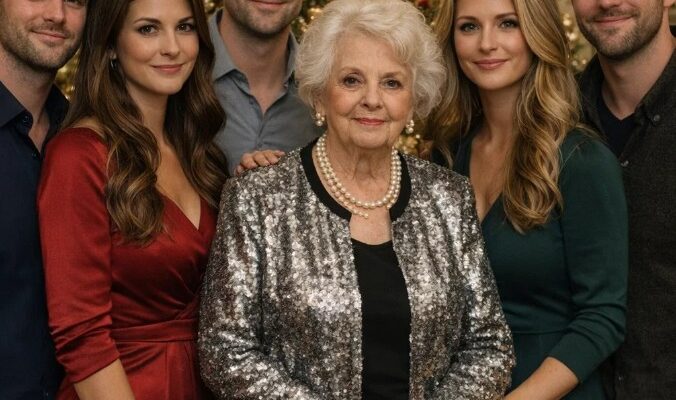
Every Christmas I invited my five grandchildren to my home.
It was our tradition. I started preparing early: I took out the best tablecloths, baked cakes using old recipes, and lit candles. The house filled with the scent of cinnamon and vanilla, and in my soul lived the hope that the evening would truly be warm.
After dinner, I gave each of them an envelope with ten thousand dollars.
I did it with joy. With a smile. With the belief that money was only an addition, not the reason for their visit.
At least back then I still believed they did not love me for the money.
It seemed easier to give than to ask for phone calls or visits. I didn’t want to be “that grandmother” who complains about loneliness. I told myself they had their own lives, responsibilities, jobs, children.
But over time I began to notice what I had previously tried not to see.
Many people probably know this.
You оправd others because you love them. You convince yourself they’re just busy. That they care — just in their own way. That if something happened, they would surely be there.

They came every year, punctually, on Christmas Eve.
But if I’m honest — they didn’t come for me.
And then, for the first time, I thought: what would happen if I changed our little tradition?
That Christmas began as usual.
Jake, the youngest, barely looked up from his phone and was already talking about a party he planned to go to later.
Twenty-three years old, handsome, carefree — that’s how a person is until character starts to matter more than appearance.
He kissed me on the cheek without looking me in the eyes.
Christy, married and successful, spent the whole evening managing the children and loudly complaining about how tired she was.
She looked exhausted — dark circles under her eyes, messy hair, expensive clothes wrinkled from the road. Everything about her said she treated the evening as just another obligation.
Carl, a legal assistant, kept glancing at his watch and talking about work.
“It’s going to be a serious case,” he said, adjusting his cuffs. “Honestly, I shouldn’t have gone out today.”
Mike, a mechanic and the father of one child, kept stepping out to take phone calls.
“Sorry,” he muttered each time. “Work stuff.”
On Christmas Eve.
Julian, unmarried and always traveling, showed me photos from her latest trip. Beautiful places, bright smiles. But she didn’t ask me once how I was feeling.
We ate dinner. We laughed at the right moments. Soft Christmas music played in the background.
And as always, their eyes drifted now and then toward the envelopes lying beside my plate.
They were waiting.
That was the moment my little test began.
I handed out the envelopes one by one, smiling as always.
“Merry Christmas, dear.”
Jake opened his first.
He blinked. Then frowned.
“Uh… Grandma, I think there’s a mistake.”
“No,” I said gently. “My savings aren’t what they used to be.”
Christy pulled out a bill.
“There’s… fifty dollars here. That’s… nice.”
Carl cleared his throat.
“Times are hard for everyone now.”
And he looked at his watch again.
In that moment I understood more than in all the previous years.
Mike nodded and put the money away.
“Thank you, Grandma.”
Julian silently turned the envelope in her hands.
No one protested. But no one stayed any longer than usual either.
The next year, I invited them again.

When evening came, the excuses began.
One message arrived late.
Another person sent a Christmas GIF.
Someone wrote an email — dry as an office memo.
Only one car arrived.
I stood by the window when I saw the lights. My heart tightened for a moment.
Julian got out of the car. She was holding a small bag.
“Am I too early? Have the others already arrived?” she asked.
“They couldn’t make it this year,” I replied.
She paused, then quietly nodded.
We had dinner just the two of us.
It was a completely different experience.
She wasn’t in a hurry. She didn’t check her phone. She asked how I was feeling — not out of politeness, but sincerely. She listened without interrupting. She laughed at my stories the way people laugh only when they truly care.
After dinner I slid an envelope toward her.
She tried to push it away.
“Open it,” I said.
Her eyes widened.
“I don’t understand…”
“I had to find out who would come without expecting anything in return.”
She looked at me in silence.
“I tested you,” I admitted. “And I’m sorry.”
She took out the check — for fifty thousand dollars.
Then she carefully handed it back to me.
“I don’t need a reward to love you,” she said. “Maybe it’s better to give this money to those who truly need it.”
Together we chose charities.
And we donated every single dollar.
And then she began to come again and again.
Not for the money.
Not for the tradition.
Not for the holidays.
Just for me.
At 87, I finally understood:
Love cannot be bought.
And it cannot be tested with trials.
It simply reveals itself — in presence, in attention, in the quiet beside someone.
And when it happens, you feel it.
It’s a pity I understood it so late.
But I’m grateful that I understood it at all.