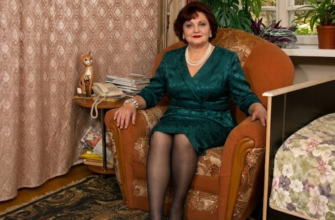

There was silence in the room, broken only by the steady ticking of the old wall clocks. Maria sat on the edge of the armchair, not taking her eyes off the young man in the perfectly tailored suit. He looked confident, but there was something in his gaze that carried her back to the past. The young man took a deep breath, as if preparing to speak the words he had carried in his heart for a long time.
“I was eight years old,” he began quietly. “It was December. It was raining so hard it felt as if the sky itself had cracked. My sister and I were barefoot, our clothes clinging to our bodies, shivering from the cold. We hadn’t eaten for two days. We were walking down the street when suddenly we smelled rice and beans coming from the restaurant where you worked at the time.”
Maria trembled. Memories flooded back with unexpected clarity: the buzz of the dining hall, the customers’ laughter, the clatter of dishes. And—two skinny childlike figures at the window, big eyes full of pleading.
“You came out the back door,” he continued, his voice trembling. “You beckoned us with your hand and gave each of us a plate of hot food. I still remember how you said: ‘Eat slowly. If it’s not enough, I have more.’”
Maria covered her mouth with her hand to stifle a sob.
“My God…” she whispered.
“Then you gave us two pieces of bread wrapped in paper. You could have walked past us, like hundreds of others. But you stopped. You looked at us not as beggars but as people. For us, that was a miracle.”

The young man squeezed the leather briefcase he was holding on his lap.
“Mother died a few months earlier,” he continued. “Father couldn’t bear it and left. My sister and I were placed in an orphanage. Life there was hard—hunger, cold, beatings. But every time it seemed to me that everything was lost, I remembered that meal. And I told myself: ‘Somewhere there is a woman who believes I deserve to live.’ That saved me from despair.”
Maria listened, barely holding back tears.
“I studied as much as I could,” his voice grew stronger. “I received scholarships, cleaned toilets, sold sweets on buses, carried sacks at the market. Every effort I made was dedicated to that memory. Every step forward reminded me: ‘It’s all thanks to the woman with kind eyes who once gave me bread.’”
Maria caught her breath.
“Now I’m an engineer,” he continued. “A few years ago, I started a company. We have contracts with international partners. But everything didn’t begin in an office or at the market. It all began that night when you fed us.”
He placed a thick envelope on the table.
“Inside is enough so that you will never again have to worry about bills or medicine. This is your peace, your freedom.”
Maria shook her head, sobbing:
“No, my son. I can’t accept this. I acted as anyone would have.”

The young man looked straight into her eyes:
“No, ma’am. Not everyone. Back then you yourself had nothing in excess, yet you shared. For us it was more than food. It was a chance. This envelope — it’s not payment. It’s gratitude.”
Maria put her hands to her face.
“One meal can’t change a destiny.”
He smiled gently and replied:
“When you are dying of hunger and hope is fading, one meal changes everything.”
At that moment the door opened. A young woman with dark hair and deep eyes stood on the threshold.
“This is Valeria, my sister,” said the young man.
The girl stepped forward and hugged Maria tightly.
“Thank you for not passing by indifferently back then,” she whispered through tears. “Thank you for showing us that there are still good hearts in the world.”
Maria embraced them both like her own children.

“I was an orphan myself,” she said softly. “Since childhood I knew what hunger and cold meant. Maybe that’s why that night I couldn’t just walk by. I saw myself in you.”
Silence fell in the room. It was that rare silence in which emptiness is not born, but deep unity.
They talked for a long time. Santiago and Valeria insisted that Maria accept the envelope. At last she took it with trembling hands.
“All right,” she whispered. “But promise me: never forget where you come from. And always help those who are in need.”
Santiago nodded.
“I promised myself back then. You saved us. Now it’s my turn to save others.”
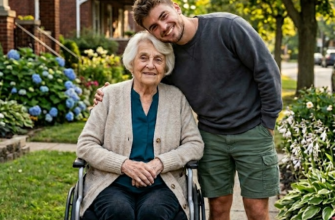
And he kept his word. In the following months Santiago not only renovated her old house — he built her a new one: bright, spacious, full of warmth. But the most important thing was that every week he came to Maria with flowers and spoke with her as if she were his mother.
The story quickly spread throughout Medellín. People repeated: “one plate of food doesn’t change the world.” But each time they added: “for someone it can be the whole world.”
And Maria, looking into the shining eyes of Santiago and Valeria, understood the lesson of her entire life: no act of kindness is small if it comes from the heart.