
My father-in-law had no pension. For twelve years, I cared for him with all my heart. In his last breath, he handed me a torn pillow and said: “For Maria.” When I opened it, I couldn’t stop crying.
My name is Maria. At the age of 26, I became a daughter-in-law in this family. By that time, my husband’s family had already gone through many hard times. My mother-in-law died young, leaving my father-in-law, Tatay Ramon, alone with four children. All his life, he farmed rice and vegetables in Nueva Ecija — without formal employment or a pension.
When I married his son, almost all of Tatay Ramon’s children already had their own families and visited him only from time to time. His later life depended almost entirely on my husband and me.
The neighbors often whispered: “What kind of story is this? She’s only a daughter-in-law, yet she looks like a servant. Who would take care of a father-in-law for so long?”
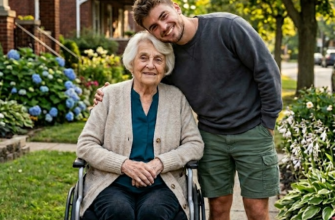
But for me, it was different. He was like a father who had worked his whole life for his children. Those twelve years were not easy. I was young and often tired; I felt lonely. When my husband worked in Manila, I stayed with our little daughter and with Tatay Ramon, who was already weak. I cooked, did the laundry, and watched over his breathing at night.
One day, completely exhausted, I said to him: “Father, I’m only your daughter-in-law… sometimes it feels like there’s a great burden on my shoulders.”
He only smiled gently and, with trembling hands, said: “I know, my daughter. That’s why I’m especially grateful to you. Without you, I might not be here anymore.”

I will never forget those words. From that moment, I decided to do everything I could to make his life easier. Every winter, I bought him a warm coat and a quilt. When his stomach hurt, I cooked him rice soup. When his legs ached, I gently massaged them.
I never expected him to leave me anything someday. I did all of this because I considered him my own father.
Over time, Tatay Ramon grew weaker and weaker. At the age of 85, the doctor said his heart was very weak. A few days before his final night, he often called me to his bedside, telling stories from his youth and advising his children and grandchildren to live honestly.
Then came the day of farewell. Struggling to breathe, he called me to him. He handed me an old pillow, torn on one side, and in a weak voice said: “For… Maria…”
I took the pillow, not fully understanding what it meant. A few minutes later, he closed his eyes forever.
During the vigil that night, I sat on the terrace and opened the torn pillow. What I found took my breath away: carefully folded banknotes, a few small gold coins, and three old savings books.

I was in shock, and then I broke down in tears. It turned out that for years he had been saving all the small amounts of money the children gave him, as well as what he received from selling a small piece of land in the village. Instead of spending it, he hid it in an old pillow and left it for me.
In the pillow, there was also an almost illegible note: “My daughter, you are the most hardworking and kind daughter-in-law I have ever known. I do not leave you wealth, but I hope this helps you live a little better. It is my decision — to leave it to you, because you cared for me for twelve years.”
I cried endlessly. Not because of the money or gold, but because of the love and recognition he showed me. I thought my dedication was just a daughter-in-law’s duty. But Tatay Ramon showed me that good deeds, even without expecting a reward, never vanish.
At the funeral, whispers could still be heard: “What did Ramon leave? He didn’t even have a pension.”
I just smiled. No one knew the true legacy he left me — not only in savings, but in sincere gratitude and trust.
Every time I see that old pillow, I think of Tatay Ramon. In my heart, he was not only a father-in-law, but a second father who taught me the true meaning of sacrifice, gratitude, and unconditional love.
And every day I remind myself: I will live better and more charitably — so that his most precious legacy is never lost.