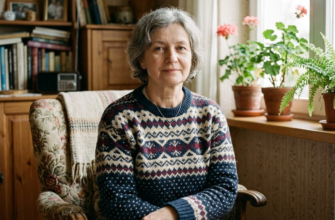
The southern heat pressed down on our small village, turning the dirt road into dry, cracked dust. The air stood still, and even the birds hid in the shade. I, Hanh, sat in the backyard of our old cottage, gathering dry branches for the fire to prepare lunch. The skin on my hands was rough, cracked — the marks of many years of hard work do not disappear under water. I had grown accustomed to these marks like memories that cannot be forgotten.
My son, Minh, was standing by the door. He was ten years old. He watched me intently, as if trying to understand something. In his eyes was the same calm curiosity that once enchanted me in his father. Those eyes could look straight into the soul.
— Mom — he asked quietly — why don’t I have a dad like the other kids?
My heart froze. I knew he would ask this someday, but I had hoped not today. For ten years, I had pondered possible answers — gentle, plausible, good. Yet none of them sounded sincere enough. I straightened up and pretended everything was fine.
— Come, help me gather these branches — I said in a calm tone.
He came closer and knelt beside me.
— Today at school, Lan’s dad was there. He gave her a new backpack. Where’s mine?
I fell silent. Something tightened in my chest.
— Your dad loved you very much — I finally said. — But he had to leave.
— When will he come back?
— I don’t know, my son — I whispered. — I don’t know.

I was twenty-two when I met Tan. He came from the city — in a white shirt, with a smile that made the sun seem brighter. I had never met people like him before: confident, educated, speaking calmly and gently. He stayed with relatives nearby, saying he would come only for the summer, but very quickly he became part of my world. We walked along the rice fields; he talked about the noisy streets and glass buildings, and I showed him how to predict the weather by observing the birds.
When I found out I was pregnant, he wasn’t afraid. On the contrary, he took my hands and said:
— Tomorrow I’ll go home, talk to my parents, and come back for you. We’ll get married.
He left at dawn. I stood by the road until his figure disappeared into the dust. Then I waited — a day, three, a week, a month. I wrote letters to the address he had left. I received no reply. His aunt said she hadn’t heard from him in a long time. Then rumors began.
People said I was a shame. Women would turn away when I walked by. Children shouted after me. Even old friends stopped speaking to me. My parents suffered in silence. My mother cried at night, my father walked hunched over, as if carrying a stone of shame.
When September came, a storm hit the house, and that night my son was born. The midwife, attending the birth, looked at me with disdain.
— You have no husband — no protection — she muttered. — You are both doomed to hunger.
I held the newborn close and said through the pain:
— We will not be hungry. I promise.
I will name him Minh — “Bright.” Because I believed that the truth would one day illuminate everything.
The years passed. My parents died — my father when my son was three, my mother when he was seven. We were left alone. I worked wherever I could: in the fields, in homes, in kitchens. Sometimes for food, sometimes for small coins. The restaurant owner, Mrs. Phuong, treated me with respect.
— You are a strong woman — she said. — But you need a miracle.

I smiled, not believing in miracles. People still whispered behind my back. At school, the children bullied Minh. He came home with tears in his eyes, asking why we weren’t like the others.
— You have me — I answered. — And that’s enough.
At night, as he fell asleep, I would take out an old photo of Tan. His eyes, the same smile. I couldn’t be angry. I only whispered: “Why didn’t you come back?”
Ten years had passed. That morning, rain was drumming on the roof as I sewed Minh’s school uniform. Suddenly, I heard the roar of engines — different from the spring tractors. I went outside. Three black cars were on the road. People ran out of their houses, staring in disbelief. The vehicles stopped right by our yard.
From the first car, a man in a black suit got out, then opened the door, and an older man with noble features stepped out. His eyes, despite his age, were full of pain. He took a step, then another, and stopped in front of me:
— Hanh…
I didn’t recognize him. But he came closer, hands trembling, and held out a photo of Tan.
— I am Lam Quoc Vinh, Tan’s father — he said. — We have been searching for you for ten years.
I stood frozen.
— You searched? But he… he left.
The old man shook his head, tears glimmering in his eyes.
— He died the day he was coming to you. There was an accident on the way. The truck driver fell asleep at the wheel. He died instantly.
The world around me froze. I knelt, feeling my legs go weak.
— We didn’t know your village — he continued. — Your address was lost. We searched all records. Only recently did a private detective find your name in hospital archives.
I could not speak. I only whispered:
— So… he didn’t abandon me?

— No, Hanh — he replied. — He died on the way to you. His last words were: “I will be a father.”
Minh stood beside me, listening to everything.
— So my dad really wanted me? — he asked quietly.
— More than anything in the world — Mr. Lam said gently. — We still have the room he prepared for you.
Minh took the phone from his hands. On the screen — a room full of toys and a photo of a young man with the same smile. I cried quietly, not from pain, but from a sense of peace.
A few hours later, we arrived at a large house, surrounded by gardens. A woman ran out to greet us. She threw herself on Minh, hugged him, and cried. It was Tan’s mother.
— You are just like him — she whispered.
I stood aside, unsure what to say. The woman came to me, embraced me, and said:
— We’re sorry. We didn’t know how you lived. Now you are home.
That evening, as Minh slept in the large bed, I sat by the window for a long time. The wind rustled in the garden, and the city lights outside were fading. I thought about how strangely life restores what is lost. Sometimes you have to go through pain to find peace.
Sometimes at night, I still wake and think I hear the creak of the old roof of our cottage. But then I open my eyes and see — silence, warmth, and light all around. Minh no longer asks why he has no father. Now he knows: his father didn’t leave, he simply didn’t make it back. And when I look at my son’s smile — the same one that once made my heart race — I understand: he did return to us. The only way he could.