
I smiled when my son said that I was not a welcome guest for the holidays.
My name is Dennis. I am sixty-two years old. I am a widower, and I have learned to carry my loss with quiet dignity, like an old coat that keeps you warm without restricting your movement. For the past five years, I have been financing a house I never lived in, investing in dreams built by another generation. At first, it seemed natural to help my son, to create space for his future. Over time, however, I felt my own world growing quieter and quieter.
My savings, accumulated over the years with patience and caution, became the foundation of someone else’s home. Wooden floors, granite countertops, a new heating system — all of it was “an inheritance in advance,” as Ethan jokingly called it. And yet, I found a quiet sense of satisfaction in it. I told myself I was doing it for the family. Family is a great story in which everyone has a role. My role was quiet and practical: support.
Ethan. My son. When he was little, he called every Sunday just to talk. Now his life is filled with responsibilities, the conversations are shorter, and more often revolve around work and everyday matters. It happened gradually, like the natural passage of time: children grow up, become independent, and parents remain distant witnesses to their lives.
I remember the first time Ethan asked for help with the down payment. He stood in my kitchen, grown and serious, and I felt proud that I could be there for him. After the death of Marlen, my wife, just eight months earlier, I was still learning how to live in a new rhythm. When Ethan said, “Mom would have wanted this,” I agreed. That is how my quiet story of support began. A check here, a transfer there, help with renovations… It became my way of remaining part of his life.
He got married, and a child was born. I watched from afar, enjoying the photos in which they laughed, created their small rituals, and built happiness. My heart was happy for them, even if my presence was rare.
But the approaching holidays brought a slight tension. The holidays after losing Marlen were especially difficult, yet I wanted to spend that day with my son and grandson, to feel the bond between generations, to feel that life goes on.

Two weeks before the holidays, I called Ethan: “What time should I come? What should I bring?”
The pause on the line was unusually long. Finally, he said, “Dad, things are a little different this year.”
And he added cautiously: “We’re planning a small evening… just close family.”
I smiled, thinking that “close” of course included me as well. “Alright, then I’m part of that circle,” I said.
He hesitated, then quietly said, “You know, Dad, this year Lena’s parents will be with us. They have… their own ideas about family traditions.”
Lena, my daughter-in-law, had always been polite and proper, addressing me by name. I took it as a sign of respect.
Ethan continued: “They feel we need more space… for our own family.” And then he quickly added: “Not so much space… it’s just how it worked out.”
Just how it worked out. My role during the holidays became less obvious. I could have said a lot — about losses, years of support, the feelings I carried quietly inside. But I remained silent. I didn’t want the conversation to turn into a tally of debts or a sense of guilt.
I smiled and said, “I understand, son. Do what you think is best.”
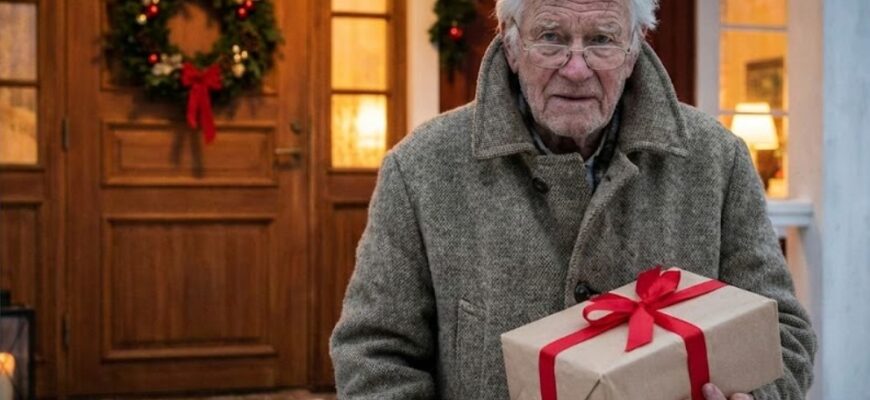
On Christmas Eve, I arrived with a small box of gifts. I decided just to leave them by the door — a quiet gesture, without interfering.
The house gleamed with lights. Through the windows, I saw their life: bright, cozy, full of laughter. Ethan opened the door. He didn’t step out onto the threshold, but he took the box. “Dad… — he said gently — we agreed.”
The words were calm, the boundary clear.
I nodded, smiled, handed over the gift. I offered holiday wishes in a calm voice, the way those who have experienced loss and learned to enjoy simple things can.
I sat in the car and drove home, having dinner in ordinary silence. I told myself: this is how it is; every family has its stages, this is just one of the holidays.
Two days later, my phone showed eighteen missed calls: Ethan, Lena, an unknown number, Ethan again.
And in that moment, I understood the most important thing. Love is a complicated matter. It isn’t always measured by shared meals, hugs, or holiday traditions. Sometimes it lives in the willingness to step aside, in the ability to give way, in quiet help, even when you’re not invited to the table.
Love shows itself by staying close — in the heart, in thoughts, in small gestures no one sees but that matter.
And in that understanding, I smiled again — this time with a slight sense of liberation.