
I was forty-five when Christmas stopped being a holiday. It became merely a period to survive. I used to love it.
I loved how snow made the world quieter. How the air smelled of cinnamon from the oven. How Hanna, my daughter, sang carols falsely but with her whole voice, just to make me laugh.
I used to love all of it.
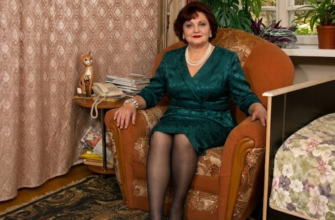
Now I am fifty-two.
Hanna disappeared seven years ago, when she was nineteen. That evening she said she was meeting a friend — and never returned home. There was no note, no call.
The police didn’t find her. Only questions remained.
For months I slept no more than two hours at a time. I left her room untouched, just as it was. Secretly, I hoped that one day she would come in and say I had moved something. Her favorite sweatshirt still hung on the chair. The perfume — a fresh, lemony scent — remained in the closet long after she vanished.
I lived between two worlds: grief and denial.
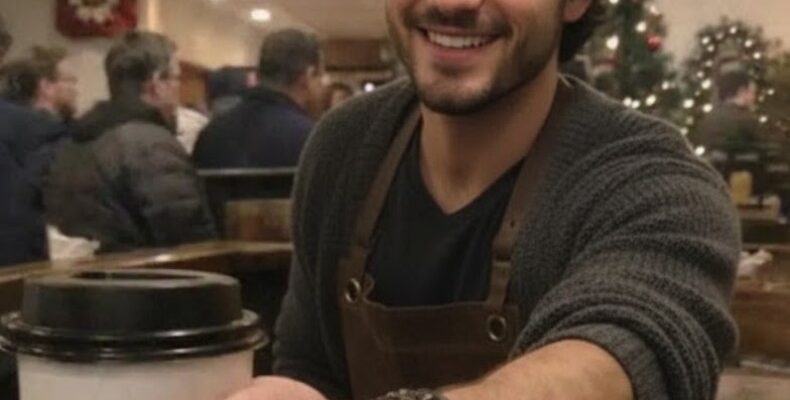
That day I was returning from Sister Margaret’s. Because of a long layover in a strange city, I entered a small café by the station. It was crowded, warm, cozy — an atmosphere that should comfort, but to me, everything felt empty.
Songs played too loudly. Someone laughed loudly, cups clinked.
I ordered a latte, even though I didn’t want one. And suddenly, when the barista handed me the drink… I froze.
On his wrist was a bracelet.
I remembered immediately.

It was exactly the one Hanna and I had made when she was eleven. On a warm winter day, while a blizzard raged outside. We braided it all day, and she laughed, saying that the uneven knot made it special.
She had worn it every day since. And that night, when she disappeared.
I recognized it immediately.
“Excuse me,” I whispered. “This bracelet… where is it from?”
The barista blinked, surprised.
“Excuse me?”
“On your wrist, blue and gray threads. Where is it from?” — quietly, with tense calm.
He looked down, then back at me. His face changed for a moment, a barely noticeable tension passing over him.
“Sorry,” he said quickly. “It’s mine. Private.”
And he took it off his wrist.
I understood: he was lying.
“I made it with my daughter,” I said.
He averted his gaze.
“Please… I don’t know anything. I can’t help.”
“With my daughter…”
He hurried away, as if nothing had happened. But I couldn’t leave. I couldn’t pretend nothing had happened. In my chest, I felt again a feeling I hadn’t experienced in a long time: hope. Terrible, fragile hope.
I sat at a corner table and watched.
When his shift ended, he put on his coat and headed to the door. I blocked his way.
“Please,” I said, my voice trembling but firm. “Just listen. My daughter, Hanna.”
He went pale.

He tried to leave, but I couldn’t anymore. I fell among the tables and chairs. I cried loudly, messily, like I hadn’t since the second year after her disappearance, when I realized no one was waiting for me anymore.
— She disappeared seven years ago — I said, catching my breath. — I want to know if she’s alive.
He froze. He gripped the belt of his coat. Finally, he looked around the nearly empty café and sighed.
— I didn’t steal the bracelet — he said quietly. — She gave it to me.
My heart stopped.
— You know her? Is she well? Where is she?
He hesitated, then took out his phone.
— Give me the number. I’ll call.
That night I didn’t sleep. I sat in the hotel, staring at the phone. Nothing happened for two days, and I began to think it was all my imagination.
On the third day, the phone rang.
— I spoke with her — the voice said. — Hanna doesn’t want to talk to you. Sorry.
I couldn’t respond. Silence filled the line. Tears welled up in my eyes.
— Why? — I finally asked.
— She’s tired of constant lecturing — he said gently. — She felt like she was drowning under expectations.
A moment of silence.
— She was pregnant. She thought that if she returned and told you, you’d never forgive her.
My knees buckled. Hands to my face.
— She wanted to start over — he continued. — She left, changed her name, found a job. Three months later we met at a restaurant.
— Who are you? — I asked.
— Luke — he said. — We’ve been married for three years. Two children. One from that time, one ours together. A girl.
I couldn’t utter a word.
The only thought in my mind: she’s alive.
— Everything is fine — he added. — Strong. A good mother.
— I don’t want to interfere — I whispered. — I just want to know you’re alive.
A week passed before anyone contacted me again. I didn’t call Luke, respecting Hanna’s decision. The phone was set to maximum volume every night.
One night it rang — an unknown number. I didn’t answer. A voice left a message.
— Hi… it’s me, Hanna.

I didn’t hear anything else. The phone slipped from my hands. I cried. Seven years of prayers, pleas, and all for one word. For a voice.
I dialed her number again. My hands were shaking.
— Hi, Mom — she said.
I didn’t know what to say. I was afraid of hurting her. I said what I had practiced in my mind for years:
— I’m so sorry.
Silence. Then she replied softly:
— I’m sorry too.
We didn’t dive into the past right away. Slowly, carefully, so nothing would collapse. She talked about her daughters — Emily, six, Zoë, just turned two — and about her work at the children’s arts center.
She spoke about Luke, who found time to take the children to school and activities.
— I never forgot you! — she said.
— I just didn’t know how to fix it — she said.
— Nothing needed fixing — I replied. — Just come back.
She took my hand.
— We both lost a lot — she said.
That day there was no miraculous solution, but there was understanding, forgiveness, love.
Over the next weeks, I visited them often. We walked in the park, drank coffee, watched Emily dance. Hanna showed her photo albums, I showed old photographs.
Finally, we met Luke for coffee. He was kind, quiet, and caring. I saw that Hanna was safe with him.
One day Emily ran up with the bracelet on her tiny wrist.
— Look what Mom gave me! — she shouted.
Hanna smiled. — It’s a special bracelet. Mom made it with me when I was little.
— Really? — Emily asked, surprised.
— Yes — I said. — On a snowy day.
Emily laughed. — That’s magic.
— Yes — Hanna said. — Magic.
That day, at Christmas, we sat in Hanna’s living room. The girls were opening presents. Luke cooked in the kitchen. Hanna sat next to me, holding a cup of coffee. She laid her head on my shoulder.
— Thank you for waiting — she said.
— I never stopped — I whispered.
Snow fell outside. The house smelled of cinnamon. And for the first time in years, Christmas felt warm again.