
I’ve been working in fast food for three years now, and during that time I’ve seen all kinds of people. Some are polite and kind, but there are also customers who are rough and unpleasant.
My boss, Mr. Peterson, is like a strict sergeant. He constantly reminds us about punctuality and demands that the tables and counter be perfectly clean. But he’s not a bad man. He genuinely believes that good service is what keeps customers coming back.
Over time I understood one thing: sometimes someone walks into the place who reminds you why small kindness exists at all — because it can mean much more than we think.
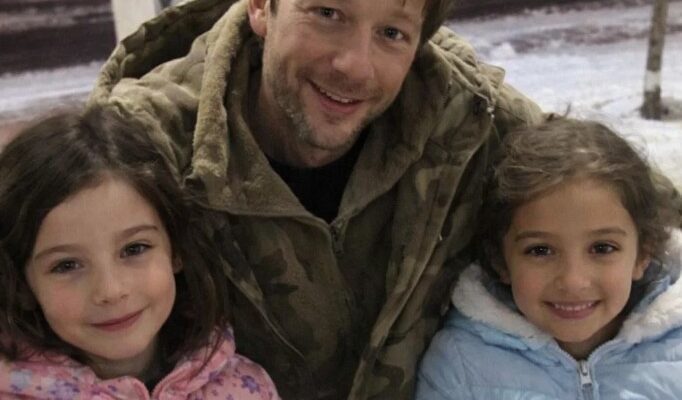
That evening it was snowing. The shopping mall’s Christmas garlands reflected on the wet asphalt in red and green lights, like tiny beating hearts. I was wiping the tables by the window when the door opened and a cold gust of wind rushed in together with three people: a man and two little girls.
The girls were about five and eight years old. They were wearing thin jackets, and their faces were red from the cold.
The father looked exhausted. His hair was wet with snow, his hands were rough and cracked from the cold. Yet he was smiling as he approached the counter.
“Good evening… one hamburger and a cola, please.”
“One?” I asked quietly.
He nodded, glancing at the girls.
“Today is my daughter’s birthday. We’ll share.”
The older girl clapped her hands.
“A birthday hamburger!” she sang, and the younger one giggled.
My heart tightened with pain. The man took a few crumpled bills out of his wallet — exactly enough for one order. His fingers trembled slightly as he handed them over.
I watched them sit by the window and saw how carefully he cut the hamburger into three parts. He did it playfully, smiling and trying to cheer the girls up.
The older one, Sophie, whispered to her sister:
“Santa never forgets good children.”
At that moment, something inside me broke.
I turned to the cook.
“Hey, Tony,” I said. “Make three hamburgers, three portions of fries and three ice creams. And three colas.”
Tony frowned.
“They only paid for one.”
“I know. The rest is on me.”
I hesitated for a moment. Mr. Peterson didn’t like it when employees got too “close” to customers. He said that’s when the line between order and chaos gets blurred. I could already imagine his displeased face if he found out. But looking at the girls shivering from the cold, I decided it was worth the risk.
Tony blinked and shrugged.

— Your money, your holiday spirit.
When I brought the tray, the girls squealed with joy as if they were seeing real magic. Their eyes widened at the sight of the ice creams, golden fries, and extra hamburgers.
“Dad!” the younger one cried. “How did you do that?”
“I… uh…” he looked at me helplessly.
I smiled as I set the tray down.
“Every birthday deserves to be celebrated.”
For a moment he was speechless. Then he cleared his throat.
“You have no idea what this means to us,” he whispered.
“It’s just dinner,” I said softly.
He shook his head.
“No. It’s much more than that.”
They ate, talked, and laughed as if the rest of the world had stopped existing. I cleaned near their table just to hear their laughter.
When they left, the girls waved to me through the window, leaving little fingerprints on the glass. Their father silently thanked me with a gesture before the snow swallowed them.
I stood there for a long time, looking at the empty booth. The air smelled of fries and hot cocoa, but for the first time it didn’t feel like work.
Back then I didn’t know their names or their story. I only knew that that evening I felt relief, and I was certain I would never see them again.
A month passed. Life went on in its calm rhythm. Christmas came and went.
The decorations were taken down, and the world sank back into gray January. I was still standing behind the counter, pouring coffee for sleepy commuters and wiping ketchup off tables that never stayed clean for long. Sometimes in the evenings I remembered that man and the two smiling girls — and the “birthday hamburger” that turned out to be something much bigger than food.
One quiet Tuesday afternoon I heard my name over the loudspeaker:
“Miss Carter, please come to the counter.”
My stomach tightened with nerves. That calm, serious voice belonged to Mr. Peterson — he used it when someone was in trouble.
I immediately thought of that evening.
“Someone filed a complaint… or the cameras recorded everything,” I thought.
My heart was pounding wildly. I put down the cloth, straightened my apron, and went to the counter. Mr. Peterson was standing there, and next to him was a man I didn’t recognize at first. He was neatly dressed, standing straight, and holding a small gift bag in his hand.
For a moment I thought he was some kind of inspector.
Then he smiled — and I understood who he was.
“Hi,” he said. “I don’t know if you remember me.”
I blushed.
“I… remember the birthday hamburger.”
He laughed quietly.
“Yes. That evening… was the hardest in my life. I had just lost my job. My wife had died two years earlier, and I was just trying to get through the holidays for my daughters.”
“I’m very sorry,” I said.
He nodded.

— That evening I was looking for a sign. I didn’t know how to go on living.
I swallowed, unable to find the words.
— You didn’t need a sign. You were doing everything you could.
He smiled faintly.
— Maybe. But you reminded me what hope looks like. And the next morning I found out that someone had taken a photo of your gesture. You’re in it, holding the tray.
— A photo? — I was surprised.
— Yes. It ended up online. A local food blogger posted it with the caption “A small holiday miracle.” Thousands of shares.
Mr. Peterson raised his eyebrows.
— Wait a second… that was you? The employee who fed a family before the holidays? The whole city is talking about it!
— What?.. — I blurted out. — I didn’t even know. I don’t have time for social media.
The father, James, smiled.
— One of my former coworkers recognized me in the photo. He called and offered me a job.
— That’s amazing — I whispered.
— And that’s not all. People started helping: clothes, toys, even help with the kids. My girls, Sophie and Maddie, are smiling again. We moved into a small apartment. Now things are good. Very good.
I felt my eyes fill with tears.
— I’m so happy for you.
He glanced at the bag in his hand.
— We wanted to come earlier, but I wanted to be sure we were really back on our feet.
— When I showed Sophie the photo — he went on — she said, “Dad, she was our holiday angel.” And Maddie even drew you. The drawing is on the fridge.
I covered my mouth with my hand, tears running down my cheeks.
— They’re so sweet…
Mr. Peterson cleared his throat softly.
— Miss Carter… that’s impressive.
James smiled at him.
— That evening she didn’t hesitate for a second. She just helped.
— I only brought the food — I tried to smile. — You did everything else.
He shook his head.
— No. You gave my daughters a memory that restored their faith in Christmas. And you gave me a reason to believe that goodness still exists.
He handed me the bag.
— A belated Merry Christmas, Miss Carter.
I stood there for a long time, holding it as if it were something fragile and sacred.
Inside was a small wooden Santa figurine — uneven, with chipped paint, but handmade.
Beneath it was an envelope with my name and a check.
The amount took my breath away — it was enough to completely pay off my student loan.
The note said:
“Sometimes angels don’t have wings. Sometimes they wear an apron and a name tag.”
I cried without being ashamed of my tears.
Mr. Peterson said quietly:
— It seems you really did become someone’s holiday miracle.
That night, walking home under the falling snow, I understood one thing:
goodness doesn’t disappear.
It comes back.
Quietly. Patiently.
When its time comes.