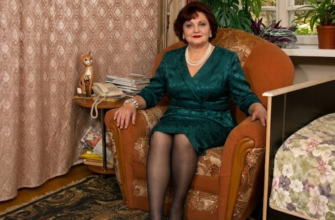

My name is Margaret Ellington. Seventy years is an age at which a person already understands a lot about life, but can still be mistaken about what matters most. All my life I was convinced that if you love your child strongly enough, if you devote yourself completely, then in return you will surely receive respect, gratitude, and warmth. I believed in this as firmly as one believes in the sunrise.
I raised Lili on my own. Her father died when she was only six years old. That day I made myself a quiet promise: my daughter would never feel abandoned, lonely, or unnecessary. I worked without days off, denied myself simple pleasures, and saved every dollar. It seemed to me that love is measured by how much you are able to give without expecting anything in return.
The years passed quickly. Lili grew up, started her own family, had her own problems and responsibilities. And then my husband died, and the house that once buzzed with life became too big and too quiet. In the evenings I caught myself listening for sounds that were no longer there: footsteps, laughter, the slam of a door. Loneliness is a strange thing. It doesn’t shout. It simply settles inside you, slowly.
When half a year ago Lili appeared at my door with two children, I did not hesitate for a moment. She was exhausted, lost, after a painful divorce and with serious financial problems.
“Mom, I have nowhere to go…” she whispered. “Please — just for a while.”
I hugged her as tightly as I did when she was a child. In that moment it felt as if life was giving me a second chance — not only to help, but to be a family again.
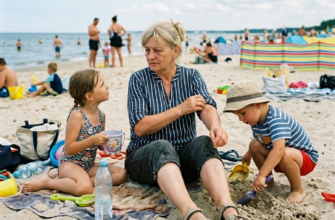
The first weeks were almost happy. The house came alive. Toys on the floor, crumbs on the table, morning noise, children’s laughter. I prepared breakfasts, walked the children to school, read bedtime stories. Lili sometimes looked at me with gratitude and said:
“Mom, I wouldn’t have managed without you.”

But gradually, something began to change. At first, almost imperceptibly. Sighs. Crooked glances. A slight irritation in her voice. Then — remarks.
“Mom, you walk too loudly.”
“Mom, you eat strangely.”
“That sweater doesn’t suit you, it makes you look older.”
I tried not to take it personally. I told myself she was tired, that it was hard for her, that it was only temporary. I bought new clothes, changed habits, tried to be almost invisible. Sometimes I caught myself holding my breath so as not to disturb anyone.
One day, working in the garden, I overheard Lili talking on the phone. She didn’t know I was close.
“I can’t live with her…” she said, irritated. “I need this house until I get back on my feet. But her… it’s hard for me to be around her.”
Her words weren’t loud, but they sank into the ground beneath my feet. I realized that I had become for her not a mother, but a burden.
With each passing day, the distance grew. Lili began limiting my contact with the grandchildren, claiming it was out of concern for them. Sometimes she said things that made me shrink inside. No shouting, no quarrels — calmly, almost every day. Until one morning, standing in the kitchen, she said something I could no longer ignore:
“Mom… your presence is hard for me. It’s difficult for me to be around you.”
There was no anger in her voice. Only coldness.
That night I sat in the dark for a long time, thinking. I realized a simple but painful truth: if I stayed and continued to endure everything, I would disappear as a person. Love that demands self-destruction is not love.
I didn’t want scandals. I didn’t want revenge. I wanted to preserve my dignity. Few knew that through years of work and saving I had built a solid financial foundation: property, savings, investments. That was my shield. Quietly, I contacted a lawyer and arranged everything. I sold the house. Closed the accounts. I explained nothing to anyone.
Before leaving, I hugged the grandchildren. They hugged me so sincerely that it took my breath away.
“Grandma will be gone for a while,” I said gently. “But she loves you very much.”

I left a short note. No reproaches. No accusations. Just the truth.
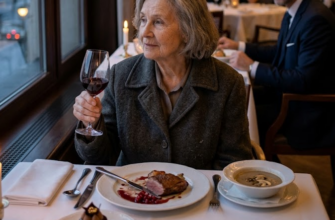
In Florida, for the first time in a long while, I felt peace. The silence no longer overwhelmed me. I walked, breathed, and learned to be myself again. I realized that taking care of myself is not a betrayal of the family.
But life turned again. My grandson Ethan ended up in the hospital. He felt guilty, thinking that Grandma had left because of him. When I found out, I didn’t hesitate for a moment. In the hospital, I saw a frightened child and understood: sometimes the words of adults hurt more deeply than we realize.
We began working with specialists, learning to talk about feelings, set boundaries, and listen to one another. Lili also examined her own behavior and began working on herself.
I returned not as a victim and not as a savior. I returned as a person who knows her own worth.
Today, our relationship is different. Not perfect. Sometimes difficult. But there is respect. My wealth stayed with me — not as punishment, but as a symbol of my security and freedom.
My story is not about escape or revenge. It’s about this:
Love should not humiliate.
Age does not take away a person’s right to respect.
Sometimes, to save a family, you must first save yourself.
I am close to my family not out of fear or guilt. I am close out of strength.
And for the first time in many years, I feel not only love but also peace.