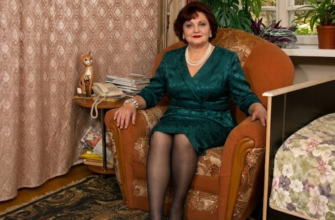
Linda stuck “Do not touch” notes on all the products I had bought myself.
At first, I thought — coincidence.
Then — a joke.
But when I opened the fridge and saw neatly attached notes on the steaks, cheese, and yogurts, I realized that in my own home, nothing belonged to me anymore.
I stood there staring, trying to understand what was happening.
First — mild surprise.
Then — anger, growing like a fire.
Each note felt like a tiny pin, but together they pierced me to my core: my home, my rules, my groceries — in someone else’s hands, under someone else’s control.
— Mark — I asked calmly, though tension was already in my voice — why does it say “do not touch” on my products?
He didn’t look up from his phone.
— It’s Linda.
At that moment, Linda walked into the kitchen with a satisfied, almost triumphant expression.
There was a confidence in her gaze that didn’t belong in someone else’s home.
In this home — the one I had built, invested effort and care into — she was now trying to impose her own rules.
That was the last straw.
I remembered everything: how Linda had been living here “temporarily,” renting out her own apartment and not paying a single cent for utilities; how she cooked only for herself and her son, leaving the stove empty; how she rearranged my things, turned off the washing machine mid-cycle, hid the water filter.
It was a demonstration of power — in small steps, but consistent, like drops of water that slowly carve through stone.

At that moment, I understood: enough. Enough of being polite and patient.
That very night, I removed all the food from the house. The fridge was left empty. The next day, I blocked the cards Linda used for shopping and stopped paying the utilities she had previously been using without contributing. I didn’t do it out of anger. I did it to show that there is one set of rules in my home — and I am the one in charge.
Days passed, and the atmosphere in the house began to change. The apartment was left without its usual comforts, and for the first time, Linda experienced the consequences of her actions. She tried to smile, offered tea, pretended everything was fine, but beneath it all, the tension she had once created for me could be felt.
When the heating was turned off, it became clear: her usual confidence was gone. For the first time, Linda felt that control is not permanent. For the first time, she understood that someone else’s home is not a place to command.
And one evening, I came home and saw a table set. Linda stood by the stove and quietly said:
— I’m sorry. I understand that I behaved improperly.
I looked at her calmly and said:

— I forgive you. But on one condition.
She blinked.
— In this house, I am the one in charge. You are a guest. When I come home from work, dinner must be ready. The house must always be clean. No raised voices. No barging into my rooms. If even one of these rules is broken, the consequences will be firm.
She remained silent and nodded. For the first time, awareness and respect appeared in her eyes.
I sat down, took a deep breath, and felt it: this was my victory — not over her, but over myself. I stopped tolerating injustice, stopped fearing conflict, and stopped allowing my boundaries to be violated. In that moment, I understood that true strength lies not in punishment or harshness, but in calm, steady self-confidence.
From that day on, the house became mine again. And no one dared to break my rules anymore. I felt that I could breathe freely, that every corner of my home belonged to me — and that feeling is beyond words.
And most importantly, I understood this: respect must be earned, and boundaries must be protected. Sometimes words are not enough. Sometimes, you have to act.