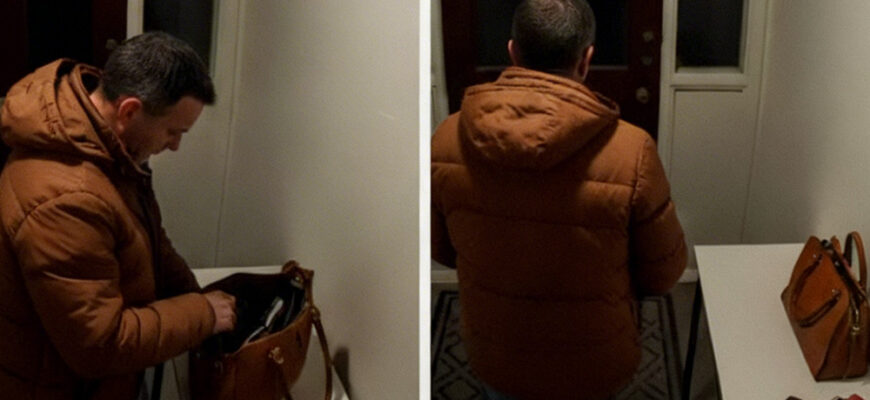

Money had been slipping out of my wallet for weeks. I was convinced one of my teenagers was pocketing it, so I installed a hidden camera to catch whoever was responsible. When I checked the footage, it wasn’t my kids on the screen. It was my husband. And what happened after that made the missing cash seem trivial.
My name is Charlotte, and not long ago, I was certain my children were stealing from me.
At first, it was minor. A $5 bill I clearly remembered sliding into my wallet — gone. Then $40. Then $100.
I tried to convince myself I’d miscounted or misplaced it. Maybe I was distracted. But I’ve never been careless with money. Not once.
Still, the numbers didn’t add up. Then one Tuesday, $300 disappeared in a single night.
At dinner that evening, I studied my children’s faces like someone searching for cracks in glass. My son kept staring down at his plate. My daughter shrugged too quickly when I mentioned it. My youngest looked at me like I’d switched languages mid-sentence.
“Kids,” I said, carefully placing my fork down, “if you ever need money, you ask Dad or me. You don’t take it. Stealing from family isn’t okay. Not in this house, not ever.”
They glanced at one another, then back at me, expressions completely blank.
But blank expressions don’t always equal innocence. And I wasn’t ready to dismiss the possibility.
“Mom, we didn’t take anything,” my daughter insisted, tucking her hair behind her ear.
“I haven’t touched your wallet,” my son added, a hint of defensiveness in his voice as he finally met my eyes.
My husband, Peter, lowered his fork. “They know you won’t really discipline them,” he said casually. “That’s the whole problem. They’re testing you because you let them.”
I looked across the table at him. He spoke with such confidence, as though the verdict had already been decided. And I believed him. God help me, I believed every word.
The following morning, another $300 had vanished. I was done doubting myself. I installed a discreet camera in the hallway, aimed perfectly at my purse. I left my wallet exactly as usual.
At sunrise, I opened the security footage on my laptop. Instead of my kids, it was Peter taking the money. He quietly took the cash and walked out the front door at 2:07 a.m., completely unnoticed.
I replayed the footage again and again. My mind spiraled into dark thoughts — gambling, secret phone, motel rooms. I checked our accounts: nothing suspicious. He was being extremely careful.
That night, I followed him. He drove to a small, overcrowded dog shelter, carrying bags of food, blankets, and cash. He quietly helped care for the puppies that had been abandoned.
Peter had taken money secretly not for gambling or deceit, but to support the shelter without causing problems for anyone.
The next morning, he confessed to the children and me. He apologized for letting us suspect the kids. Together, we set a new rule: no more secret spending, no more unilateral decisions.
A few days later, we brought the litter home. Seeing Peter’s dedication and the joy of our kids with the puppies healed the tension. Peter returned the money, added a little extra, and promised no more secrets.
From that day on, trust was rebuilt. Even good intentions, if hidden, can damage relationships — but honesty and transparency repaired ours.