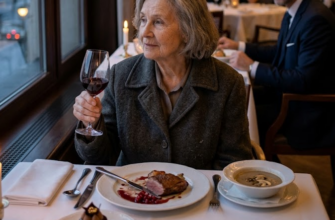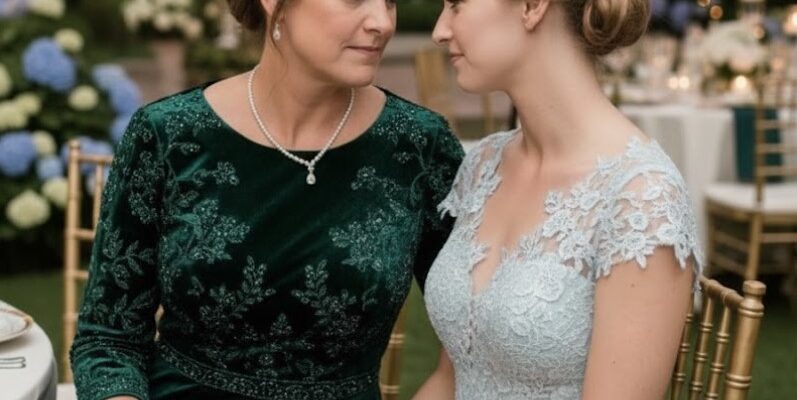

My mother sat across from me at dinner, her smile perfect, like it had been cut out of a glossy magazine, but there was something venomous hidden in it, like a thin poison beneath a sweet coating. “We invited you only out of pity,” she said almost in a whisper, but every sound cut deeper than one might expect. “Don’t stay long.”
I took a deep breath, slowly raised my glass, took a sip, and smiled. It wasn’t a smile of fear. Nor of weakness. It was the kind of smile that says: “I see everything, but I am calm.” And I left, quietly, without looking back, but every step echoed inside me like a drum, announcing the beginning of a new life.
On the streets of Chicago, the frost was merciless. Snow gusts rose from the sidewalks and struck my face, the icy wind stabbing my eyes. I walked slowly; every step left a deep mark in the frozen ground, and every breath escaped in a cloud of steam. But inside me there was no trembling or fear — there was a cold clarity, like a blade cutting through illusions and lies. They thought my silence was weakness. They were wrong.
The evening at the restaurant was a spectacle, carefully staged. Crystal glasses clinked like small, unsettling bells. Laughter floated above the snow-white tablecloths, mixing with the scent of my mother’s expensive perfume that hung in the air like an alarm signal. Austin, my brother, laughed loudly, proudly raising his glass, as if humiliation were part of the celebration. My aunt added sharp jokes, my uncle nodded with the expression of a spectator at a play. And I understood — I wasn’t a guest. I was the entertainment.
I didn’t cry. I didn’t argue. I didn’t beg for a place at a table that loved me only when I stayed silent. I simply smiled, took a sip, and walked out.

A week later, I was holding in my hands the documents that had been hidden from me for years. The cabin in the forest, which they had presented as a “family treasure,” was my property. Not “family,” not “shared,” but strictly mine. Every detail, every signature, every stamp — everything was in my name. And that was only the beginning. All the accounts, credit cards, personal and shared debts — they were also in my name. Every payment order, every amount — now they were visible, like proof that they could no longer hide their schemes.
The phone rang constantly. My mother screamed, “The cabin is gone! Strangers with a court order are at the door!” My brother shouted, “You destroyed my credit rating! How could you!” Letters from the banks appeared on the screen — cold, precise, numbers merciless and impartial. Purchases, loans, transactions I didn’t even know about — everything was now in my name, and they could no longer hide anything.
I sat there holding those documents, and for the first time I felt strength: not anger, not revenge, but control. Control over my own life, over the future they had tried to steal from me. Control over myself.
When I first met with the lawyer, his gaze was precise and cold, like a blade. “This is betrayal,” he said. “Not just fraud. It is betrayal by those closest to you.” The words cut, but they were honest. It was the truth that sets you free.

My mother tried to justify her actions, explaining them as “survival” and concern for Austin: “We were just trying to survive. So that Austin wouldn’t lose his chance.” I listened, but I did not respond. I knew that no concern gives someone the right to shift their mistakes onto someone else’s name. Onto the name of a child.
Weeks passed. Accounts were reviewed, operations were frozen, credit lines were closed. I was reclaiming everything: accounts only in my name, my credit history being cleaned, financial freedom returning. Every document, every number, every stamp — now they were my weapon and my protection.
I was learning to trust myself. I was learning to listen to my own thoughts without my parents’ whispers, without pressure. I was learning to build a reality free from manipulation. No one could say anymore that I was weak. No one could use me as a bank, as a warehouse for debts and mistakes.
With each passing day I felt the fear disappear. The memories that laughter at my mistakes had been normal began to fade. The desire to beg for their approval also disappeared.
The following year I sat with friends who valued me for who I am, not for the role of a “family joke.” I raised my glass, and the sound of crystal glasses no longer sounded alarming. It sounded like a new dawn, like the beginning of a life that I write myself.
I stopped being the “family joke.” I became the author of my life. My name belonged to me again. And in that new year, among laughter, warmth, and true friendship, for the first time I felt real freedom — the freedom to be myself, to choose, to manage my life, and to live without someone else’s control.