
The morning began just like hundreds of others. Quiet, peaceful, almost lazy. I was going about my usual routine, expecting nothing unusual from the day, until the phone shattered that illusion of calm.
My daughter’s name appeared on the screen.
I immediately felt that something was wrong. Not because of her words or what she said—but even before she began speaking. A mother has a special instinct when she hears her child’s voice and simply knows: something isn’t right.
“Mom…” her voice trembled. “I really need your help.”
She spoke quickly, as if she were afraid I would interrupt her, as if she had very little time.
“I’ve been sent on an urgent business trip. Everything happened so suddenly. Could you take care of Tommy for two weeks?”
I didn’t ask a single question.
Tommy—my grandson, my little world. Whenever he was with me, life became lighter, brighter, warmer. His laughter filled the house as though the sun had returned. I couldn’t and didn’t want to refuse.
“Of course. Bring him over,” I said calmly.
There was a brief silence on the other end.
Too long for an ordinary conversation.
“Thank you…” she finally whispered, letting out a shaky breath as though she was holding back tears—or pain.
At the time, I didn’t think much of it.
If only I had known…
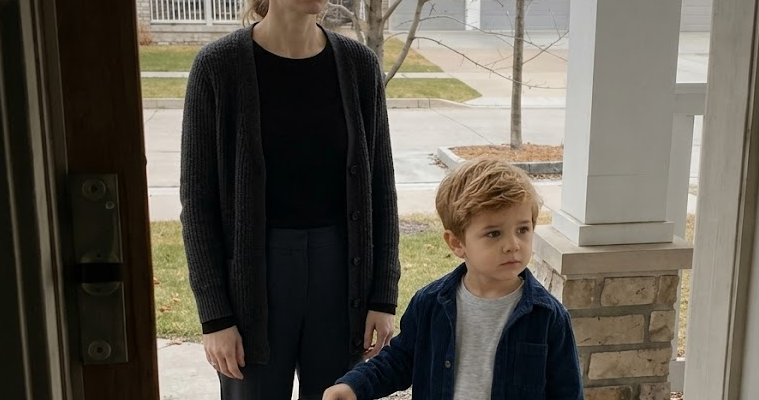
A few hours later, she arrived.
I saw her through the window as she slowly stepped out of the car, carrying Tommy in her arms, looking as though she was gathering the last of her strength. She didn’t just look tired—she looked completely exhausted, as if she hadn’t slept for many nights.
Tommy waved at me happily, laughing, unaware of everything, hugging his favorite toy tightly.
But she…
She barely smiled.
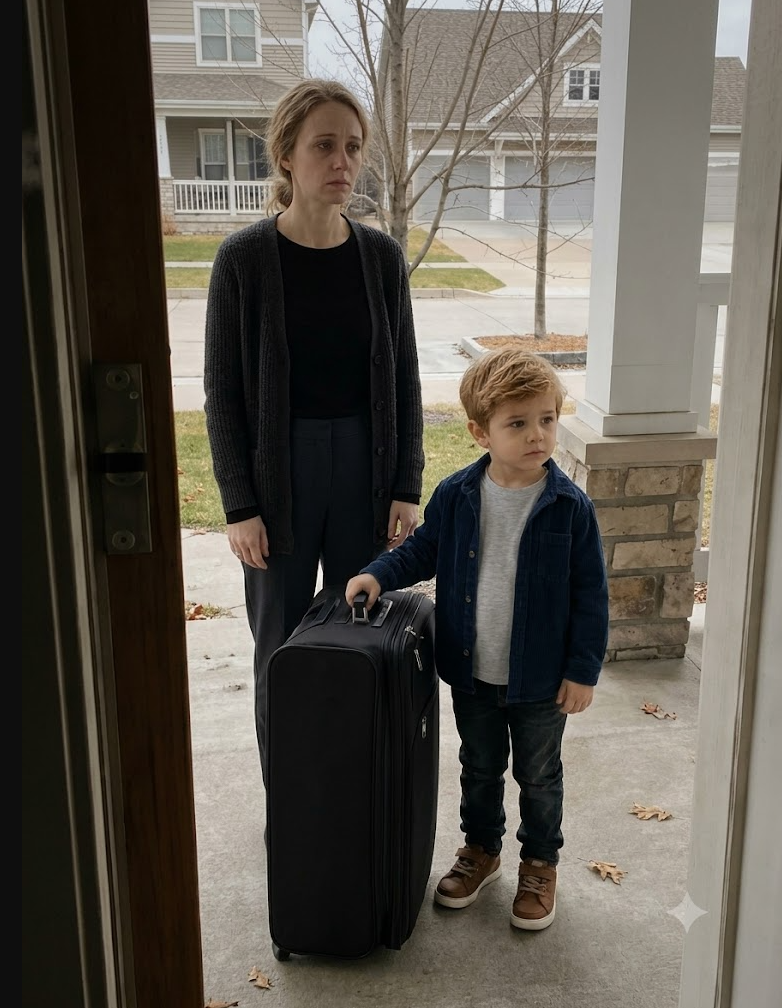
She was carrying a large suitcase.
Far too large for a two-week stay.
She carried it into the house herself, placed it against the wall, and stared at it for a moment with a look I couldn’t understand at the time.
“I’m going to miss my flight,” she said too quickly.
We hugged.
But it was a different kind of hug.
Short.
Tense.
As if she was afraid to stay even one second longer.
Then she left.
The door closed.
Her car drove away.
The house became quiet.
Too quiet.
Tommy was already running through the rooms, laughing, throwing his toys around, delighted to be staying with Grandma. And I watched him, trying to convince myself that everything was fine.
But deep inside, uneasiness had already begun to grow.
Small, almost invisible, yet impossible to ignore.
That evening, something happened that changed everything.
Tommy spilled his juice and got his clothes dirty, so I went to the suitcase my daughter had left behind to get him a clean outfit.
At first, everything seemed perfectly logical. Pajamas, T-shirts, diapers. Everything was neatly packed, as if she had carefully planned it all.
But the deeper I looked into the suitcase, the stronger the feeling became that this wasn’t an ordinary trip.
I found winter clothes.
Heavy jackets.
Wool sweaters.
Hats, scarves, and gloves.
Then spring clothes.
And then summer outfits.
It was as if she had packed not for two weeks, but for months. For changing seasons. For a long absence.
I stopped.
I ran my hand over the clothes once again.
No.
That couldn’t be right.
But the worst was still ahead.
There was a separate bag filled with medicine.
An inhaler.
Allergy medication.
Cough syrup.
Fever medicine.
Everything was carefully labeled and neatly organized.
Too carefully.
Too thoughtfully.
This isn’t how you pack for a short trip.
This is how you pack a child when you’re not sure who will be taking care of them—or for how long.
My breath caught in my throat.
I kept searching until I found an envelope.
It was tucked between the clothes.
My name was written on it in her handwriting.
I opened it.
And froze.
Inside was a large amount of money.
So much that it took my breath away.
It wasn’t money for a trip.
It was money for a long future.
In case she couldn’t come back.
And at that very moment, something inside me broke.
My hands began to shake.
I kept staring at the suitcase, the clothes, and the envelope.
The realization didn’t come all at once—it settled over me slowly, heavily, like icy water.
It wasn’t “two weeks.”
It was a goodbye disguised as an ordinary trip.
I called her immediately.
No answer.
I called again.
Silence.
I started sending messages.
“Call me.”
“Where are you?”
“Please answer.”
But her phone remained silent.
On the first day, I still tried to explain it logically. A flight. Work. She was busy.
By the second day, that explanation was becoming harder to believe.
By the third day, I was waiting for her call as if it were my only hope.
But it never came.
A week passed.
Then two.
Every time my phone vibrated, my heart stopped—only to sink a moment later when I realized it wasn’t her number.
I stopped sleeping properly.
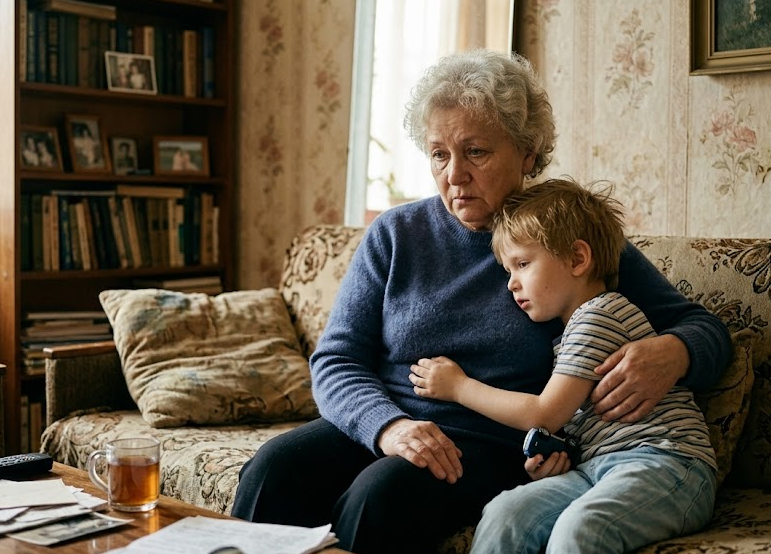
Night after night, I sat alone in the darkness, listening to the silence of the house, replaying our last conversation over and over.
Searching for a hidden meaning.
Any clue at all.
But I found nothing.
Only her voice.
And that strange, inexplicable sense of urgency.
In the third week, just as I had almost accepted that I didn’t understand what was happening, my phone rang.
A video call.
Her name.
I froze.
For several seconds, I simply stared at the screen, afraid to answer.
Finally, I tapped the button.
And I saw her.
She was pale. Thin. Completely different from the woman I knew. The moment our eyes met, she burst into tears.
At first, I couldn’t understand what she was saying.
Her words came out broken, drowned by sobs.
Then the pieces began to fall into place.
An illness.
A diagnosis she had been hiding from me for months.
Urgent treatment in another state.
Her one and only chance to recover.
And uncertainty.
She didn’t know whether she would survive.
She didn’t know whether she would come back.
That’s why she packed Tommy’s things as though she were preparing for every possible outcome.
She didn’t want to tell me.
She didn’t want me to see her weakness.
She didn’t want a goodbye.
“I couldn’t…” she kept repeating through tears. “I just couldn’t tell you…”
I listened as it felt like everything inside me was falling apart.
“You should have told me…” was all I managed to say.
But she shook her head.
“I was afraid you’d all start saying goodbye to me… and I wasn’t ready for that.”
Then came weeks of treatment.
Long.
Painful.
Filled with waiting.
And once again, silence.
Until one day, a brief phone call came.
And just a few words changed everything:
The treatment worked.
Some time later, she came home.
When Tommy saw her standing in the doorway, he cried out with joy and ran straight into her arms, as if he feared she might disappear again.
She dropped to her knees, hugged him tightly, and wept.
I stood beside them, watching, and realized one simple truth:
The heaviest thing she had left on my doorstep wasn’t that suitcase.
It was her fear.
And her love.