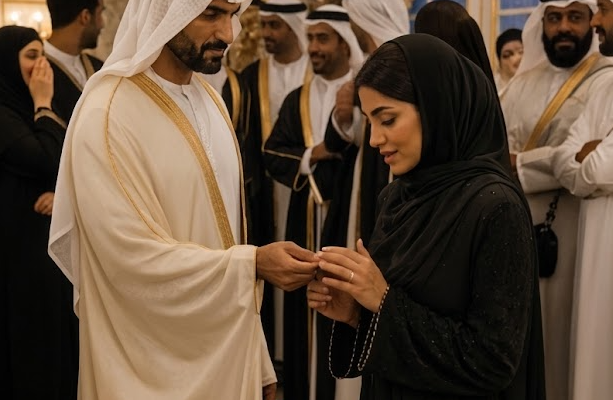
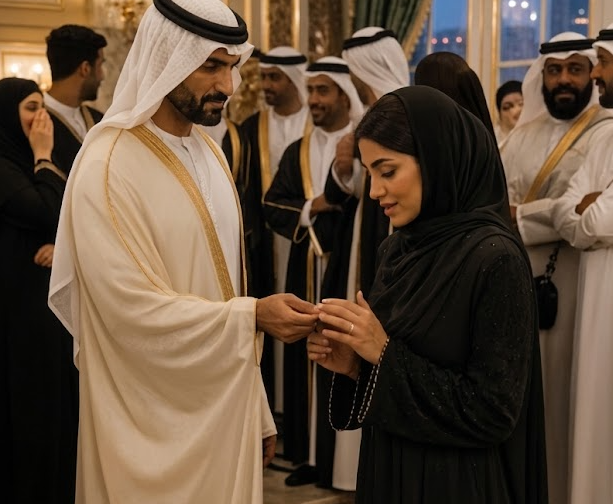
The sheikh placed a gold bank card in front of his new wife as if it were not a luxury, but a test that could not be refused. There was nearly one million dollars in the account. The condition was delivered calmly, almost coldly: spend every last dollar within one month. If even one dollar remained, she would leave the palace not only as a divorced woman, but also humiliated, like those who had “failed.”
He looked at her as if he already knew the outcome. Then he added the sentence he told every wife:
“Money does not make a person more beautiful—it reveals who they truly are.”
The first wife believed the wisest choice was to turn the money into status. She invested everything in a seaside villa with marble, glass, and a breathtaking view of the endless ocean. She thought it would impress him—a beautiful gesture that could not be called selfish. But when the sheikh saw the documents, he did not even become angry. He simply pushed the folder aside and said:
“You bought yourself a future, but not a place in my life.”
The next day, her name disappeared from the palace as quietly as if she had never been there.
The second wife chose the opposite path. She decided that the heart mattered more than wealth and donated almost the entire million dollars to hospitals, shelters, and charitable foundations. She believed compassion was the answer no one could reject.
But the sheikh did not even change his expression. He only said:
“You gave away something that did not belong to you as if you had already won. That, too, is a form of pride.”
A few hours later, her room was empty.
After that, no one in the palace whispered about “the test” anymore. They called it a sentence. Because no one truly passed the sheikh’s challenge—they simply endured it until the end.
When the third wife arrived, even the servants looked at her with the cautious sympathy reserved for something inevitable.
The wedding guests had not yet left when the sheikh quietly placed the card on the table.
“One month. The account must be at zero.”
No one expected her to say anything. But she looked at the card, then at him—not as a husband, but as a system that needed to be understood.
“If I change the form of the capital, will that count as spending it?” she asked calmly.
A quiet murmur spread through the room. It was the first time someone had not asked, “What should I buy?” but instead, “How does it work?”
The sheikh narrowed his eyes.
“I don’t care about the form. Only the result.”
And with those words, without realizing it, he opened the door.
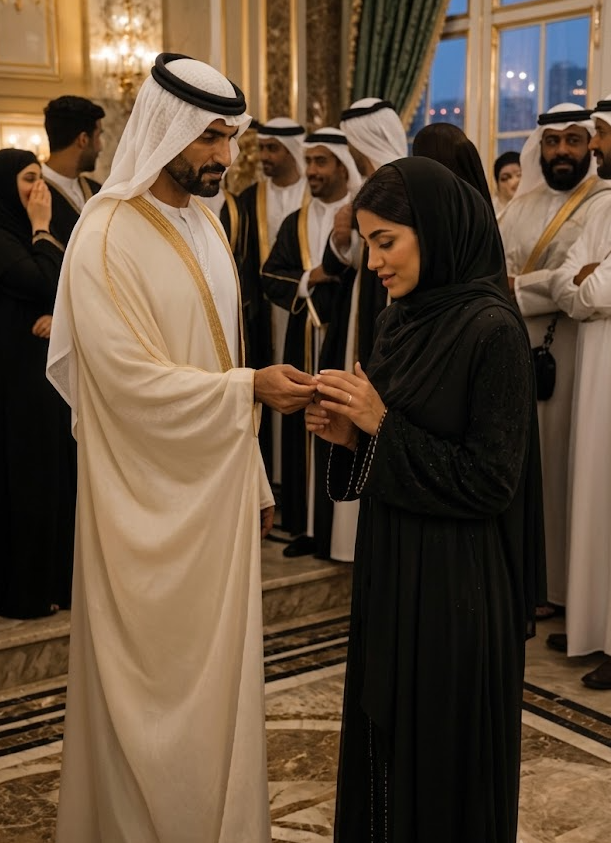
She nodded as if she had received not a threat, but a technical assignment.
During the following month, she hardly lived like “the sheikh’s wife.” She was seen not among jewelry and designer dresses, but among people who rarely entered the palace: lawyers carrying gray briefcases, financial analysts with spreadsheets, and structural architects who spoke quietly and quickly.
The servants tried to guess what she was doing. Some said she was building her own palace. Others believed she was simply looking for a way to spend the money without giving anyone a reason to criticize her. But as the deadline approached, a strange impression grew stronger: she wasn’t spending the money—she was restructuring it.
Exactly one month later, the sheikh opened his banking app.
Balance: $0.
For the first time in a long while, he allowed himself a brief smile. At least this game had ended “the right way.”
But the smile disappeared when she entered his office—not carrying gifts, shopping bags, or a report of expenses. Instead, she held a folder that concerned not the spending of the money, but the very structure of his power.
“You wanted the balance to be zero,” she said.
Then she placed the documents on his desk.
He began to read.
With every page, his confidence that he controlled everything began to crack. She had not merely “spent” the money.
She had used it to dismantle and rebuild his own system.
The hidden debts of his companies, buried behind chains of intermediaries, had been bought out and settled. Unprofitable subsidiaries had not been shut down—they had been reorganized and rescued from the spiral of debt. Assets that he himself had secretly undervalued to hide losses had been consolidated once again into a single controlled structure. Even the shares he had secretly sold through proxy accounts had been repurchased at market lows and returned to the company’s ownership structure.
Every dollar he had considered “wasted” had actually been used to repair his own empire.
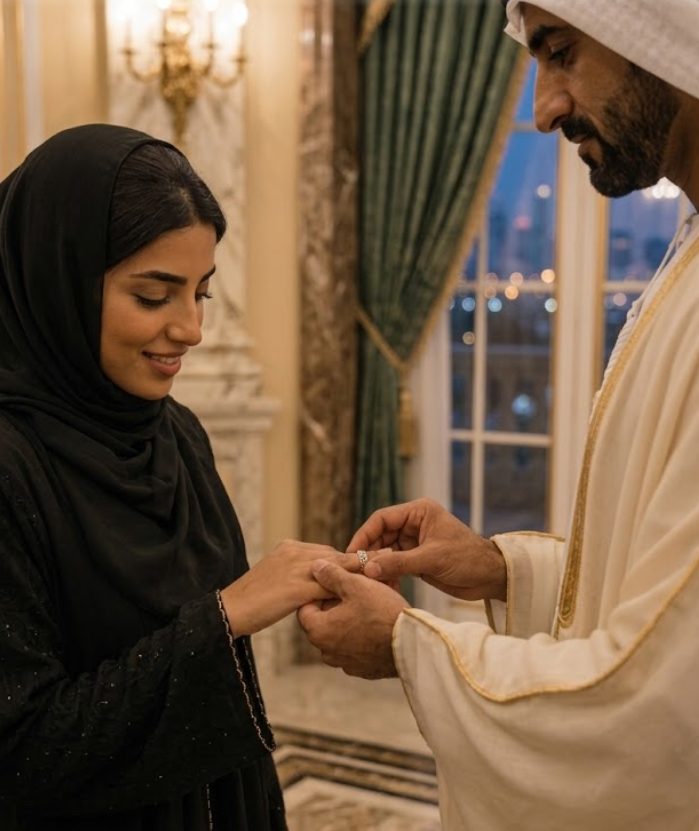
It wasn’t spending.
It was intervention.
Slowly, he raised his eyes.
“Who are you?” he asked, more quietly than he had intended.
She didn’t smile immediately. Instead, she let out a tired breath, like someone who had worked with chaos for far too long.
“For the past ten years, I’ve been working with companies that everyone called hopeless. Yours isn’t hopeless. It simply hasn’t been managed seriously.”
The silence became thick, almost heavy.
“I gave you a test,” he said.
For the first time, it sounded less like authority and more like doubt.
She tilted her head slightly.
“You gave me a flawed system and asked me to make the balance zero. I simply took your instructions literally.”
He closed the folder.
For the first time in years, he couldn’t think of anything else to say—not as a sheikh, nor as a man who had always won.
The very next day, the financial reports revealed something he had never expected: after the restructuring, debt repayment, and restoration of assets, his company was worth three times more than it had been before the “test.”
And then it became clear:
Sometimes the most dangerous part of a test is not who loses.
It’s the person who understands the rules too well.