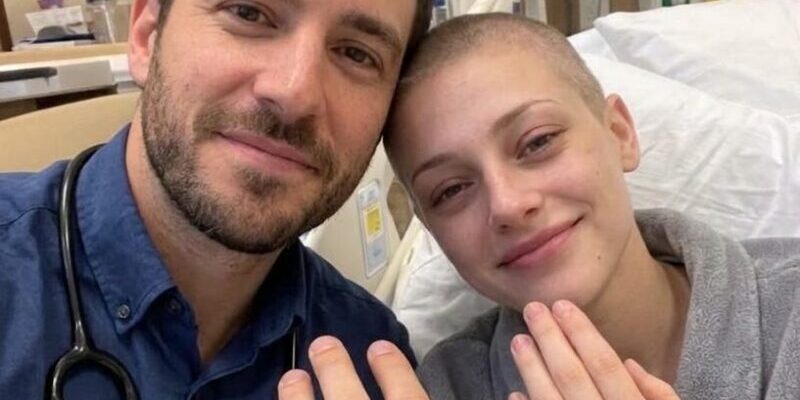

I thought I was doing something noble when I agreed to marry a patient who had very little time left to live. But after the funeral, her sister handed me a box with my name on it. I hadn’t even finished reading the letter inside when I was forced to face an accusation that could destroy my career.
I was thirty years old. I had completed medical school, wore a white coat, and carried student debt that still made my stomach tighten whenever I thought about it.
I had always dreamed of becoming a doctor.
My parents couldn’t afford to pay for my education, so I studied throughout the week and worked on weekends. When I met Alicia, I thought the hardest part of my life was already behind me.
She was eighteen and the most cheerful person in the oncology ward.
Even when the treatment completely drained her strength, she could still make a nurse laugh while she was changing the bed sheets.
“Dr. Lucas, you know smiling doesn’t cost anything, right?”
I tried to keep a serious expression, but she wouldn’t give up until she got what she wanted.
One day, she noticed me staring at a reminder for my student loan payment.
“Bad news?”
“No. I’m just still paying off my student debt.”
She wrinkled her nose.
“Then they should at least refund you some of the money for that handwriting of yours!”
I laughed, never suspecting that I would soon have nothing to laugh about.
The treatment had stopped working.
On Tuesday, the head of the department informed Alicia’s family that she probably had about three days left to live.
After that conversation, I stopped outside her room. There was nothing more I could offer her, and I was afraid I would see hope in her eyes that I wouldn’t be able to fulfill.
But Alicia was the one who asked me to sit down.
“I have one last wish.”
“What is it?”
“I want to marry you.”
At first, I thought she was joking. She gave me a faint smile.
“Come on! I don’t want to go to heaven as an unmarried woman.”
“Alicia, I’m your attending physician.”
“You’re not a man I would marry for love, Doctor,” she replied. “But I have my reasons.”
“Why me, specifically?”
She smiled.
“Because you know how to listen. Even when you think my wishes are silly. I want to do something big at least once, something I get to decide for myself.”
“It’s not that simple.”
“Why should my wish matter less just because I have less time left?”
I couldn’t find a way to refuse her without watching her smile disappear.
And yet, I should have kept saying no.
Instead, I imagined that I could give her at least one happy day after weeks of bad news.
I arranged for another doctor to take over her treatment. However, I didn’t ask Dr. Patel, my mentor, whether I was doing the right thing.
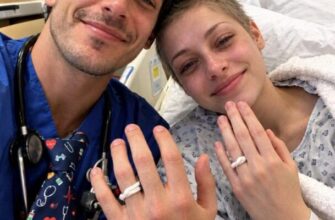
The next day, we got married in her hospital room.
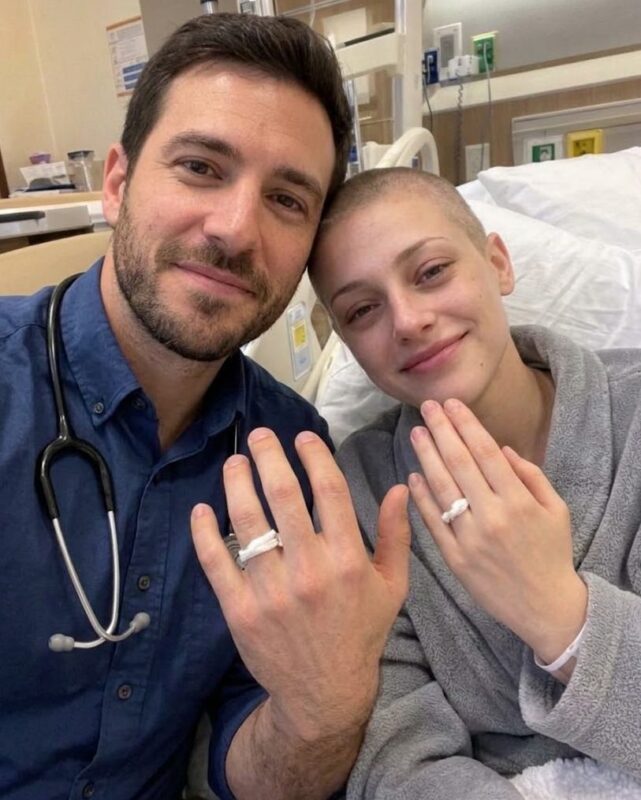
Instead of a stethoscope, I wore a tie. A nurse braided two rings from thin strips of clean bandage, and Alicia wore a white scarf that looked like a veil.
Her sister, Nora, brought flowers.
Alicia smiled throughout the entire ceremony. Nora adjusted her scarf twice and then squeezed my hand.
“Thank you. You gave her something beautiful. Truly.”
I left the room convinced that I had done something good for Alicia.
Two days later, she died.
At the funeral, I stood behind the people who had loved her all her life, unsure of where I belonged among them.
After the ceremony, Nora hurried over to me carrying a small, sealed box.
“She asked me to give this to you only after her death.”
My name was written on the lid in Alicia’s handwriting.
I opened the box beside my car. The first thing I found inside was a letter from a lawyer.
Alicia had left me her share of her grandmother’s inheritance.
The amount would have been enough to pay off my entire student loan.
I checked the figures and my name several times, convincing myself that there must have been some kind of mistake.
Beneath the letter lay a folded sheet of paper.
Nora glanced over my shoulder. Her face turned red.
“What is this supposed to mean?!” she shouted.
“What happened?”
She pointed at the letter.
“She left you money from her grandmother’s estate?”
“I knew nothing about this. I swear, I had no idea!”
“Then why did you marry her?”
“It wasn’t a romantic marriage. You knew that.”
“Yes, I knew!” Her voice broke. “But now I see what you got in return.”
She covered her mouth with her hand.
“No, listen, it’s not like that…”
Nora stepped back and pointed her finger at me.
“I’m reporting this to the hospital.”
She walked away before I could respond.
I remained beside my car with the box open.
If the hospital administration decided that I had married a patient for her money, I could lose my job.
I wanted to run after Nora and explain everything. At the same time, I wanted to look at the inheritance amount one more time.
In the end, I closed the box without doing either.
That evening, I opened a student loan repayment calculator and entered the amount.
The debt disappeared.
I stared at the zero on the screen and imagined finally taking my parents out to a restaurant without calculating how much money I would have left after dinner.
Then I closed my laptop.
I should have rejected the inheritance while I could still force myself to do the right thing.
The next morning, I called the lawyer.
“I want to renounce the inheritance.”
“Are you sure?”
I looked at the reminder for my loan payment.
If I gave up the money, I would be paying off my debt for many more years. But now my job was also at risk, and I should at least try to save it.
“Yes. Please send me the documents I need to sign.”
Before driving to the hospital, I called Nora.
“I’ve given up the money. You don’t have to file a complaint.”
“The fact that you’re giving it up now proves nothing. You got caught.”
“I didn’t know about the inheritance.”
“Grandma talked about that money as if our entire future depended on it. I buried my sister on Saturday, and now I find a letter with your name next to an inheritance.”
I couldn’t convince her that I was innocent.
“I’m sorry,” I said.
She hung up.
When I arrived at the hospital, Dr. Patel was already waiting for me outside the ward.
“Your patients have been transferred to other doctors. I need your access badge.”
“Why?”
“You married an eighteen-year-old patient, and now it has come to light that you stand to receive her money.”
Her jaw tightened.
“What on earth were you thinking, Lucas?”
“But I transferred her treatment to another doctor…”
“Marrying a patient is a violation of professional boundaries. Transferring her care to another doctor doesn’t change what happened.”
“Am I going to lose my job?”
“That will be determined by the investigation.”
She held out her hand.
I removed my access badge from my coat and handed it to her.
At home, I finally unfolded Alicia’s note.
“Grandma left each of us money for education and a new life.
You told me that you paid for your studies yourself. Everyone talks about how lucky you were to become a doctor, but I don’t think they understand how much it cost you.
Nora will keep her half. I can’t use my share to live the life Grandma planned for me. Maybe this money will help you recover at least some of what you had to give up.
The wedding was something I wanted for myself. And this is something I want to give you. You deserve a good life, Doctor.”
Beside her name, she had drawn a little smiling face.
I felt that she had understood me in a way few people ever could.
But that didn’t mean I had done the right thing.
That evening, my parents invited me to dinner.
Mom served rice onto my plate, and for a few minutes, I allowed myself simply to enjoy having someone take care of me.
“Any news?” Dad asked.
“Not yet.”
Mom put down her fork.
“Who was that girl, Lucas? Why did you risk everything for her?”
I told them about Alicia. But when I mentioned her age, their smiles disappeared.
“Eighteen?!” Dad exclaimed. “Why did you need to marry a patient?”
Mom covered her mouth with both hands.
I explained that the doctors had given her little hope, that she had asked me to marry her, and that we hadn’t been romantically involved.
Dad waited until I finished.
“But why did you agree?”
“Don’t make it sound bad. It wasn’t like that.”
“That doesn’t answer the question,” Mom said quietly. “I’m asking why you married her.”
I lowered my eyes to my plate.
“Because there was nothing else I could do for her.”
“Oh, Lucas,” Mom said gently. “But that doesn’t mean marriage was the right decision.”
I wanted Dad to disagree with her.
Instead, he reached for his glass of water.
They knew me. Neither of them believed I had married her for money.
But neither of them thought that made my actions justifiable, either.
Finally, Dad asked, “Do you need money until all this is over?”
“No.”
“Lucas.”
“Maybe. I’ll tell you if I need it.”
My parents hugged me at the door. I stayed in their arms a little longer than usual, relieved that their love for me hadn’t changed.
At home, I sat down to write the explanation the hospital had requested.
At first, I wrote that Alicia had insisted on the wedding herself, but then I stopped.
She had asked. I had agreed.
I corrected the sentence.
For most of the night, I tried to explain my decision without hiding behind her wish.
I sent the explanation before I could soften its wording again.
Later that week, Nora posted a photograph of our wedding online.
In the picture, I stood beside Alicia wearing a tie, while a white scarf rested on her head.
“This doctor exploited my dying sister to get an inheritance,” she wrote.
I called her with a trembling hand.
“Why are you doing this? The investigation isn’t over yet.”
“Because I think the hospital will protect you. They’ll sweep everything under the rug and pretend nothing happened.”
“I gave up the money.”
“Only after you got caught.”
She hung up.
I opened the comments and watched people share the photograph.
I started writing an explanation, hoping that people would finally understand me.
Then I opened Alicia’s letter again.
I almost took a photograph of it to attach to my response.
She had trusted me with her thoughts, and now I was searching her private words for evidence that might make strangers stop judging me.
The letter couldn’t prove that I had known about the inheritance before the wedding.
I put my phone down and posted nothing.
Some time later, a relative called my parents.
A former professor who had once written me a letter of recommendation asked whether the accusations were true.
I typed a response, deleted it, and started again.
Then Dad called.
“I could use some help at the shop. If you want to earn a little money.”
“Dad, I’m a doctor.”
“I know who you are. I’m offering you a way to pay your bills. Nothing more.”
I looked at the pile of bills beside my laptop.
“When should I come?”
“Eight o’clock. I’ll show you what needs doing.”
On Monday, I was arranging merchandise behind the counter at my father’s shop.
When a customer asked if I was the owner’s son, I braced myself for a question about the photograph.
But she only wanted to know where the light bulbs were.
I was so relieved that I nearly laughed.
At lunchtime, Dad handed me a sandwich and left me alone with my phone.
I had already signed the documents renouncing the inheritance and sent the hospital my explanation about the wedding.
Still, Nora’s public accusation continued to spread.
People shared her post without knowing that she herself had helped organize the ceremony. She also didn’t tell them that she couldn’t prove I had been counting on the money before the wedding.
I called Nora and asked to meet.
She said she wanted to collect Alicia’s belongings—the white scarf and the bandage ring that had remained in the box after the funeral.
“I’ll bring them. But I need you to tell the hospital what you actually saw.”
“I’m not withdrawing my complaint.”
“I’m not asking you to.”
We arranged to meet on Saturday.
I prepared Alicia’s belongings, a copy of the lawyer’s letter, and the documents confirming that I had renounced the inheritance.
Nora invited me into the kitchen. I placed the box between us and opened it so she could see the scarf and the ring.
She ran her hand over the white fabric, then closed the lid.
“I’m not going to apologize,” she said. “I had every reason to file a complaint.”
“You did.”
She placed her hand on the box.
“I was her doctor. I was responsible for my decision. The fact that she asked me doesn’t change that.”
“So you admit you exploited her.”
“You’re right.”
My face grew hot.
I still couldn’t honestly defend my decision to marry Alicia.
“I should have refused. But I didn’t marry her for money.”
“You came to her room every day.”
“Yes. You can say that. You can also say that you knew about the wedding and helped us during the ceremony.”
She withdrew her hand from the box.
“The inheritance changed everything.”
“It raised questions. I understand why.”
I slid the documents toward her.
She read the lawyer’s letter, then the renunciation statement, and compared the dates.
“This doesn’t prove you didn’t know about the money beforehand.”
“No. But it shows when I officially learned about the inheritance and what I did afterward.”
“You want me to say you’re innocent?”
“I want you to tell them what you saw. You knew we weren’t romantically involved. You helped with the ceremony. But you don’t know whether I was counting on the money.”
Nora handed the documents back to me.
“People will think I took your side.”
“In your statement, you can describe every doubt you still have.”
“Now leave,” she said, her voice trembling. “I thought I was giving her something good. But you…”
I looked at the box beneath her hand and remembered how gently she had adjusted Alicia’s scarf.
For a moment, I wanted to say that we had both done the right thing. That would have made it easier to ask for her help.
But I had spent too many nights trying to convince myself of the same thing.
“I thought I was helping her, too,” I said. “But I still made a decision I shouldn’t have made.”
Nora wiped her face with her sleeve.
“And if they let you return to work? What will you do the next time someone asks you to do something you shouldn’t agree to?”
I was about to promise that I would never make such a mistake again.
Another promise I wanted to make simply to make her feel better.
“Next time, I’ll ask for advice before making a decision.”
Nora picked up her phone, but immediately put it back down.
“What you did was wrong. And I’m not withdrawing the complaint.”
“I understand.”
She opened an email to the person conducting the investigation and began writing.
She could still send that message, and I could still lose my job.
In her statement, Nora described how she had helped organize the wedding, knowing that there were no romantic feelings between us. She also wrote that she didn’t know whether I had been counting on the inheritance beforehand.
However, she did not hide her reservations about the marriage itself.
When she showed me the text, I read it twice.
It wasn’t a letter defending me. I thanked her, and she pressed Send.
Then she added a correction to her public post.
Her finger hovered over the screen before she pressed the button.
I left Alicia’s belongings with Nora.
As I was leaving, she opened the box again.
A few weeks later, the investigation came to an end.
Nora’s statement was reviewed alongside my explanation and the other evidence.
No evidence was found that I had knowingly exploited Alicia for financial gain.
However, the administration concluded that I had demonstrated exceptionally poor professional judgment.
I was allowed to return to work, but I received an official reprimand that was placed in my personnel file. I had to complete mandatory training on professional boundaries and continue my clinical work under supervision.
I read the conditions at my parents’ kitchen table.
“Will you agree to it?” Dad asked.
“Yes.”
Mom placed a hand on my shoulder.
The paperwork renouncing the inheritance was also finally completed. I wouldn’t receive a single cent of that money.
Perhaps Alicia really had wanted to do something good for me. But I couldn’t keep the inheritance.
I still owed money for my studies. Every Saturday, I would help at my father’s shop until I had paid off my debts.
On my first morning back at the hospital, I waited outside the ward until Dr. Patel confirmed that all the formalities had been completed.
A reminder for my next loan payment appeared on my phone.
I put my phone away and took out my new access badge.
My hand trembled as I held the card against the reader.
A short beep sounded.
The lock clicked, and the door opened.
“No more weddings, Lucas,” Dr. Patel said with a frown.
I nodded.