
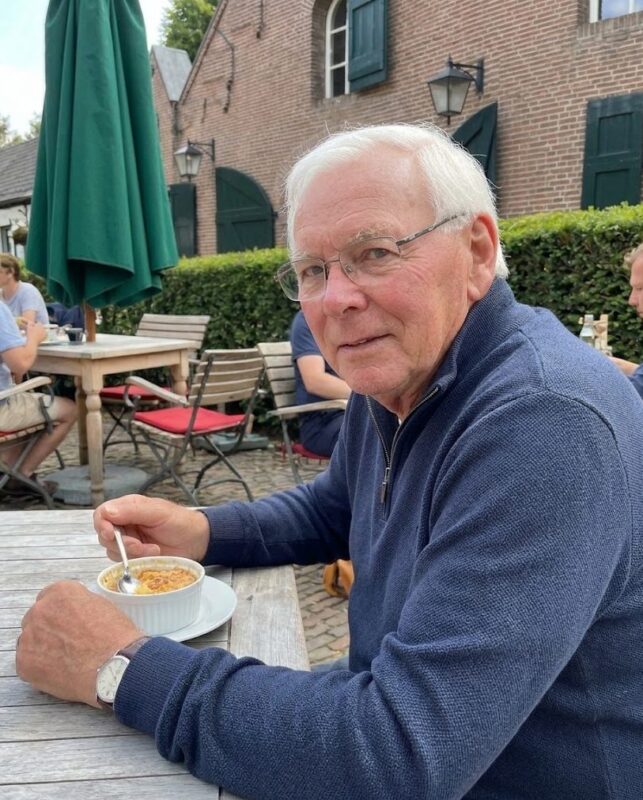
My name is Robert, and I am 78 years old. Six years ago, my wife, Margaret, passed away. Since then, I have been living alone in the house we bought together many years ago.
I manage my everyday responsibilities on my own. I cook, drive, and manage my finances. After fifty years of working, I have earned the right to enjoy a peaceful retirement. I own my home and have savings that should be enough to last me for the rest of my life.
My only son, Daniel, is 46 years old. I paid for his education, helped him buy an apartment, and supported his family financially on numerous occasions. I always believed I was doing everything I could to give him a good future.
However, last Sunday, he came to visit me with an unusual proposal.
— Dad, we need to talk about your assets.
I smiled.
— Has something happened? I’m not planning on going anywhere just yet.
Daniel remained serious.
— You’re already seventy-eight years old. Transfer all your assets to me. It will make things easier.
I refused. I wanted to make my own decisions about everything I had worked so hard to earn throughout my life.
That was when my son changed his tone.
— If you don’t agree, we’ll have to consider putting you in a nursing home. And don’t expect to see your grandchildren as often.
For a moment, I didn’t know what to say. It hurt to hear those words coming from my own child.
— Daniel, I’m your father. Do you really think you can make demands like that of me?
He stood up from his chair.
— Think about it until tomorrow. We’ll talk afterward.
That evening, I sat in the living room for a long time, staring at Margaret’s photograph. I remembered how happy we had been about our son’s first achievements, how we had helped him start an independent life, and how strongly we believed our family would always stay together.
I couldn’t understand when everything had changed.
The next morning, at exactly eight o’clock, the doorbell rang.
Daniel was standing at the door. With him were a man wearing a dark jacket and a woman holding a folder.
— Dad, these are employees from a nursing home. They’ll help us figure out how you should live from now on, my son announced.
The woman greeted me politely.
— Good morning, Mr. Robert. Your son informed us that it’s becoming increasingly difficult for you to live alone. We’d like to discuss the possible care arrangements available to you.
I looked at my son.
— And who told you that I wanted to move anywhere?
The woman fell silent and glanced at Daniel.
He, however, looked completely confident.
— Dad, I tried to explain this to you. I simply want to get everything organized in advance.
I invited the visitors inside. I needed to calmly explain the situation.
Daniel probably assumed that I had finally given in. What he didn’t know was what I was planning to do.
I took out my phone and called the police.
The smile disappeared from his face.
— Dad, why are you doing this?
I explained to the dispatcher that my son was pressuring me, demanding that I hand over my assets, and had brought strangers to my home even though I had never agreed to move.
Daniel began protesting.
— Are you seriously going to report your own son?
— I just want my decision to be respected, I replied. — Is that really too much to ask?
The nursing home employees looked visibly uncomfortable.
— We were told that you had agreed to consider moving, the woman said.
— I never said anything of the sort.
Twenty minutes later, two police officers arrived.
Daniel immediately changed his tone. He began talking about how worried he was about me and explaining that he had only wanted to make sure I was safe.
One of the officers turned to me.
— Are you able to manage your household independently?
— Yes. I cook, do my shopping, and pay my bills myself.
— And do you feel safe in your own home?
— Until the day before yesterday, I had absolutely no doubts about that.
I paused briefly and then took out my phone.
The previous day, during our conversation about the inheritance, I had turned on the recording function. I wanted to preserve my son’s exact words because I could hardly believe what I was hearing.
Now I felt the police officers should hear them too.
Daniel’s voice came from the speaker:
— If you don’t agree, we’ll have to consider putting you in a nursing home. And don’t expect to see your grandchildren as often.
Silence fell over the room.
My son looked at me in disbelief.
— You recorded our conversation?
— Yes. I wanted to make sure I had understood you correctly.
The police officers asked Daniel to explain his behavior. They then spoke with the nursing home employees. They confirmed that my son had contacted them several times, claiming that it was becoming increasingly difficult for me to look after myself independently. He had also assured them that I was ready to move.
Meanwhile, I had never confirmed any such thing.
During the conversation, one of the officers asked me another question:
— Have you noticed your son showing an interest in your bank accounts without your permission?
I thought about it.
Three days earlier, someone from my bank had called and asked whether I had authorized Daniel to obtain information about my accounts. At the time, I hadn’t thought much of it.
Now I told the police officers about it.
Daniel immediately protested.
— This is some kind of misunderstanding! He’s making me out to be a criminal!
The officers explained that they would document my statement and that any suspicions involving unauthorized activity related to my finances should be investigated. They also reminded me that decisions about moving and my own property were mine to make, not those of a family member.
When they left, the nursing home employees apologized for what had happened.
— If we had known that you hadn’t given your consent, we wouldn’t have discussed your move in this way, the woman said.
I thanked her.
Then I turned to my son.
Daniel stood by the door, avoiding my eyes.
— Dad, I didn’t want things to turn out like this.
— And how did you want them to turn out? I asked.
He didn’t answer.
I looked at the photograph hanging above the fireplace. It showed Margaret, Daniel, and me on the day of his eighteenth birthday.
— I’ve spent my entire life trying to help you, I said. — I paid for your education, helped you buy an apartment, and supported your family financially. I did it because I loved you, not because I expected anything in return.
My voice trembled.
— I never imagined that one day I would have to defend my right to make decisions about my own life against you.
Daniel lowered his head.
— I’m deeply in debt, Dad. Everything has gotten out of control. I thought your money could help me get out of this mess.
— Why didn’t you simply ask me for help?
— You could have said no.
— I could have. But at least I would have listened to you.
He wiped away his tears.
— Please, don’t tell Susan about this.
I looked at him sadly. Even now, he was more afraid of his wife’s reaction than of how deeply he had hurt me.
— Go home, Daniel. I need some time.
He wanted to say something, but changed his mind and walked out.
That same day, I called my lawyer. We discussed ways to protect my assets, review my inheritance documents, and make sure that nobody could manage my finances without proper authorization.
I also contacted my bank and asked them to examine any unusual inquiries concerning my accounts more carefully.
Then I had another difficult conversation ahead of me — with my daughter-in-law, Susan.
I told her everything. At first, she couldn’t believe what I was saying.
So I played her the recording.
Susan burst into tears.
— Robert, Daniel told me that you wanted to move into a nursing home yourself and were planning to sell the house. I had no idea the situation was different.
It was difficult for me to accept that my son had been telling completely different stories to different people.
Susan assured me that she would never make it difficult for me to see my grandchildren because of our conflict.
The following Sunday, the children came over for lunch.
My twelve-year-old granddaughter, Emily, threw her arms around me.
— Grandpa, Dad said you were going away. Does that mean you won’t be with us anymore?
I hugged her tightly.
— No, sweetheart. I’m not going anywhere.
My grandson came over and hugged me too.
At that moment, I understood that no amount of money or property could replace the closeness of family. But loving the people closest to you doesn’t mean you have to give up your own dignity.
Two weeks later, Daniel came to my house again. This time, he was alone.
He looked exhausted and struggled for a long time to begin the conversation.
Eventually, he sat across from me at the kitchen table.
— Dad, I’m sorry. I know I was wrong.
He told me that his financial situation was much worse than he had previously admitted. Susan had insisted that he seek professional help to get his debts under control.
Then he said quietly:
— I don’t deserve your forgiveness.
I looked at my son for a long time. I no longer saw the confident man who had tried to force me into a decision just a few weeks earlier.
— You’re my son, Daniel. I will always love you. But that doesn’t mean I’ll let you make decisions for me or hurt me.
He nodded.
I explained that trust couldn’t be rebuilt in a single day. He would have to be honest with me, respect my decisions, and accept that my money belongs to me.
He agreed.
I don’t know whether our relationship will ever be the way it used to be. Some wounds need time to heal.
I still live in the house I shared with Margaret.
Every morning, I make coffee, open the curtains, and look at the roses my wife once planted.
And every Sunday, my grandchildren come to visit me.
Last week, Emily asked me:
— Grandpa, why do adults sometimes hurt the people they love?
I thought for a moment before answering.
— Sometimes people want what they don’t have so badly that they forget to appreciate what they already have.
She hugged me.
— I don’t need your money, Grandpa. I need you.
I pulled her close, feeling tears welling up in my eyes.
At 78, I understood something very important: true love is not measured by inheritance, and it never requires us to give up our freedom.
Even when someone closest to you hurts you — even your own child — you have the right to protect yourself, your decisions, and your peace of mind.
Sometimes the most important decision in life isn’t to cut someone close to you out of your life forever, but to learn how to love them without allowing them to cross your boundaries.