
Four days before Christmas, my daughter-in-law called me and told me not to come to the family holiday gathering.
“This year, we’ve decided to spend Christmas with my family, Joan,” Renee said. “You don’t need to come.”
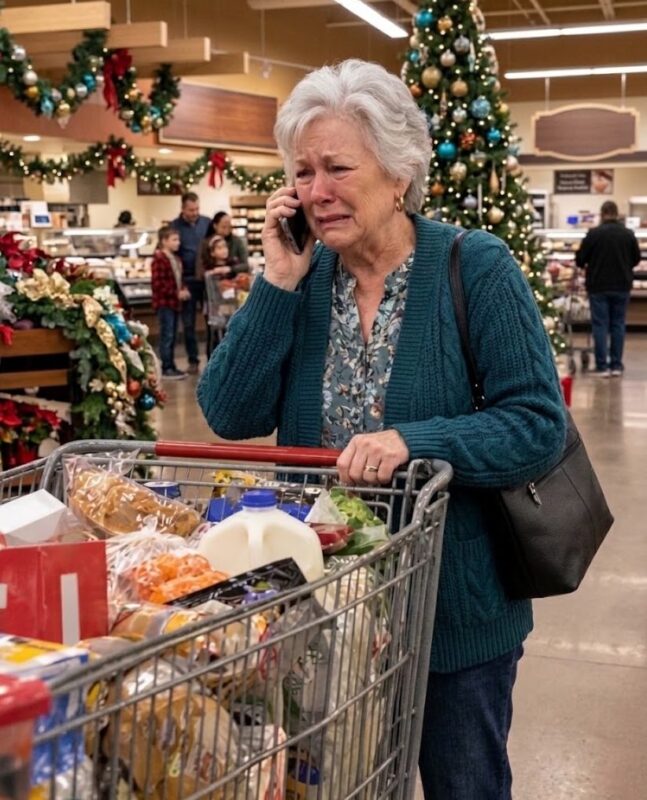
I froze in the middle of the grocery store, holding two packages of fresh thyme.
“But Adam invited me a few weeks ago.”
“He knows about the change of plans,” she replied. “We’ve already discussed everything.”
I quietly wished her a Merry Christmas and ended the call.
Renee didn’t know that I had recently received $35,000 from selling a collection my late husband had treasured so dearly.
She also had no idea that the very next morning, my son would be standing on my porch demanding an explanation for why I had given all that money away.
But the most unexpected twist was still to come on Christmas Day, when I met someone during the holiday lunch who revealed the truth about what was really happening in my family.
My name is Joan Kessler. I’m sixty-two years old, and two years ago, I lost my husband, Walter.
We had been married for thirty-six years.
For most of our life together, Christmas was the happiest time of the year in our home.
Walter loved everything about the holiday, especially handing out presents while wearing his old red Santa hat.
He would announce each recipient’s name with the same seriousness as if he were introducing a professional hockey player before they stepped onto the ice.
Our grandchildren, ten-year-old Lily and seven-year-old Noah, adored that tradition.
After Walter died, Christmas became quieter. Even so, I continued looking forward to the holiday because it gave me a chance to spend time with our son, Adam, his wife, Renee, and their children.
On Thanksgiving, Adam personally invited me to Christmas.
“Everything will be just like usual this year, Mom. Come at noon.”
I wrote the invitation in the calendar hanging in my kitchen.
December 25. Noon. Adam’s house.
So when Renee unexpectedly canceled my visit, I couldn’t understand what had changed.
I looked down at my shopping cart.
It contained clementines for Lily, yellow mustard for Noah, and the ingredients for my traditional pecan pie.
I had even bought Adam’s favorite cranberry sauce.
Suddenly, all of it seemed pointless.
Still, I paid for the groceries. The bill came to $87.40.
Outside, the December wind chilled me to the bone as I loaded the bags into my Buick.
I sat behind the steering wheel for several minutes before texting Adam:
“Renee told me the Christmas plans have changed. Call me when you have a moment.”
I wanted to add that I was sorry, but in the end, I kept the message short.
Instead of driving home, I headed to another part of town.
My destination was the Westdale Community Center.
Walter had volunteered there for six years, right up until his death.
After retiring from the post office, he delivered groceries every Tuesday and Thursday, repaired furniture, and helped older people get to their medical appointments.
He loved that place.
He often came home tired but smiling, telling me another story about someone he had managed to help.
After his death, I had almost stopped visiting.
But that day, my feet seemed to carry me straight to the familiar door.
Claire, the center’s director, looked up from a box of donated food.
“Joan! What brings you here?”
“I brought some food,” I replied. “My dinner plans have changed.”
She studied me carefully, then silently reached for her coat.
“Let’s see what you’ve brought.”
We carried the groceries and fruit inside. Claire explained that, because of storage regulations, they couldn’t accept certain products that required refrigeration.
When we finished, I stopped by the door.
“Could you use some help sorting the donations?”
Claire smiled.
“We can always use an extra pair of hands.”
For the next hour and a half, I worked alongside several volunteers, arranging canned vegetables, pasta, fruit, and other groceries on the shelves.
Strangely enough, I began to feel better.
Later, as I carried boxes into the storeroom, my eyes settled on a gray metal cabinet standing against the opposite wall.
Its door had once been broken. Walter had spent two days fixing it.
I remembered how proudly he had announced:
“Joan, I think this cabinet is going to outlive me.”
Someone had attached a paper snowflake to the door.
Beneath it, on a strip of masking tape, were the words:
“WALTER’S CABINET.”
Tears filled my eyes.
Claire appeared beside me.
“Gus put that label there,” she explained. “He said your husband deserved to be remembered.”
She invited me into her office for coffee.
A photograph of Walter hung on the wall. He was laughing as he carried a folding table during a picnic for local residents.
I had never seen that photograph before.
“This place became better because of him,” Claire said.
As I looked at the picture, I suddenly remembered the money.
Walter had collected hockey memorabilia for nearly thirty years.
Old game programs, signed pucks, photographs, tickets, and sports equipment had filled the shelves in our basement.
I had never been particularly interested in hockey, but every item meant a great deal to Walter.
After he died, it took me a long time to decide what to do with the collection.
Eventually, I contacted an auction house specializing in sports memorabilia.
Selling the collection took several months.
After expenses were deducted, I received $35,000.
I deposited the money into a savings account.
Adam knew about the amount.
He and Renee had been looking for a bigger house with a yard for Lily and Noah for nearly a year.
When I told him about the money from the collection, he remarked:
“That would make a pretty good down payment.”
I agreed with him.
However, he had never asked me to give him the money, and I had never promised that I would.
For several months, I had been considering donating some of the proceeds to the Westdale Community Center.
Walter would have loved that idea.
Now, sitting in Claire’s office, I asked her about the housing assistance program.
Claire sighed.
“We have far more applications than we can handle. Families need help paying rent, utility bills, and apartment deposits. Some are at risk of losing their homes.”
“How much money is left in the fund?”
“About four thousand dollars.”
“And how many people are waiting for help?”
“Twenty-two applications.”
I looked at Walter’s photograph.
“What could you do with $35,000?”
Claire fell silent.
“Joan, that’s an enormous amount of money.”
“I know.”
“Please don’t make this decision just because you’ve had a difficult day.”
I appreciated her concern.
But the idea had been in my mind long before that day.
Walter and I had paid off our mortgage years ago. My pension covered my everyday expenses, and I had additional savings for emergencies.
I could afford to make the donation.
More importantly, I knew exactly what Walter would have said.
“If we have enough money, Joan, let’s help those who don’t.”
I asked Claire to explain in more detail how the funds would be used.
She said the money would help provide warm meals during the winter, pay heating bills, cover overdue rent, and provide emergency housing assistance.
So I took out my checkbook and wrote a check for $35,000 to the Westdale Community Center.
In the memo line, I wrote:
“In memory of Walt.”
Claire stared at the check for a long moment.
“Joan, thank you.”
She asked whether she could publicly thank me for the donation.
I agreed.
“Can we mention the amount, too?”
I thought about it.
I knew Renee followed Westdale’s Facebook page.
Part of me was curious about how she would react.
I wouldn’t pretend that my phone call with her hadn’t hurt me. But I had been thinking about donating the money to charity long before Christmas.
“Yes,” I finally replied. “You can mention the amount.”
Before leaving, I asked Claire whether they needed help on Christmas Day.
“We’ll be serving Christmas lunch from eleven until three,” she replied. “We could use another pair of hands in the kitchen.”
“Then sign me up.”
That evening, Adam finally called.
He explained that Renee’s mother was going through a difficult time after losing her job and separating from her husband.
They wanted to spend Christmas in a way that would allow them to give more attention to her family.
“I understand,” I said. “But you could have told me yourself.”
“Mom, please don’t make this complicated.”
His words hurt more than he could have imagined.
I simply wished him a Merry Christmas.
After the call, I walked over to the calendar in the kitchen.
I crossed out the entry:
“Noon. Adam’s house.”
And underneath, I wrote:
“Westdale. 10:00 a.m.”
The next morning, someone pounded on my front door.
“Mom! Open up!”
I glanced at the clock.
It was 7:15 a.m.
When I opened the door, Adam was standing on my porch with his phone in his hand.
He was furious.
On the screen was a Facebook post from the Westdale Community Center thanking me for a $35,000 donation made in Walter’s memory.
“Mom, did you really give all that money away?”
“Good morning, Adam.”
“Thirty-five thousand dollars! We thought that money would help us buy a house!”
I looked at him.
“Adam, you never asked me to give you that money.”
He stared at me.
“Are you trying to punish us?”
I considered his question.
“No. I’ve been thinking about helping Westdale for months. Yes, yesterday was upsetting. But I donated the money because I believed it was the right thing to do.”
Adam shook his head.
“You don’t understand anything, Mom.”
“Then explain it to me.”
He hesitated.
Finally, he told me something I had never known.
Renee’s mother, Patricia, was at risk of losing her apartment.
After being laid off from the factory, she had fallen behind on her rent.
Adam and Renee had hoped to buy a house with a basement room where Patricia could live with them.
They had planned to ask me to help them raise the money for a down payment.
I stared at my son in disbelief.
“Why didn’t anyone tell me?”
“Renee was embarrassed. She didn’t want you to know how bad things were.”
Adam lowered his eyes.
“And I didn’t know how to ask you.”
Suddenly, the whole situation seemed much more complicated than I had thought.
A few minutes later, Adam left.
I remained in the doorway, watching his car disappear around the bend.
For the first time, I wondered whether there were far more misunderstandings in our family than any of us realized.
For the next two days, Adam didn’t call me once.
On Monday, I contacted Claire and carefully asked whether any of the money from my donation had not yet been distributed.
She explained that a substantial portion of the funds had already been allocated to families in urgent need of housing assistance.
“We’ve already helped eighteen families,” she said. “Thanks to your donation, they’ll be able to enter the new year feeling much more secure.”
I felt grateful.
At the same time, I regretted not having learned about Renee’s situation sooner.
On Christmas Eve, Lily sent me a message:
“Grandma, why aren’t you coming tomorrow? Dad said you’re busy.”
I explained that I would be helping serve Christmas lunch at the center where Grandpa Walter had once volunteered.
Her reply brought tears to my eyes.
“But who will hand out the presents?”
That evening, I baked my traditional pecan pie anyway.
I used an old glass baking dish that had belonged to my mother. Walter used to joke that it was older than both of us.
On Christmas morning, I put on jeans and Walter’s red flannel shirt.
At ten o’clock, I arrived at Westdale.
The dining room was decorated with paper snowflakes, little Christmas trees, and colorful tablecloths.
Volunteers were preparing turkey, stuffing, gravy, and enormous pots of mashed potatoes.
Claire handed me a red apron.
“Your job is the potatoes.”
I laughed.
“I have plenty of experience with those.”
For the next several hours, I helped prepare and serve the food.
People came to the center from all over the neighborhood: older residents, young parents, children, and people who simply wanted to spend Christmas somewhere warm and welcoming.
I greeted everyone with a smile.
“Merry Christmas!”
“Merry Christmas!”
At around twelve-thirty, I raised my head and looked at the person standing in front of me.
A woman wearing a navy winter coat was holding a tray.
She lowered her eyes.
But I recognized her immediately.
Patricia Gorski.
Renee’s mother.
“Pat?” I said softly.
She looked up.
Her expression changed instantly.
“Joan?”
She glanced nervously around the room.
“What are you doing here?”
“I’m volunteering. Walter used to help out at this center.”
I served her a portion of mashed potatoes.
“Go get something to eat. Then we can talk.”
She hesitated but finally nodded.
At one o’clock, I brought two cups of coffee to a corner table where Pat was sitting alone.
For a while, we sat in silence.
Eventually, she began to speak.
“Renee doesn’t know I came here.”
I let her continue.
“She thinks I’m preparing Christmas dinner at home.”
Pat looked down at her hands.
“But I didn’t even have enough money to buy groceries. I came here hoping to receive one of the food packages prepared for the holidays.”
My heart ached.
She told me she had been struggling with serious financial problems for several months.
She had told Renee that she had savings.
She had also assured her daughter that her landlord had agreed to wait for the overdue rent.
Neither statement was true.
“I didn’t want my daughter to worry about me,” Pat whispered.
I reached across the table and gently covered her hand with mine.
“Pat, you have nothing to be ashamed of.”
Tears filled her eyes.
Then she told me something astonishing.
After receiving an eviction notice, she had applied for assistance through Westdale’s housing support program.
She had been placed on the waiting list.
But on Monday morning, Claire called to tell her that her application had been approved.
The center would cover her overdue rent and her January rent.
A total of $4,200.
I stared at her in disbelief.
Pat continued.
“Claire told me the assistance had become possible because of a large donation. She explained that the money had been given by a woman in memory of her late husband.”
Pat looked straight into my eyes.
“Joan, that woman was you.”
I couldn’t find a single word to say.
Among all the people Westdale had helped was Renee’s own mother.
The very woman my family had been desperately trying to help.
Pat burst into tears.
“Your husband’s collection helped me keep my apartment.”
I moved closer and wrapped my arms around her.
“You didn’t take anything away from me,” I whispered. “You applied for help, and you received it. That’s exactly what this fund is for.”
She wiped her cheeks.
“Renee thinks you gave the money away out of anger.”
“I know.”
“She doesn’t understand.”
“At first, I didn’t understand everything either.”
We sat in silence for several minutes.
Then Pat took my hand.
“Come to my house for Christmas dinner.”
I hesitated.
“Renee specifically asked me not to come.”
“Then she made a mistake,” Pat replied firmly. “I’ve made mistakes too. We’ve all been hiding the truth instead of talking to one another.”
I looked at her.
“Are you sure?”
“Absolutely.”
I remembered Lily’s message and smiled.
“First, I need to go home.”
“Why?”
“My pecan pie is waiting in the refrigerator.”
Pat laughed through her tears.
“That’s Renee’s favorite pie.”
I smiled.
“Then perhaps Christmas isn’t over after all.”
First, we went to Pat’s house to prepare the turkey breast she had received from Westdale.
Then we headed to my house to collect the pie.
Before leaving, I went down to the basement and took a small shoebox from a shelf.
Inside was something Walter had treasured especially. I had deliberately kept it when I sold the rest of his collection.
I took the box with me but didn’t explain to Pat what was inside.
At 3:10 p.m., we arrived at Adam and Renee’s house.
Pat was carrying the turkey.
I was holding the pie and the box.
When Renee opened the door, her smile disappeared as soon as she saw me.
“Joan? What are you doing here?”
Pat answered firmly.
“Renee, let us in. We need to talk.”
Renee looked at her in confusion, then stepped aside.
Adam came out of the kitchen.
“Mom?”
But before I could answer, Lily came running out of the living room.
“GRANDMA!”
Noah appeared right behind her.
They hugged me so tightly that I nearly dropped the pie.
“You came!” Lily cried.
“I told Dad you would!” Noah added.
I wrapped my arms around both grandchildren.
“Of course I wanted to see you.”
Across the hallway, Renee stood silently watching us.
Pat took charge of the situation.
She carried the turkey into the kitchen, put it in the oven, arranged the side dishes, and asked Adam to set the table for one more person.
Then she took Renee into the laundry room.
They spoke privately.
After a few minutes, I heard Renee crying.
Meanwhile, Adam and I sat at the kitchen table.
I told him everything: about the Christmas lunch, Pat’s application, the housing assistance, and the $4,200 that had covered her overdue rent.
Adam stared at me, unable to believe his ears.
“Your donation helped Renee’s mother?”
“Yes.”
He leaned back in his chair.
“We thought that money was gone, and you still ended up helping her.”
I nodded.
“But I didn’t know she had applied for assistance.”
He lowered his head.
“I’m sorry for what I said to you on the porch.”
I took his hand.
“And I’m sorry I didn’t understand what you were going through.”
He looked at me.
“I should have been honest. I should have asked whether you could help us instead of expecting you to offer the money yourself.”
I smiled sadly.
“Your father was never afraid to ask for help.”
Adam chuckled quietly.
“No. That’s true.”
At that moment, the laundry room door opened.
Renee walked into the kitchen with tears in her eyes.
She stopped in front of me.
“Joan, I need to apologize to you.”
I remained silent, waiting for her to continue.
“I was scared for my mom. I didn’t want you to find out that our family was having problems. I convinced myself that you would judge us.”
“Renee, I have never looked down on you.”
“I understand that now.”
Her voice trembled.
“Instead of telling you the truth, I pushed you away.”
I looked at her.
“Sweetheart, I’ve been trying to cope with Walter’s death for two years. Sometimes, even getting through an ordinary day is difficult. You don’t have to pretend that everything in your life is perfect when you’re with me.”
Renee stared at me.
“I didn’t know it was still so hard for you.”
“I rarely talk about it.”
She took a step forward.
And for the first time in twelve years, my daughter-in-law hugged me as though I were her own mother.
“I’m sorry,” she whispered.
I hugged her back.
That Christmas dinner was different from every one before it.
There was ham and turkey on the table, Pat’s stuffing, Renee’s casserole, and my pecan pie.
Noah put mustard on almost everything.
Lily told stories about school.
Adam laughed more than he had in the previous several months.
For the first time since Walter’s death, I felt that our family was slowly finding its way back to one another.
After dinner, Lily brought out Walter’s old Santa hat.
“Grandma, it’s your turn now!”
“My turn for what?”
“To hand out the presents! You have to announce the names just like Grandpa!”
I looked at the faded red hat and put it on.
It slipped over one eye.
I picked up the first present.
“And now,” I announced in the deepest voice I could manage, “performing under number seven, the magnificent LILY ROSE KESSLER!”
The children burst into laughter.
Soon, everyone was laughing.
For a brief moment, I almost felt as though Walter were sitting beside us again.
When the presents had all been handed out, I reached for the shoebox.
“Adam, I want to give you something.”
He sat beside me.
I placed the box on his lap.
“I sold most of your father’s collection,” I explained. “But I kept one thing.”
He lifted the lid.
Inside were an old junior hockey game program, a team photograph, and a worn black hockey puck.
A strip of white tape was attached to the puck.
Written on it in Walter’s handwriting were the words:
“ADAM’S FIRST GOAL — FEBRUARY 17, 2002.”
Adam stared at the puck.
“He kept this?”
“Of course.”
He picked up the photograph.
It showed nine-year-old Adam wearing an enormous hockey helmet, grinning at the camera.
Behind him stood Walter in his coach’s jacket.
Adam lowered his eyes.
“I quit hockey when I was eleven,” he whispered. “I told Dad I hated the sport. I thought I’d disappointed him.”
My heart ached.
“Adam, your father kept that puck at the beginning of his favorite folder for years.”
He looked at me.
“Really?”
“Yes. Every time he looked through his collection, he stopped at that photograph.”
I touched his shoulder.
“He was proud of you, sweetheart. He just wasn’t always good at saying it.”
Adam stared at the puck for a long moment.
Then tears filled his eyes.
Lily climbed onto the couch beside her father.
“Is that you, Daddy?”
He nodded.
“And is that Grandpa?”
“Yes.”
She studied the photograph carefully.
“He looks very happy.”
Adam put his arm around his daughter.
“Because he was happy.”
Across the room, Renee discreetly wiped away her tears.
And there I sat, wearing Walter’s ridiculous Santa hat, grateful that the Christmas I had expected to spend alone had helped bring our family closer together.
A year has passed since that extraordinary holiday.
Pat kept her apartment.
A few months later, she found a job as a receptionist at a dental office.
Every Tuesday evening, she calls me.
We talk about the grandchildren, our families, and everything that has happened during the week.
She has become one of my closest friends.
Adam and Renee postponed buying a house.
Instead, they focused on saving money and improving their financial situation.
Eventually, Adam sat down with me and directly asked whether I would be willing to contribute a smaller amount toward the down payment on their future home.
This time, he didn’t drop hints.
He simply asked.
And because we had finally learned to communicate openly, we managed to agree on terms that worked for everyone.
Now I have lunch with Renee once a month.
She tells me about growing up with constant financial hardship and how ashamed she felt whenever her family didn’t have enough money.
I tell her about the years when Walter and I tried to stretch every paycheck, raised Adam, and worked to make our modest house a beautiful place to live.
We discovered that we understood each other far better than either of us had imagined.
Adam also began volunteering at Westdale.
Once a month, he repairs shelves, doors, and furniture.
It would be unfair to call him a particularly skilled handyman.
Walter would have found that hilarious.
But Gus, one of the older volunteers, patiently teaches him new skills.
A few weeks ago, Adam called me after work.
“Mom, guess what?”
“What?”
“I fixed Dad’s cabinet.”
I smiled.
“The gray one?”
“Yes. The door closes perfectly now.”
I laughed.
“Your father would be proud of you.”
This year, our Christmas preparations began very differently.
In early December, Renee called me.
“Joan, I’ve been thinking about how we could spend the holidays.”
For a moment, I remembered the painful conversation from the previous year.
But then she added:
“What if we all volunteer at Westdale on Christmas morning? You, Adam, the children, my mom, and me?”
I fell silent.
“And afterward,” she continued, “we could go to your house, have dinner, exchange presents, and try your famous pecan pie.”
I smiled.
“Renee, that’s a wonderful idea.”
And that’s exactly what we did.
On Christmas morning, our entire family arrived at Westdale wearing matching red volunteer aprons.
Adam helped prepare the turkey.
Renee and Pat worked on the stuffing.
Lily handed out rolls.
Noah carefully arranged the napkins.
And I returned to my usual spot, serving mashed potatoes.
The dining room was full of people enjoying a hot Christmas dinner.
Around noon, a young woman holding a small child approached my serving station.
She looked at my name badge.
“Are you Joan?”
“Yes, sweetheart.”
She smiled.
“My name is Kayla. Last year, thanks to your donation, my son and I were able to keep our apartment.”
I stared at her in surprise.
“Really?”
She nodded.
“We were behind on our rent. Westdale helped us pay it. I’ve wanted to thank you for a long time.”
I looked at the little boy in her arms.
He waved at me, clutching a dinner roll in his tiny fingers.
Tears filled my eyes.
“I’m so glad you’re doing well.”
After Kayla left, Lily looked at me.
“Grandma, was that Grandpa’s money?”
“Yes, sweetheart.”
She thought for a moment, then smiled.
“I think Grandpa would rather that money helped people than have all those hockey things just sitting in our house.”
I chuckled softly.
“I think you’re right.”
Later that day, Claire asked me to come to the storage room.
Walter’s old gray cabinet was still standing against the wall.
A new paper snowflake had been attached to its door.
Beneath the familiar label “WALTER’S CABINET,” someone had added:
“AND JOAN’S.”
I placed my hand against the cabinet and smiled.
Then Claire pointed toward her office.
Beside the old photograph of Walter volunteering, another photograph was hanging on the wall.
It showed the 2002 hockey team.
Walter stood in the back row, smiling proudly.
Adam sat in the front, holding a small trophy.
“Your son brought this in,” Claire explained. “He thought his father would want this picture displayed here.”
I stood in front of the photograph for a long time.
Walter had left so much behind.
His collection.
His memories.
His old flannel shirts.
His ridiculous Santa hat.
But the most important thing he left us was something that could never have been sold at an auction.
It was his example of how to help others.
Adam came over and gently placed a hand on my shoulder.
“All right, Mom, shall we go?”
I nodded.
“The kids are waiting,” he said. “Lily is already practicing Grandpa’s announcements for handing out presents.”
I laughed.
“She’s pretty good at it.”
“Better than I am,” Adam admitted.
“Everyone is better at it than you, sweetheart.”
He laughed and hugged me.
Together, we headed for the exit.
Before leaving, I noticed Walter’s old work shirt hanging on a hook among the others.
The red fabric had faded, and a small stain remained on the pocket.
But his name was still written across the front.
“WALT.”
I gently touched the fabric.
Then I followed my son outside.
Our family was waiting for us in the warm car.
Lily was sitting in the back seat wearing Walter’s enormous Santa hat.
As soon as I opened the door, she shouted as loudly as she could:
“And now, please welcome the captain of our family… GRANDMA JOAN!”
Everyone burst into laughter.
I climbed into the car, fastened my seat belt, and looked at the people I loved.
A year earlier, I had believed Christmas without Walter could never be the same again.
But now I understood something.
Love does not disappear when someone we love is gone.
Sometimes, it continues to live in the kindness we show others, the mistakes we learn to forgive, and the family we try to save.
And as we drove home that Christmas through streets illuminated by winter lights, I realized that Walter had left us one final gift.
He had shown us that a true legacy is not what we leave to our own family, but the love and generosity that inspire them to share kindness with others.