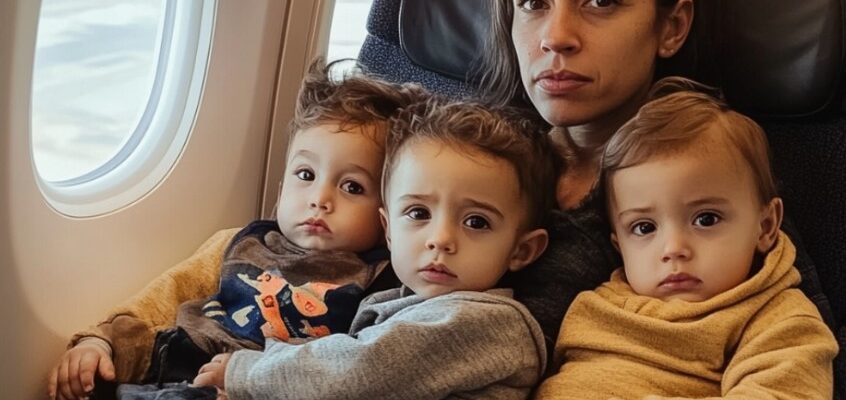

For Debbie, this flight was especially important. It was the first time she was flying in first class with her three children — a gift from her husband for their wedding anniversary. The trip was meant to be a joyful experience, and Debbie did her best to keep everything calm and pleasant. The children behaved well, but not everyone was pleased.
One of the passengers, a wealthy and self-assured man named Louis, showed his displeasure from the very beginning. He loudly expressed irritation at the sound of the children’s voices, shot annoyed glances at Debbie, and made unkind remarks about her appearance and supposed “low social status.” Later, he stated that a family with children didn’t belong in the first-class atmosphere and suggested they be moved to economy class.

Debbie remained calm. Despite the hurtful comments, she didn’t engage in any arguments. Her main goal was to make this day a beautiful memory for the whole family.
Everything changed at the end of the flight.
As the plane began its descent for landing, the pilot’s voice came over the speakers:
— “Dear passengers, thank you for choosing our flight. Today is a special day for me. On board is my wife Debbie, who is flying with our children. On the occasion of our anniversary, I would like to thank her for her love, patience, and everything we’ve been through together. It’s an honor to be her husband.

The passengers fell silent. Moments later, the pilot stepped out of the cockpit holding a bouquet of flowers and walked straight toward Debbie. He was her husband — Tyler. After a long break, he had recently returned to work. At that moment, he knelt down and, just like during their engagement, asked her to marry him once again.
The reaction on the plane was incredible — applause filled the cabin, and some passengers had tears in their eyes. With a smile and tears of her own, Debbie replied, “Yes.”

As for Louis — he didn’t say another word for the rest of the flight.
Sometimes, sincere gestures filled with respect and love can set everything right — and serve as a reminder that a person’s true worth doesn’t depend on their status or appearance, but on how they treat others.