The noise of the metropolis stayed somewhere below, behind the thick glass of the panoramic windows. Sofía Méndez stood in front of the office door, her fingers clenched around the folder with her résumé. This job interview — the last hope. Hope to pay for her mother’s treatment, hope to escape endless poverty, hope for a decent life.
The door opened.
The office of the company’s director, Fernando Arteaga, impressed not so much with luxury as with a sense of absolute authority. There was nothing unnecessary here—only dark wood, steel, glass, and perfect order. Arteaga himself, a man around fifty with gray hair at his temples, sat behind the desk without lifting his gaze from the documents. It seemed that even the air in the room froze under his influence.
“Señorita Méndez,” he finally said, and his low, steady voice made Sofía flinch inside. “Please, sit.”
She sat, trying to breathe calmly. Her story about modest work experience, her sick mother, and student loans—all of it now sounded pathetic and unconvincing. His face revealed nothing. Then, desperately trying to distract herself from the rising panic, Sofía let her eyes wander across the desk.
And the world flipped over.
Next to the brown company seal stood a simple silver frame. Inside—an old faded photo. A little girl, about four years old, wearing a white dress with a lace collar, holding a sunflower almost as big as her face. Smiling from ear to ear.
Sofía stopped breathing. She knew this photo as well as the lines on her own palms. Her mother kept it in a metal tin under the bed, taking it out only on the most important days. “Your father took it—” Isabel would say. “The day he promised us eternal happiness.” Never any details—only sadness in her eyes and a firm: “He is dead, sweetheart, don’t torment me.”
“…that is why I am convinced I could be useful to your company,” she finished automatically, no longer remembering what she had been saying.
Fernando Arteaga looked up at her. His sharp gray eyes seemed far too tired for a man who had everything.
“You are very absent today, señorita Méndez,” he noted. “You keep glancing at my desk.”
“The photo…” she blurted out. “I’m sorry. It’s just… very pretty. Your daughter?”
For the first time, his face showed emotion. Something like a sudden physical pain, immediately suppressed by iron will.
“No,” he cut off, harsher than he should have. “Not a daughter. Just… an old photograph.” He cleared his throat, becoming unreadable once more. “Carmen will explain your duties. I hope our cooperation will not be marked by distraction.”
All day, Sofía functioned like a machine. Carmen, the older secretary with wise eyes, showed her the archive, the document flow system, and introduced her to the staff. But everything spun before her eyes. Only one thought, obsessive and terrifying: “How?”
That evening, in their tiny apartment in the poor district, Sofía couldn’t hold it in. Her mother, Isabel, was preparing dinner, humming an old song. Her face, once beautiful, was now lined with wrinkles from worry and a long, hard-to-treat illness.
“Mom.”
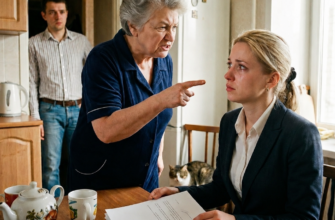
“Yes, darling? How was your first day? I hope this Arteaga didn’t turn out to be the tyrant they write about?”
“Mom”—Sofía sat at the table, looking directly into her eyes. “He has a photo on his desk. My childhood photo. The one with the sunflower.”
Silence. Ringing, absolute silence. A spoon fell from Isabel’s hand and clattered against the tiles. It seemed her whole being stopped for a moment. Then slowly, as if against her own will, she sank into a chair.
“No,” she whispered. “That’s impossible.”
“It’s possible,” Sofía said firmly. “Mom, who is he? Who is my father really?”
And then, with the whistle of the kettle and the hum of the city behind the window, the wall of silence Isabel had built for 26 years finally collapsed.
The story was ordinary and therefore even more tragic. Young, beautiful housemaid Isabel working at the Arteaga family estate. The young master of the house, Fernando, just beginning to build his empire, unhappy in his marriage to Verónica Montero—a high-society woman whose family had provided his starting capital. Secret meetings in the library, stolen kisses in the garden, whispers of love and freedom.
“He said he would run away with me,” Isabel’s voice was like a ghost. “He said he loved me and would leave everything. And then… then I told him I was pregnant.”
She fell silent, swallowing her tears.

— Everything changed. He became nervous, distant. And then She came. Verónica.
Isabel described her so clearly that Sofía could almost see her: tall, perfectly dressed, with eyes cold as mountain ice.
— She didn’t scream. She even smiled. She said she knew all about our affair. That she didn’t care. But she wouldn’t allow a scandal. “If he leaves me for a maid, and a pregnant one at that, he’ll be a laughingstock. His career will be over. And I — she said — won’t let anyone destroy what belongs to me.”
That same night Fernando came to Isabel. With a suitcase full of money.
— “I can’t — he said — I can’t lose everything I’ve built. Verónica… her threats aren’t empty. She’ll destroy me.” He cried, Sofía. He cried! And he said he loved me. But… — Isabel clenched her hands. — But fear was stronger. He gave me money. Told me to leave. To disappear.
— And you left?
— I was alone, pregnant, with nothing! That money… was salvation. I took it. I left. And then, when you were born… I wrote to him. I sent him a photo, this one. I wrote again and again. Told him about you, begged him just to see you… Not a single answer. Not one!
Sofía listened, a storm raging inside her. Anger at her traitor father. Compassion for her mother. And a wild, unstoppable hunger for truth.
— But the photo is on his desk, Mom. Why?
— I don’t know — Isabel groaned. — Maybe one of the letters reached him? Maybe his conscience woke up? Or maybe… maybe Verónica intercepted the letters, and sent him the photo to torment him? I don’t know…
The next morning Sofía went to work with firm determination. She would not run. She would look that man in the eyes. She would learn who he was. And she would force him to answer — if not for love, then out of duty to his daughter.
Work proved difficult. Fernando Arteaga was demanding, meticulous, and completely unreadable. But he was also fair. Seeing her sharp mind and enormous diligence, he began giving her more difficult tasks. At the office they started calling her “the boss’s protégée,” sparking jealousy in some and respect in others.
Then strange things began to happen. First, a contract with a German company went missing. Sofía was sure she had put it in the blue folder. But the folder was empty, and the document “turned up” three days later in the trash bin by the copier. Then an important meeting with Japanese investors failed — the date in her calendar was entered incorrectly. And then came an angry email from an old client, one she supposedly hadn’t answered, even though the draft reply was saved on her computer.
— Someone is destroying you, dear — Carmen whispered to her once over coffee. In her old eyes there was only worry. — Be careful.
— Who? — asked Sofía.
Carmen only glanced meaningfully at the portrait of Verónica Arteaga hanging in the hall. “Charity Ball under the Patronage of Mrs. Arteaga.” In the photo Verónica was smiling — a smile that felt cold.
Verónica herself appeared in the office two weeks later. Her visit was like a queen’s. The whole staff trembled. She walked down the corridor nodding left and right, and her cold, assessing gaze lingered on Sofía for several seconds. It seemed something in her memory clicked. She said nothing, but that look was enough.
After her visit, the sabotage became open. Colleagues who had been friendly now avoided her. Rumors appeared: about her “questionable” past, about her “worming her way into the boss’s favor.” One morning she found an anonymous note on her desk: “Leave. While you still can.”
And then Fernando called her in.
He sat behind his desk, and for the first time Sofía saw not a boss, but a tired, aging man.
— Señorita Méndez — he began bluntly. — What is happening here? In the past month you’ve had more mistakes in your work than all the secretaries combined in the last five years.
— These aren’t mistakes, señor Arteaga. It’s sabotage — she said calmly, surprised by her own courage.
He narrowed his eyes.
— Do you have proof?
— Only logic. Who benefits from making me look incompetent? Who doesn’t like that you trust me?
He leaned back in his chair, his gaze becoming sharp again.
— You are suggesting my wife.

— I’m not suggesting anyone. I’m stating facts. Someone has wanted me gone from the very beginning.
He looked at her for a long time, then at the photograph in the silver frame, then back at her. It seemed something clicked in his mind.
— You are… astonishingly similar — he said slowly. — To the little girl in that photo. The same shape of eyes… the same smile…
Time stopped. Sofía understood this was the moment. The truth was bursting to the surface like water through a cracked dam.
— That’s because it’s me — she said quietly. — In that photo. It’s me. I’m four years old.
The office fell into a silence so thick it could be cut with a knife. Fernando froze. It seemed like he stopped breathing. Then he stood up very slowly, walked to the window, and stood with his back turned, looking at the city below.
— Explain — he said finally, his voice hoarse.
And she explained. Everything she knew. About Isabel. Their affair. The pregnancy. Verónica’s threats. The money. The departure. The letters that never received answers.
— I never got any letters — he murmured, still staring out the window. — Not a single one. I swear on everything. That photo… someone slipped it into my office. No signature, nothing. I never knew who that girl was. But… I couldn’t throw it away. It was like a ghost. A reproach.
He turned around. His face was twisted with such deep pain that Sofía stepped back.
— All these years… I had a daughter. And I didn’t know.
At that moment the office door burst open. Verónica stood in the doorway. Not the flawless high-society lady, but a furious storm. Her eyes burned with icy fire.
— So here you are! — her voice cut the silence. — Enjoying a family idyll? Too soon, Fernando, too soon!
— Leave, Verónica — Fernando said quietly, but with such force that even she paused.
— No! I won’t leave until I say everything! — She pointed at Sofía. — You think she’s here by chance? She and her mother want to use you! Twenty-six years ago her mother tried to trap you with lies, and now her daughter has come to claim what she wants!
— Silence — thundered Fernando, losing control for the first time.
— I will NOT be silent! I have proof! Letters hinting about money! Witnesses! I’ll publish everything on the front page of the newspapers! You’ll be a laughingstock, Fernando! And that… that climber will return where she came from!
— You won’t do anything — Sofía said firmly. She straightened and looked Verónica straight in the eyes. — Because we also have proof. Proof of your lies.
— What proof? — Verónica scoffed, but uncertainty flickered in her eyes.
Carmen appeared in the doorway. She held a thick folder in her hands, her face stern.
— Forgive me for interrupting, señor Arteaga — she said. — But this is necessary. — She placed the folder on the desk. — I’ve worked here thirty years. And for thirty years I’ve seen señora Verónica intercept your private mail. Especially letters from a certain… poor district. I never interfered — it wasn’t my place. But when the attacks on señorita Sofía began… I realized silence was becoming a crime.
She opened the folder. Inside were copies of postal receipts bearing Verónica’s signature, printouts of transfers to a “private agency,” and even photos from a hidden camera showing Verónica handing envelopes to a suspicious man near the post office.
— And one more thing — Carmen added. — I found the mailman who delivered letters from Isabel Méndez for years. He’s old, sick, but ready to testify. He says señora paid him to bring all mail to her first. But one time… he didn’t hand over something. A photo of a little girl. He felt sorry. He slipped it into your office, señor Arteaga. Without anything. He hoped you’d understand.
Fernando stared at the evidence, his face terrifying in its stillness. Verónica grew so pale she seemed transparent.
— Those… those are fakes! — she gasped, her voice trembling.
— No — Fernando said coldly. — This is the end. The end of your lies.
He walked to the phone and pressed a button.
— Eduardo? Gather the partners. In one hour. Yes, urgent. And invite our legal counsel.
One hour later, in the main conference room of “Arteaga & Associates,” all partners and senior attorneys had gathered. Fernando stood at the head of the table, and beside him stood Sofía — pale, upright. Verónica sat aside, her luxurious gown now looking like a costume.
— Ladies and gentlemen, colleagues — Fernando began with a clear, merciless voice. — You are here to witness the end of one lie and the beginning of a truth. Next to me stands Sofía Méndez. My daughter.
A murmur spread through the room. Fernando raised his hand for silence.
— Yes, my biological daughter. Whose existence was intentionally hidden from me for twenty-six years. Her mother, Isabel Méndez, tried to inform me about the child’s birth, but her letters were systematically intercepted. — He nodded, and scanned documents from Carmen’s folder appeared on the screen. — This was organized by my wife, Verónica Montero. To maintain the illusion of our marriage. For control. She lied, bribed, hid the truth.
He presented the entire story coldly and precisely. Showed DNA results from a prestigious lab. Presented the mailman’s testimony. Then turned to Verónica.
— Do you have anything to say in your defense?
All eyes turned to her. Verónica slowly stood. She held her posture through willpower alone, but her eyes were full of humiliation and rage.
— I protected my family! — she said, but without her usual certainty. — I protected you from manipulation! Without my family you’d be nothing! And I won’t allow…
— Enough — interrupted the chairman of the partner board, the respected don Eduardo. — Señora Arteaga’s actions are unacceptable. The firm “Arteaga & Associates” cannot be associated with such behavior.
He turned to Fernando:
— Your decision?
— I am filing for divorce — Fernando announced firmly. — Immediately. And I officially recognize Sofía Méndez as my daughter and heir. My personal assets and controlling stake in the firm will be transferred accordingly.
— You’ll regret this! — Verónica screamed. — I’ll challenge everything! In court!

“That’s your right,” Fernando said coldly. “But think about the price you’ll pay for it. You always cared about your reputation, Verónica. Leave. Peacefully.”
She understood she had lost. All her power evaporated in the face of undeniable evidence. Without saying a word, she left the room.
Epilogue. Six months later.
A quiet evening in Cuernavaca. A small but cozy villa surrounded by greenery. Three people were having dinner on the veranda.
Isabel, visibly healthier after her difficult surgery, laughed at Fernando’s story about his first mistake in court. Sofía poured herbal tea, watching them.
Six months were nothing compared to twenty-six years of separation. There were still awkward pauses between them, unspoken resentments. But there was also a cautious, slowly growing tenderness. Fernando, freed from the burden of lies, seemed rejuvenated. He didn’t try to buy his daughter’s love — he was learning to know her. He asked about her life, her dreams, and helped her open a small law office to support single mothers.
Verónica, stripped of much of her wealth after the divorce, moved to Europe. The scandal faded away.
One evening, Fernando approached the fireplace, above which hung that photo — in a new, simple wooden frame.
“You know,” he said, speaking to Sofía but looking at the picture, “I often think… what would have happened if I had received even one of those letters.”
“Don’t torture yourself,” Isabel said gently. “You can’t turn it back. What matters is that we’re here now. Together.”
“I’m not torturing myself,” he replied, and something appeared in his eyes that Sofía had never seen: peace, acceptance. “I just look at that smile and think that despite all the years of lies… something true still made its way through. That photo was my only compass. And it led me to you.”
He walked up to Sofía and placed his hand on her shoulder — uncertain, but sincere.
“Thank you for not running out of my office that day. Thank you for giving me a chance… to be a father. Even such a late one.”
Sofía placed her hand on his. She still couldn’t call him “Dad.” That word was stuck somewhere deep. But something new appeared in her heart — compassion, respect, and cautious hope.
“We’ll catch up,” she said quietly. “We still have plenty of time ahead.”
Outside, a warm, starry night was falling. Their story wasn’t a fairy tale. It was full of pain and loss. But it was theirs. And on that peaceful veranda, beneath the smile of a four-year-old girl holding a sunflower, they finally had a chance for a new, honest chapter — a chapter of family. Imperfect, cracked, but real.