
For ten years, I saved for my first home.
Ten years of extra shifts, giving up vacations, a strict budget, and an endless inner dialogue: “Later. Now is not the time for expenses.” I wasn’t just saving money — I was saving the possibility of one day living the way I want.
When I signed the contract for a house in Alicante, near the sea, I felt not euphoria, but a deep calm. It was an adult decision. Conscious. Mine.
I decided to tell my parents in person.
In their house in Murcia, everything looked as usual: mom in the kitchen, father silently scrolling through the news, my sister discussing the details of her upcoming wedding.
See more
Personal development courses
Family board games
Ebooks about interpersonal relationships
“I bought a house,” I said. “In Alicante. In two weeks I’m picking up the keys.”
Silence fell.
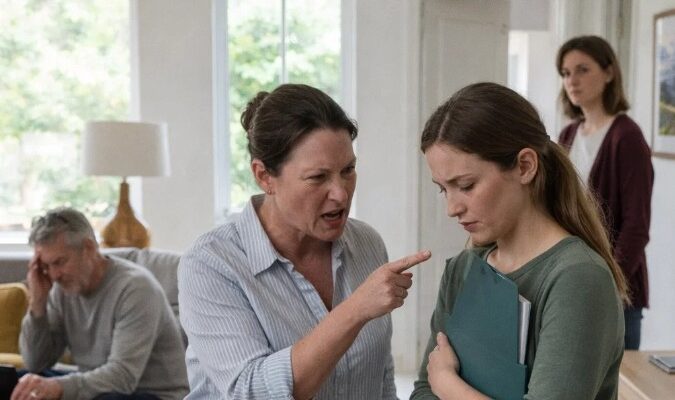
“You’re not married,” my mother said after a few seconds. “Why do you need a house?”
At first, I thought she was joking. But her face remained stone-cold.
“Because I want to live on my own. And I can afford it.”
“That money was needed for your sister’s wedding,” she said coldly. “We are a family. We have shared priorities.”
Something inside me tightened painfully. In our family, my achievements were always treated as a shared resource.
“It’s my money, Mom.”
Her voice grew harder.
“As long as you lived under our roof, everything you earned belonged to the family. We invested years in you.”
My sister cut in:
“Is a house really more important to you than the most important day of my life?”
I realized the conversation was no longer about the wedding. Not even about the money. It was about control. About the right to decide for me.
“I’m not obligated to pay for other people’s decisions,” I said calmly.
My mother stepped closer. Very close. So close I could feel her breath.
“If you go against the family, you will regret it,” she said quietly. “One day you’ll understand what it means to be left alone.”
It wasn’t a scream. It was worse. It was cold certainty.

Father tried to say something but fell silent. My sister looked away.
I stood there and suddenly realized clearly: she isn’t afraid of losing my money. She is afraid of losing power.
“I’m not afraid of being alone,” I replied.
And I left.
Two weeks later I stood in my own house. White walls, empty rooms, the sound of the sea in the distance. Ahead of me — renovation, bills, responsibility. But it was my responsibility.
For the first time in a long time, I slept peacefully.
Then the doorbell rang.
Two police officers.
“Your mother filed a report. She claims you used funds intended for the family.”
I expected something like that. The threat hadn’t remained just words.
At the police station I calmly showed the documents: ten years of official work, savings, transfers. Everything transparent.
“Were there conflicts between you?” I was asked.
I nodded.
“Yes. And there were threats.”
I described the conversation. No emotions. Just facts.
The investigation showed the accusations were unfounded. But the story didn’t end there.
The next day the bank called me.
“We detected regular transfers from your account to a company organizing events in Murcia. Did you authorize them?”
No.
The amounts were small. Unnoticeable. But over several years they added up to a significant sum.
The recipient — a wedding agency.
My sister had indeed said that “mom had already paid almost everything.”
Now I understood — with what.
I contacted a lawyer. We requested login history to online banking, transaction confirmations, devices.
The accesses led to my parents’ house.
When my mother called, her voice was irritated.
“You’re blowing the problem out of proportion.”

“Were you transferring money from my account?” I asked.
“We are family. They were shared funds.”
“No,” I said. “They were my savings.”
Her tone hardened again.
“If you take this to court, don’t count on the family’s support.”
And then I finally understood: for her, threats are a tool. Pressure is a way to regain control.
The proceedings were long but calm. Documents spoke louder than emotions.
In court, my mother spoke about ingratitude. About how I had “forgotten where I came from.”
When I was asked what I demanded, I answered:
“The return of the funds and official protection from further pressure.”
The court ordered the money to be repaid according to an established schedule. The false report was recorded. An official warning about the inadmissibility of further threats was issued.
The wedding plans had to be reduced.
A week later my father called.
“I should have supported you.”
“Support is not silence,” I said.
That evening I sat by the window of my house. Outside, the wind rustled. Inside, there was silence.
This house became something more than property to me.
It became a boundary.
I no longer have to prove that I have the right to what is mine.
I no longer have to fear loneliness.
Because the worst thing is not being alone.
The worst thing is living without the right to your own life.
Now I have that right.