I was twenty-two years old, exhausted, and desperately in need of money when I agreed to the strangest job of my life. During the day, I attended college classes. At night, I stocked shelves in a grocery store. Every spare moment, I helped my mother take care of my younger brother, Noah. Noah was only fourteen, but hospitals had already become a normal part of his childhood. His treatment cost more than we could afford, and each new bill seemed heavier than the last.
My mother never complained. She worked double shifts as a hospital cleaner and still managed to smile whenever Noah was afraid. But I saw the truth. I saw the unpaid bills on the kitchen table. I saw her quietly crying after midnight. I saw the fear she tried to hide from both of us.
One rainy Thursday, another hospital bill arrived. Mom stared at it for a long time, then folded it and placed it on top of the others. That night, I started searching online for any kind of side job. Dog walking. Tutoring. House cleaning. Then one advertisement caught my eye.
“Seeking a young woman aged 20–25 for weekly Sunday visits to an elderly blind veteran. High pay. Must be willing to assume the role of a family member — a companion.”
At first, I thought it was a scam. Then I kept reading. The veteran’s granddaughter had stopped visiting him. The family wanted him to feel loved during the final years of his life. The hired person was expected to pretend to be his granddaughter. It felt wrong. Almost cruel. I was about to close the page when I glanced at the hospital bill lying next to my laptop. And I submitted my application.
A week later, I met Linda — the veteran’s daughter.
“My father’s name is Walter Harrison,” she explained. “He lost his sight six years ago. He served in the military. He’s stubborn, proud, and lonelier than he would ever admit.”
With a tired voice, she added:
“My daughter stopped visiting him a few years ago after a family argument. Dad still asks about her.”
I understood the reason behind the request, even though it made my stomach tighten.
“What exactly am I supposed to do?” I asked.
“Visit him every Sunday. Talk to him. Have lunch with him. Give him the feeling that someone still comes to see him.”
“And pretend to be his granddaughter?”
Linda lowered her eyes.
“Yes.”
I agreed.
On the first Sunday, I was terrified. Walter lived in a small white house surrounded by flowers and oak trees. When I knocked, he opened the door almost immediately. Even though he couldn’t see me, he smiled.
“There you are.”
My throat tightened.
“Hi, Grandpa.”
The word felt like theft. But Walter took my hand and warmly said:
“Come in.”
That first visit lasted four hours. Walter told stories about his military service, repairing trucks, fishing, and his wife Margaret, whom he had loved for more than fifty years. Whenever he spoke about her, his voice softened.
“Margaret could make anyone laugh,” he said. “Even me.”
And for a moment, I forgot I was playing a role.
The Sunday visits continued. Weeks turned into months. Something unexpected happened. Walter stopped being a “job.” He became someone I genuinely cared about. He remembered everything I told him: my exams, my mother’s long shifts, Noah’s treatment, and the little worries I tried to turn into jokes.
One day he asked:
“How is your brother?”
I froze for a second. Then I realized — I had told him everything. Not because I had to. But because I trusted him.
“He’s having a difficult week,” I admitted.
Walter squeezed my hand.
“He’s lucky to have you.”
Those five words nearly broke me.
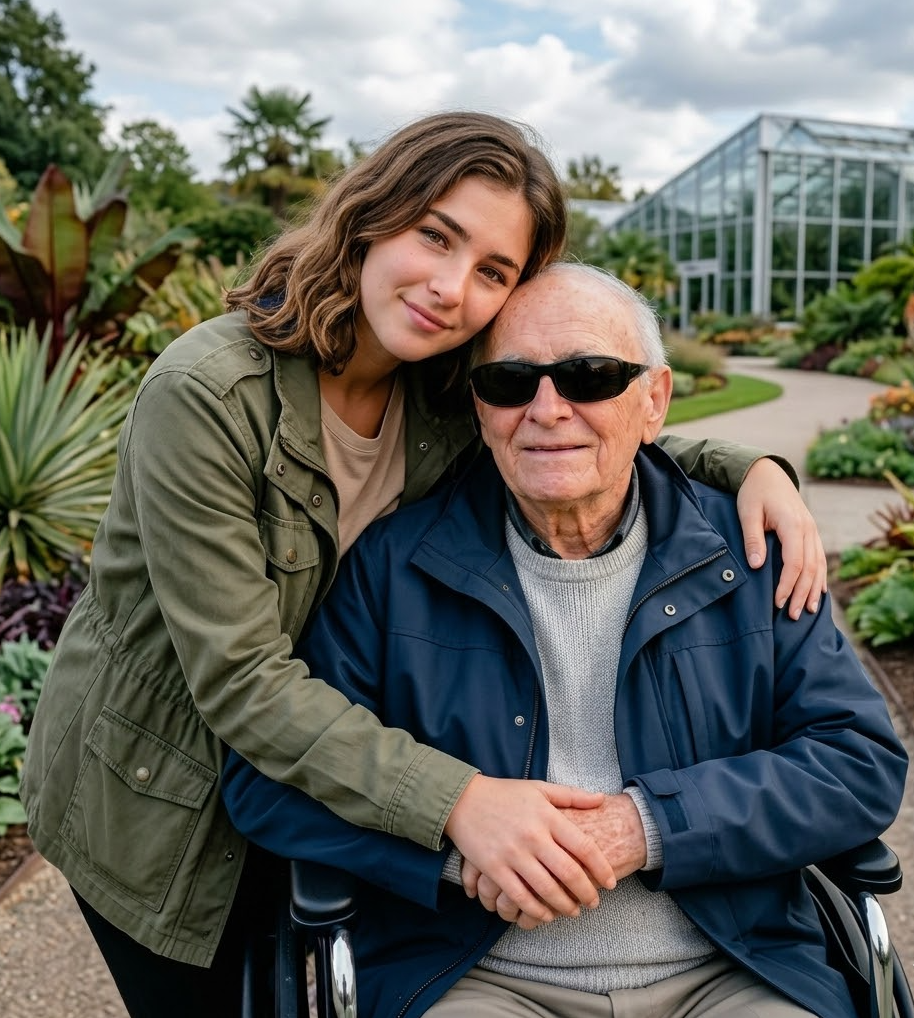
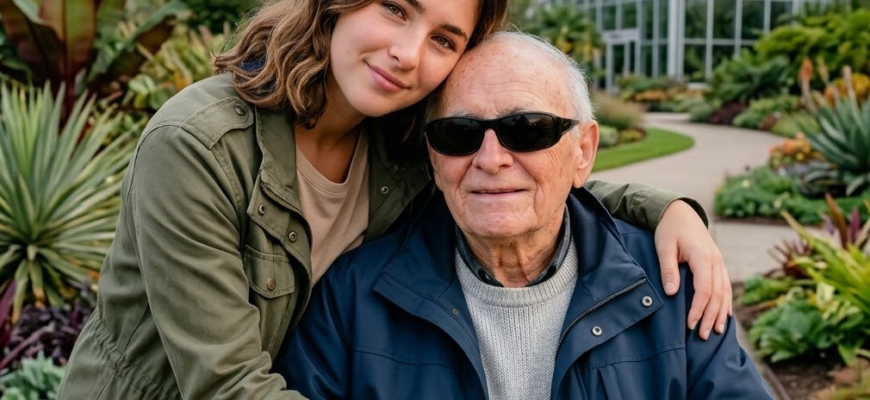
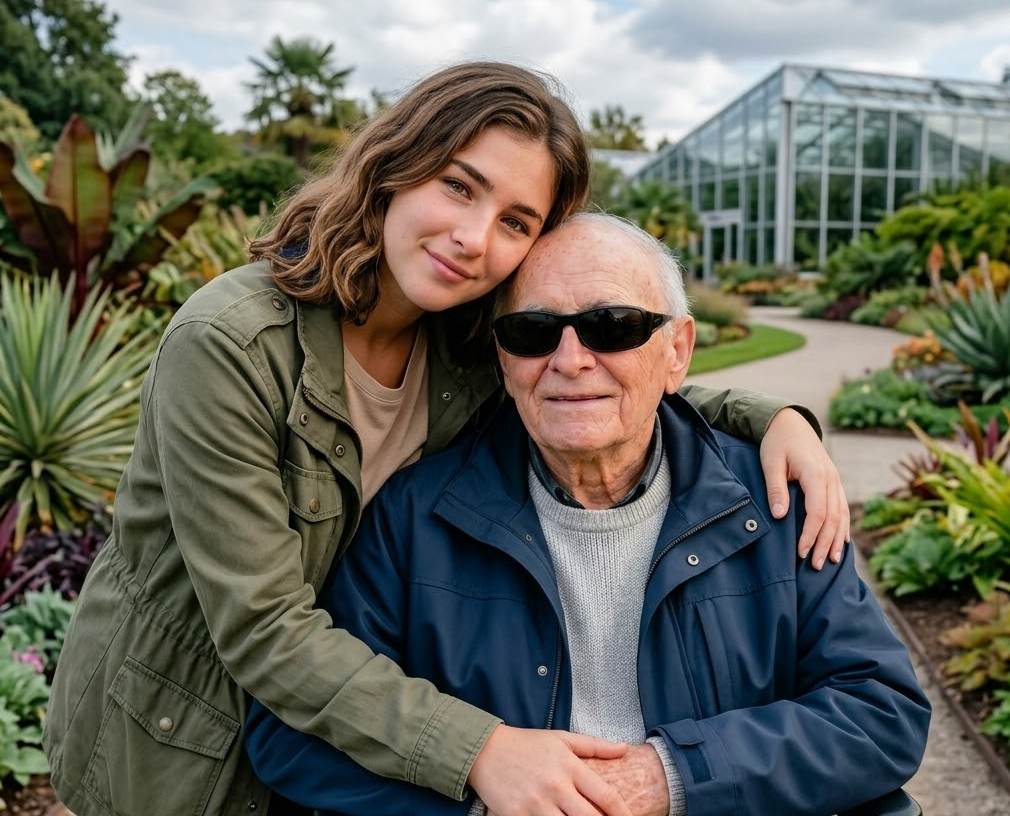
With time, I started coming over even when I wasn’t getting paid. I brought cookies. I sat with him on the porch. Sometimes we talked for hours. Sometimes we just listened to the birds in the treetops.
The lie disappeared. The bond became real. I wasn’t truly replacing his granddaughter. He wasn’t replacing my grandfather. But somehow, we became family anyway.
One Sunday, I arrived and felt that something had changed. Walter spoke more weakly. His breathing was slower. His voice trembled as he welcomed me. “Are you okay?” I asked. He laughed quietly. “Aging isn’t for cowards.” I smiled, but I felt fear in my chest.
In the following months, his health deteriorated rapidly. Hospital visits became more frequent. Walking became harder and harder, until it was finally impossible. And yet, every Sunday, he wanted me to be by his side.
One day, as I was adjusting his blanket, he grabbed my hand. “You know what?” he said softly. “What?” “You changed my final years.” Tears welled up in my eyes. “No, Walter,” I whispered. “You changed mine.” He smiled. We didn’t need to say anything anymore.
Three weeks later, Linda called. The moment I heard her voice, I understood everything. “He’s gone.” I sat on my bed and cried for hours. Not because I lost a job. Only because I lost a man I loved.
The funeral was held a week later. Veterans came. Neighbors came. Old friends came. I sat in the last row and listened to people talk about Walter’s courage, his kindness, his loyalty, and his humor. Every story sounded like a description of the man I knew. After the ceremony, Linda hugged me tightly. “Dad adored you,” she whispered. I couldn’t answer.
A week later, the phone rang. A man introduced himself as lawyer James Whitaker. “It’s about the estate of Mr. Harrison,” he said. I went cold. “I think you have the wrong number.” “I assure you I don’t. Mr. Harrison explicitly requested your presence.”
The following Friday, I went to the law firm. Inside, several family members were already there. Some looked at me. Others whispered. “That’s her. The ‘fake granddaughter’.” I wanted to sink through the floor.
Lawyer Whitaker opened a thick folder. “Before his death, Walter Harrison left a final instruction regarding Ms. Emily Carter.” Everyone turned toward me. My heart was pounding like crazy. And the lawyer began to read Walter’s letter.
“My family. You are probably surprised by Emily’s presence. Many of you know she is not my biological granddaughter. But I want you to understand something. I knew it from the start.” Muffled gasps echoed in the room. I stopped breathing. He knew?
“From the very first day Emily came to my house, I knew she wasn’t the granddaughter I remembered. People think blindness means lack of knowledge. That’s not true. I recognized a different voice, different footsteps, and a different way of moving around the room. I knew.” Tears blurred my vision.
“At first, I accepted this arrangement because I was lonely. But after a few weeks, Emily stopped pretending. She became herself. And that person brought more kindness, patience, and love into my life than I ever expected.” Nobody said a word. The lawyer’s voice softened.
“Many people share your blood. Very few share your heart. Emily didn’t come because she was paid. She stayed because she cared. That difference matters.” I cried openly. Linda did too.
And then came the words that made the room freeze. “Therefore, my final instruction is: a portion of my estate is to be transferred to a trust fund for the medical treatment and education of Noah Carter. No child should suffer just because their family cannot afford medical care. This fund will be called the ‘Second Chance Fund’.”
The room fell still. I could barely breathe. “The fund contains two hundred thousand dollars,” lawyer Whitaker said. I burst into tears. Two hundred thousand dollars. That was enough for Noah’s treatment, therapy, and his future. Mom wouldn’t have to overwork herself anymore. For the first time in years, we could breathe.
But Walter left one more message. The lawyer handed me an envelope. His handwriting.
“Emily, if you are reading this, it means I am probably already arguing with angels somewhere and telling old stories. Thank you for every Sunday. For every conversation. For treating an old, blind man as if he still mattered. Family isn’t always those who share our blood. Sometimes it’s those who stay by choice. You stayed. And that makes you my granddaughter in everything that matters. With love, Grandpa Walter.”
By the time I finished reading, almost everyone in the room was crying.
That was three years ago. Today, Noah is healthy and thriving. I graduated from college. Mom finally works normal hours. And every Sunday, I still drive to Walter’s little white house. It belongs to Linda now, but she leaves the porch open for me.
I sit in his favorite rocking chair and tell him about the week, about Noah, about life. Sometimes, when the wind moves the tree branches, I can almost hear his voice. “How is your brother doing?” And every time, I smile. Because thanks to one lonely, blind veteran who saw clearer than anyone else, I can finally answer the way he always wanted. “He’s doing great, Grandpa.” And somehow, I feel that Walter already knows.