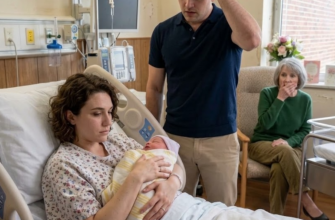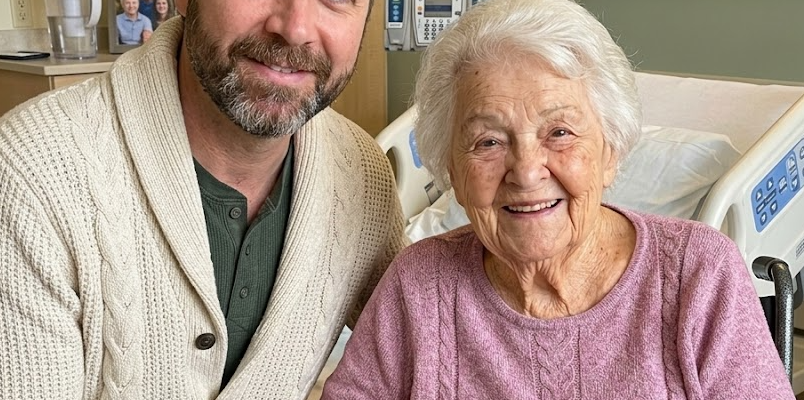

David wouldn’t let me visit his mother alone—he said she needed peace and quiet. But a month later, I went there by myself and saw something with my own eyes that made my legs give way beneath me.
I believed my husband spent every day sitting by his recovering mother’s bedside while I paid for her treatment. The truth turned out to be far worse.
Every Sunday, our kitchen smelled of cinnamon and toast—that was how it had always been whenever David was home. Over fifteen years by his side, I had built a quiet, peaceful life. I thought it protected me like a warm sweater.
When my mother-in-law, Helen, suffered a stroke three months earlier, I was sure that this shared hardship would bring my husband and me even closer.
The Beginning
For the first few weeks, we went to the hospital together. I held Helen’s thin hand while David adjusted her pillow, and I could see genuine concern in his eyes.
“Thank you for being here,” he whispered to me in the hallway. “I couldn’t do this alone.”
“She’s my family too, David.”
That evening, he hugged me tighter than usual.
“You’re saving us. You really are.”
I wanted to knit Helen a blanket from soft yellow yarn. I bought her favorite lavender hand cream and warm socks. At the time, I truly believed that suffering sometimes brings people closer together.
The First Cracks
Then the phone calls began. David would answer them in the garage or sit in his car with the windows rolled up while I stood on the porch holding a cup of coffee that was slowly growing cold.
“Work,” he would reply briefly.
One day, I noticed the scent of unfamiliar perfume on his collar—strong and floral. I convinced myself it must have rubbed off from a nurse in the elevator.
A few days later, he said something that changed everything.
“I think I should keep visiting Mom by myself. She needs complete peace and quiet. Too many visitors wear her out.”
“But I’m not just a visitor, David. I’m her daughter-in-law.”
“Trust me. It’s better for her this way.”
I nodded—and for the first time in fifteen years, I felt a crack forming in the foundation of our marriage.

The Money That Kept Disappearing
Every week, I wrote a check for Helen’s rehabilitation—three, sometimes even four thousand dollars.
“The insurance won’t cover the physical therapy again,” David explained, cupping my face in his hands. “You’re literally helping my mother walk again.”
I wanted to believe him. I needed to believe him.
But one day, I found a receipt from a restaurant sixty miles away from the hospital—in the exact opposite direction. And once again, I noticed the same perfume scent on his collar.
I called the hospital myself.
“I’m sorry, but no one visited her today,” came the reply.
That evening, I confronted David directly.
“The nurses mix up their shifts, sweetheart,” he laughed. “The doctors asked me to come alone. Trust me.”
I said, “I trust you,” almost like a prayer. But deep inside, I already knew that prayer would not save me.
The Denver Conference
A few days later, David packed a suitcase for a three-day business trip.
Several hours after he left, I received a call from an unfamiliar number.
“This is Dr. Hensley. I’ve been trying to reach your husband, but his phone is unavailable. Helen’s condition has worsened. Please come in—we need to discuss several matters regarding her treatment.”
“What kind of matters?”
“Please, just come.”
What I Saw With My Own Eyes
I didn’t hesitate. I drove straight to the rehabilitation center—not the one I believed David was taking his mother to every day, but the one listed in Dr. Hensley’s records.
As I walked down the hallway toward the nurses’ station, I saw him.
David was standing by a window, holding the hand of a young woman whose rounded belly clearly showed she was pregnant. He leaned in and kissed her the same way he had kissed me during the early years of our marriage—gently, naturally, as if it were the most normal thing in the world.
I made no sound. I simply stood there, watching everything I had believed in for fifteen years crumble before my eyes.
A nurse stepped out from behind the desk—a woman with gray hair and tired but kind eyes. She recognized me from a photograph she had once seen in Helen’s room.
“You’re David’s wife,” she said quietly. “My name is Clara. Come with me—we need to talk before your husband notices you.”
She led me into an empty office.
“Your mother-in-law has been trying to contact you for weeks. David took away her phone. She told me everything she knew.”
“And that woman?”
“He introduces her here as his fiancée. Helen found documents in his bag a month ago.”
“The money I was paying for rehabilitation…”
“The payments have not been arriving for almost a month. Helen was moved to a ward for patients who cannot afford their treatment.”
The ground seemed to disappear beneath my feet. Everything I saw that day with my own eyes was more convincing than any words could ever be.

Helen
I found my mother-in-law in a standard hospital room—tired, but undefeated.
“I tried to warn you,” she whispered, squeezing my hand. “He took my phone away. I couldn’t contact you.”
“I know the truth now. And you’re not alone anymore.”
That same day, I called a lawyer.
“Please freeze our joint accounts. Prepare the divorce papers. And take care of the legal arrangements so I can assume responsibility for Helen’s medical care.”
The Conversation
That evening, David came home wearing the same smile that had always made me doubt myself.
I was waiting for him with a folder of documents on the table.
“What’s going on, Sophia?” he asked when he saw my face.
“I was there today, David. I saw you. I saw her. I saw the room your mother is really staying in.”
The smile disappeared from his face.
“I can explain everything…”
“No.”
He reached out toward me. I stepped back.
“Never use her name to manipulate me again.”
“Please, just let me explain…”
“I will never again let you take away the place where I should have been.”
I handed him the folder.
“Helen is under my care now. My lawyer will contact you on Monday.”
“You can’t do this to me.”
“I’m not doing this to you, David. I’m doing it for her. And for myself.”
I closed the door.
Later
A few weeks later, I was sitting beside Helen in a bright hospital room—now in a proper ward that I paid for directly, without anyone in between.
She was smiling again.
The truth cost me my marriage. But it gave me back the woman I had always considered family.
And it gave me back myself—the person I had lost the day I learned to stop trusting my own eyes.