
Thirty minutes after our daughter was born, my husband said he wanted a DNA test. He looked at our baby not with joy, but with suspicion, and those words changed everything I thought about our marriage.
I had always imagined that moment differently.
After nine months of waiting, worry, and hope, I thought my husband would stand by my side, hold our daughter in his arms, cry tears of happiness, and say that from that moment on, we were a family.
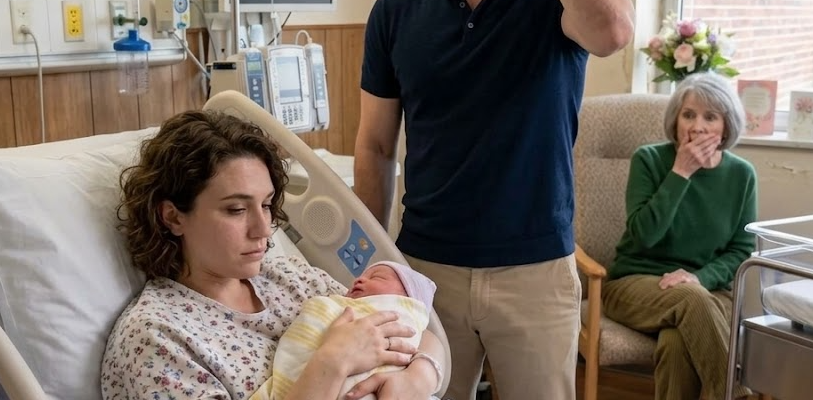
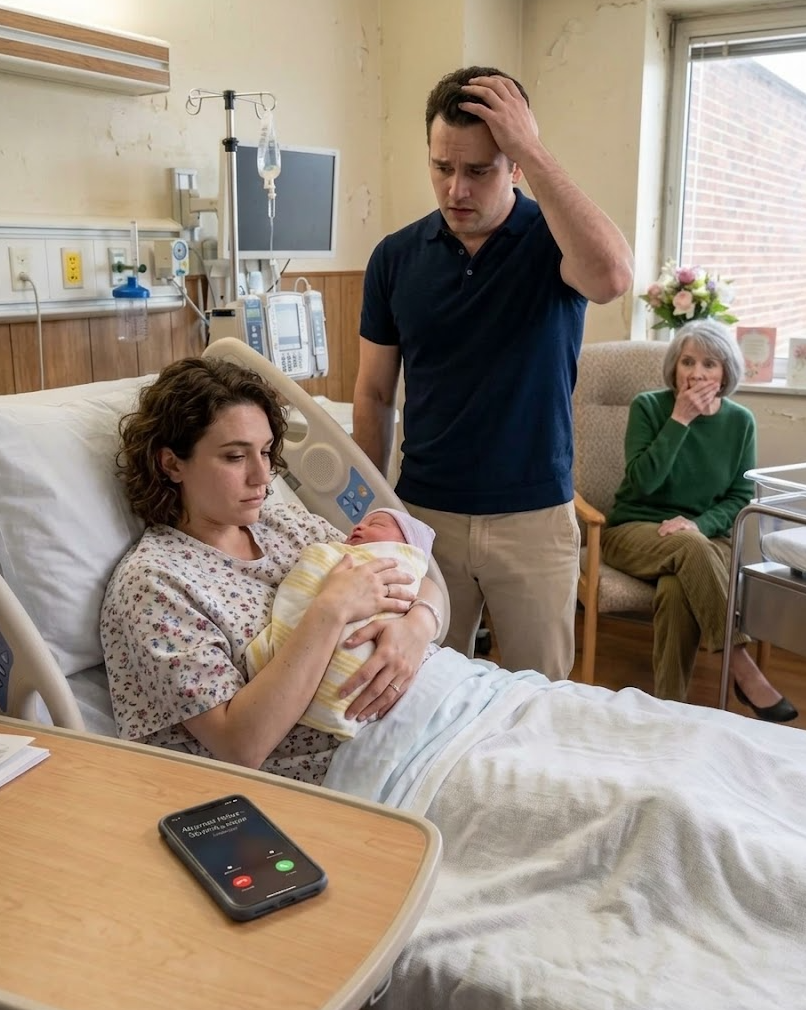
Instead, he stood beside my hospital bed, looking at the tiny girl I had just given birth to as if he were searching for proof of some hidden secret.
I lay in the hospital room, exhausted but happy. My body still ached, my hands trembled with fatigue, and beside me lay our daughter, Emma.
She was so tiny.
Her little fingers moved as she held onto my finger, and I couldn’t stop looking at her.
I waited for my husband, Jason, to sit beside me, kiss my forehead, and say:
“Thank you. She’s beautiful.”
Instead, he sighed deeply and quietly said:
“I need a DNA test.”
At first, I thought I had misheard him.
I looked at him.
“What did you say?”
He avoided my gaze.
“I want a paternity test.”
His mother, Susan, was sitting in the corner of the room, holding a cup of coffee with both hands, but at that moment she stopped drinking.
She froze.
I looked at Jason.
“Thirty minutes after I gave birth to your daughter, you’re saying something like this to me?”
He pressed his lips together.
“I just want to know the truth.”
Those words hurt me more than I could have imagined.
This was the man who had been by my side throughout the entire pregnancy.
He went with me to every checkup.
He held my hand when we first heard our baby’s heartbeat.
He chose the color for the nursery himself and told me countless times how much he couldn’t wait to meet our daughter.
But now that she was lying beside me, the first thing he felt was doubt.
“Do you think I cheated on you?” I asked.
He didn’t answer.
And that was enough.
Something inside me changed.
I didn’t scream.
I didn’t cry.
I simply picked up my phone from the bedside table and called my lawyer, Melissa Harper.
When she answered, I said:
“I need you to prepare the divorce papers.”
Jason suddenly looked up.
“What?”
He clearly hadn’t expected that.
But the biggest change was in his mother’s reaction.
Susan turned pale.
She looked at her son, then at me.
Then she quietly whispered:
“My God… he doesn’t know.”
I slowly turned toward her.
“What exactly doesn’t he know?”
Jason frowned.
“Mom, what are you talking about?”
Susan lowered her eyes.
Her hands were trembling.
“This isn’t the right place…”
I shook my head.
“No. You didn’t stop him when he accused me right after our baby was born. Now I want to know the truth.”
Silence filled the room.
The nurse asked whether she should leave or ask Jason to step outside.
I replied:
“Not yet.”
Susan took a deep breath.
“When Jason was twenty-three, before he ever met you, he became seriously ill.”
Jason looked at her.
“What are you talking about?”
She continued:
“After the surgery, there were complications. The doctors told us there was a possibility that he might have trouble having children.”
Jason’s face suddenly changed.
“What?”
“We didn’t tell you everything,” she whispered. “After that illness, you were devastated. We were afraid that this information would destroy you.”
I felt my heart begin to race.
“So you’re saying Jason believed the baby might not be his, even though the problem could have been something completely different?”
Susan closed her eyes.
“Yes.”
Jason took a step back.
“That’s impossible.”
“It’s true,” she replied. “I still have the medical records.”
He looked at her as though his entire world had just fallen apart.
But my pain didn’t disappear.
I looked at him.
“You accused me at the most vulnerable moment of my life.”
He lowered his head.
“I didn’t know.”
“But you chose to believe the worst about me.”
He rubbed his face with his hand.
“I heard something.”
“What exactly?”
He was silent for a long time.
Then he said:
“My brother said Emma doesn’t look like me. He also said you were too close to your coworker.”
I closed my eyes.
His brother, Michael, had never liked me. He constantly made careless comments and enjoyed causing trouble.
And his words were enough for Jason to begin questioning our entire family.
My coworker Tom was almost thirty years older than me, had a wife, and had always treated me strictly professionally.
But for Jason, one rumor was enough.
My phone rang again.
It was Melissa.
“I can start preparing the papers,” she said. “But I have to ask—are you sure this is what you want?”
I looked at Jason.
He no longer looked like the confident man who had accused me only moments earlier.
He looked like someone who had finally realized the consequences of his words.
Before I could answer, Susan opened her bag.
She took out an old envelope.
“Jason, read this.”
He took the documents.
They were his medical records.
He read them.
Once.
Then a second time.
Then a third.
His face turned pale.
The anger was gone.
Only confusion, shame, and regret remained.
“Why didn’t you tell me?” he asked quietly.
Susan burst into tears.
“We thought we were protecting you.”
He looked at me.
“Emily…”
I raised my hand.
“No.”
He fell silent.
Because the issue was no longer just the DNA test.
It was about trust.
I remembered every year of our marriage.
When he came home late from work, I supported him.
When his father died, I helped him through his grief.
When his mother had surgery, I drove her to her appointments, even while I was pregnant and feeling sick.
I was always there for him.
But on the day I needed him most, he looked at me with suspicion.
“The test will be done,” I said.
Jason nodded.
“Yes. And when it shows that Emma is my daughter…”
I interrupted him.
“Even if it proves she’s yours, it won’t change what you did.”
He lowered his eyes.
“I was afraid.”
“So was I,” I replied. “I was afraid of giving birth. I was afraid for our daughter’s health. I was afraid every time the doctors checked her heartbeat. But despite all that, I chose to trust you. You chose doubt.”
Two weeks later, the test results arrived.
Jason was Emma’s biological father.
But those two weeks changed us forever.
He came to see me with flowers, baby supplies, and a handwritten letter.
He stood at the door looking completely different.
“I know I can’t simply erase what I said,” he said. “But I want to fix what I’ve done.”
I remained silent.
“I’m ready to go to therapy. I’m ready to work on myself. I don’t want to lose our family.”
I looked at him.
Once, those words would have made me happy.
But now everything was different.
“Our family didn’t fall apart because of the DNA test,” I said. “It started falling apart the moment you looked at our daughter and saw suspicion instead of love.”
He cried.
I believed his regret was genuine.
But sometimes one apology isn’t enough to rebuild what has been broken.
I filed for legal separation.
Not because I wanted to punish him.
But because I needed to learn how to feel safe again.
Jason continued to stay involved in Emma’s life and tried to be a good father.
I told him that trust can’t be restored with promises.
It can only be restored through actions.
Susan apologized to me many times.
I gradually forgave her.
But I’ll never forget that silence can hurt, too.
A few months later, I sat beside Emma’s crib in her nursery.
She slept peacefully.
She knew nothing about the fear, doubt, and pain of adults.
To her, the world was simple.
She knew only love.
I kissed her forehead and whispered:
“You were always wanted.”
This story taught me one thing: a family is built not only on love, but also on trust.
Because sometimes the deepest wounds are inflicted not by strangers, but by those we trust the most.