A week before the start of the big summer vacation, I was making coffee in the kitchen when I accidentally overheard my daughter planning what she considered the perfect trip.
Her name was Emily, and she was talking on the phone from my living room.
“Just leave all eight kids with Mom,” she said casually. “She doesn’t have anything better to do anyway. Then we’ll be able to go to the hotel and finally enjoy a peaceful vacation.”
I froze. The coffee cup remained in my hand as her words carried clearly through the open doorway. Emily laughed. She explained to the person on the other end of the line that her husband, Marcus, had already booked a hotel on the coast, while my son Rupert and his wife Lily had reserved the resort they had dreamed about for years. Meanwhile, all eight grandchildren were supposed to stay with me.
“Mom has already bought presents for everyone and paid for the entire holiday dinner,” Emily continued. “All we’ll have to do is come back at the end of the weekend, eat, pick up the gifts, and leave. It’s just perfect.”
Perfect.
For them.
My name is Sylvia Johnson. I’m sixty-seven years old, a widow living on a modest pension that I carefully budget every month. I loved my grandchildren deeply. Emily had three children, and Rupert had five. I adored reading to them, attending their school events, and listening to their endless stories. But loving them didn’t mean I had agreed to become the family’s unpaid seasonal babysitter.
Quietly, I went upstairs to my bedroom and sat on the edge of the bed. The walls around me were covered with family photographs. I was in nearly every one of them—holding a baby, carrying a holiday cake, putting up decorations, serving food, or standing quietly in the background with a tired smile. I was always there. Yet no one really thought about me.
Inside my closet were eight carefully chosen gifts for my grandchildren. Over the previous three months, I had spent more than $1,200 on educational toys, books, summer clothes, and everything else I thought would make the children happy. On my dresser lay the receipt for the holiday dinner: I had prepaid more than $900 for a meal for eighteen people. Appetizers, main courses, desserts, drinks… No one had asked me to do it. I simply believed that giving everything you had was how mothers proved their love.
Then the memories came flooding back with painful clarity. The last time the whole family gathered, I had cooked for two straight days. Emily and Marcus arrived late, ate quickly, and left because they had plans with friends. Rupert and Lily stayed only a little longer. The grandchildren remained with me until late at night. I made their beds, helped them wash up, settled arguments, read bedtime stories, and stayed awake while their parents enjoyed themselves elsewhere. Every holiday and every vacation followed the same pattern: I cooked, I cleaned, I watched the children. Everyone else relaxed.
But when my own birthday came, no one remembered. Emily called three days later. Rupert sent a short message two weeks afterward. There was no dinner, no cake, no flowers, no visit. Only excuses.
Sitting in my bedroom, I finally recognized the pattern. My family no longer saw my constant care as generosity. They saw it as an automatic service.
Something inside me quietly changed. I picked up my phone and called my close friend, Pauline. She had been inviting me for years to spend a week with her in a quiet seaside town, but I had always declined because I felt obligated to stay with my family.
When she answered, I asked,
“Is your invitation to the seaside still open?”
There was a brief pause.
“Of course,” she replied warmly. “What happened?”
“I’ve decided that this time I’d like to enjoy my vacation instead of working through it.”
“We’re leaving Wednesday morning,” Pauline said. “No pressure, no responsibilities. Just the sea, peaceful meals, and good company.”
For the first time in many years, vacation plans sounded like something I could genuinely enjoy.
The next morning, I called the catering company and canceled the holiday dinner order for eighteen people. The refund was supposed to be credited back to my card within a few days. Then it was time to deal with the gifts. I loaded all the bags into my car and spent several hours driving from store to store. By noon, I had recovered almost all of the money, and the two gifts that couldn’t be returned I simply donated to a local community charity program. They would go to other children whose families might understand that care is not something you can demand without gratitude.
When I got home, I was physically exhausted, but my heart felt light. That sense of relief was new to me. It felt as though I had laid down a heavy burden I had carried for so long that I had forgotten what it felt like to stand up straight.
Over the next few days, Emily called twice to ask if everything was ready for the children to come. I told her everything was under control. And it was true. For the first time, everything was under my control.
Then Rupert sent me a message simply informing me of the plan: “We’ll drop the kids off on Friday at ten in the morning. We’ll pick them up Sunday evening. Thanks, Mom. They can’t wait.”
It wasn’t a request. He simply announced how I would be spending three days of my life. I left the message unanswered.
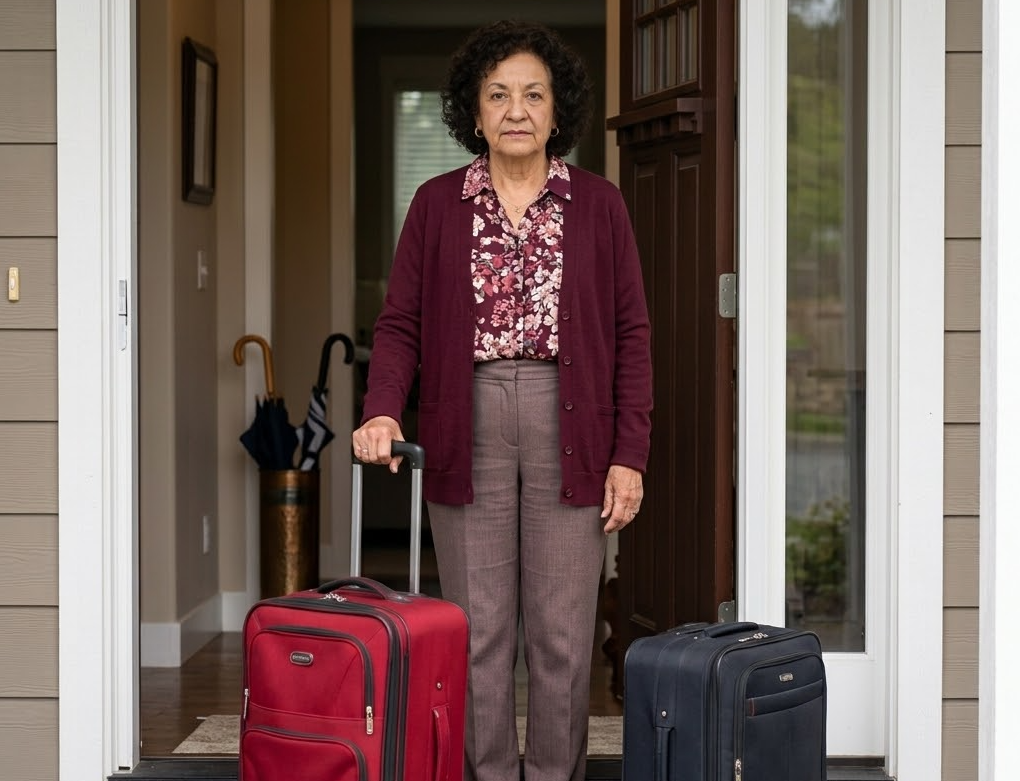
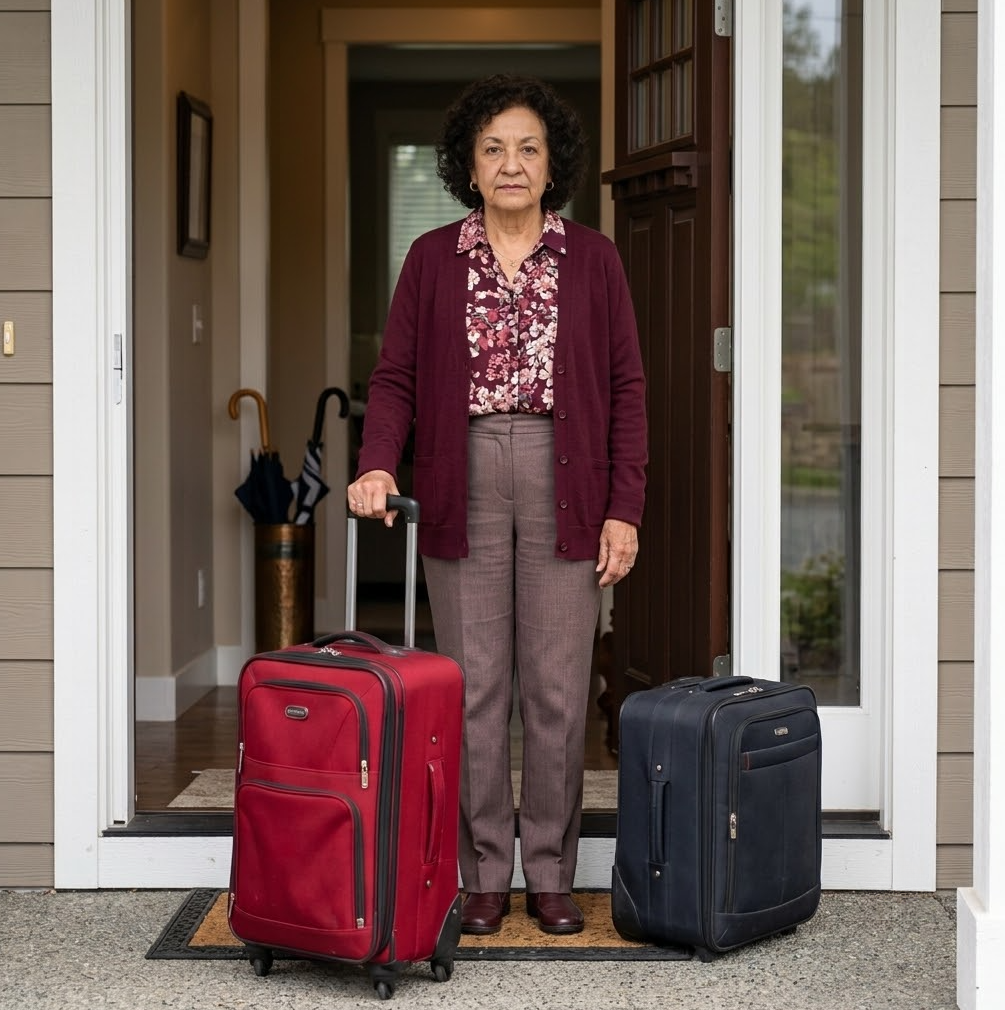
On Tuesday, while I was packing my suitcase, the doorbell rang. Emily was standing at the door with a bag of food for the children. She was in a hurry, saying that her husband was waiting in the car.
“Emily, I need to tell you something,” I stopped her. “I won’t be home those days. I’m leaving with Pauline tomorrow, and I won’t be back for a week.”
Her face stiffened. She immediately protested that everything had already been planned, and that’s when I told her I had overheard her phone conversation. Her expression changed from confusion to anger. She accused me of interfering in her private conversation and insisted it was only for a couple of days and that the children loved me.
“That’s not the point,” I replied, looking her straight in the eye. “The point is that you all assumed my time belonged to you.”
And for the first time in her life, my daughter realized that I was capable of saying “no.”
Emily tried to brush off my complaints, insisting that I was making a big deal out of nothing and that they always included me in family plans.
“You only remember me when you need something,” I interrupted. “When was the last time you came just to spend time with me? When was the last time any of you remembered my birthday without being reminded?”
She had no answer. Instead, she helplessly asked what they were supposed to do with eight children.
“They’re your children,” I replied. “So you’ll have to figure it out yourselves.”
The next morning Pauline arrived. We loaded our luggage into the trunk and drove away, leaving behind a phone that wouldn’t stop ringing. After the tenth call, I simply turned it off.
We arrived at the seaside town that afternoon. It was small and beautiful, with pastel-colored houses and the scent of salt in the air. The cottage we had rented had large windows overlooking the water. The moment I saw the sea, all the tension I had been carrying finally disappeared.
I turned my phone on for a moment and found dozens of missed calls and angry messages. Emily wrote that the children were devastated because I had disappeared. Rupert accused me of being selfish for canceling the food order. Marcus demanded that I come back and fix everything because Emily was on the verge of a breakdown. Every message demanded that I clean up the consequences of decisions they had made without me. But for the first time in my life, I didn’t feel guilty.
I turned my phone off again.

On the very first evening, Pauline and I strolled through the local market without any rush or schedule. I bought myself a simple bracelet in shades of blue and green. It wasn’t expensive, but it was something I chose for myself simply because I liked it. After lunch, we sat on the beach under an umbrella. There were no children’s arguments, no adults asking questions about the holiday dinner. That evening, we cooked pasta, opened a bottle of wine, and had dinner on the terrace while watching a breathtaking pink sunset.
The days of our vacation passed in the same peaceful rhythm. We walked along the coastline and ate at a small restaurant by the water. My phone remained switched off. Every crisis unfolding back home belonged to the people who had created it. They had to take care of their own children, cook their own meals, and learn that a family vacation doesn’t organize itself with the wave of a magic wand. Every day passed peacefully.
At the end of the week, Pauline drove me home. That same evening, Emily and Rupert showed up at my door. Neither of them looked as confident as before.
“We need to talk,” Emily announced.
“Then let’s speak honestly,” I replied. “No guilt and no manipulation.”
“You ruined our entire vacation,” my daughter said, frowning. “We lost money on our reservations and spent the whole time trying to manage the children.”
“And for the first time in many years, I spent that time in peace and quiet,” I answered calmly. “You stopped treating me like a member of the family. You turned me into a function—someone useful whenever you needed money, food, or a free babysitter, but unimportant the rest of the time.”
Rupert called my behavior selfish, but I replied that it was simply self-respect. I clearly laid out my new rules: no last-minute babysitting, no paying for family holidays by myself, and no treating my plans as unimportant. When Emily asked what would happen if they didn’t accept those boundaries, I answered that then we would have nothing left to discuss. I closed the door, feeling stronger than I ever had before.
The following weeks were unusually quiet. My children didn’t call, and at first the silence felt strange. Soon, however, it became filled with a new kind of life. I enrolled in a watercolor class, joined a book club at the library, took long walks through the park, and cooked simple meals just for myself. I no longer waited for permission to be happy.
At the beginning of April, while I was working in the garden, Rupert came to visit me. He looked uncomfortable, even shy. We sat down in the living room, and after a long silence, he admitted that he had been thinking a lot about what I had said.
“You were right about how we treated you,” he said quietly. “We used you as the solution to every problem we had, and we never asked if you were tired. We just got used to the fact that you were always available.”
Those were the words of apology I had once desperately longed to hear. But by then, I no longer needed them to feel worthy. I thanked him for his honesty, but firmly reminded him that my boundaries would remain unchanged: visits had to go both ways, and any help with the children had to be requested politely and well in advance. Rupert agreed and promised that he and his wife would do their best to make things right. It was a difficult but honest conversation.
I didn’t know whether Emily would ever come back or whether our family would ever be the same again. But I had realized the most important thing: my peace depended only on my own decision to protect it.
That evening, I sat on my porch with a cup of tea, listening to the birds singing. I remembered the day I had overheard my daughter’s hurtful words in my living room. At the time, they had seemed cruel. But in truth, they had saved me. For decades, I had believed that a good mother had to give everything she had, confusing self-sacrifice with self-worth. At sixty-seven years old, I finally understood that loving your family does not require giving up yourself. I chose myself, and that choice became the beginning of my true life.