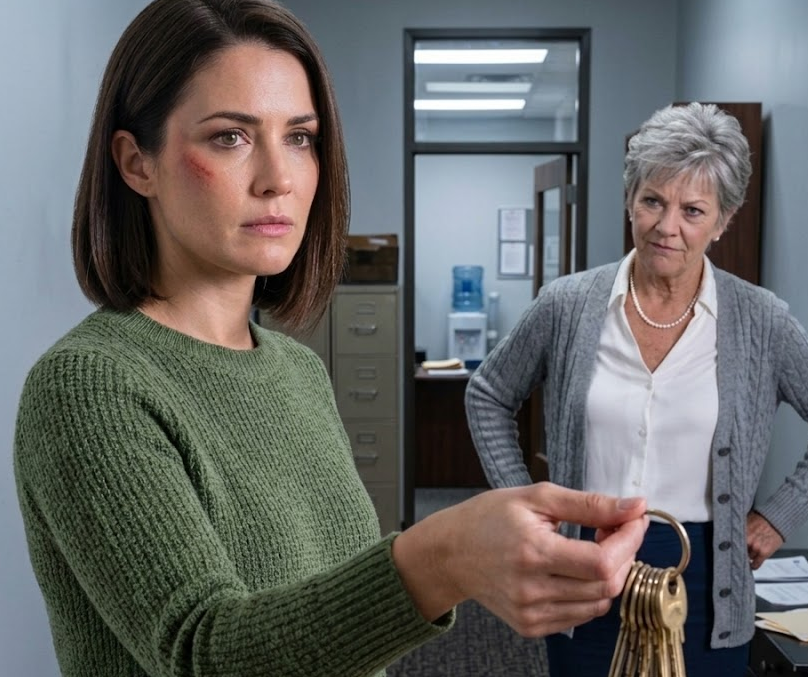
My mother-in-law believed she had the right to enter every room in the house. I only asked her not to enter my room without permission.
The keys hurt me less than the words that followed a moment later.
“This is my son’s house,” Diana said, looking at me as if I were the stranger here. “And you don’t get to decide where I’m allowed to go.”
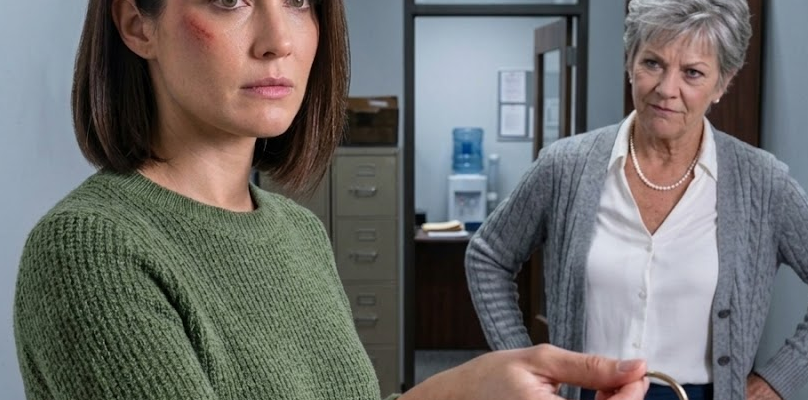
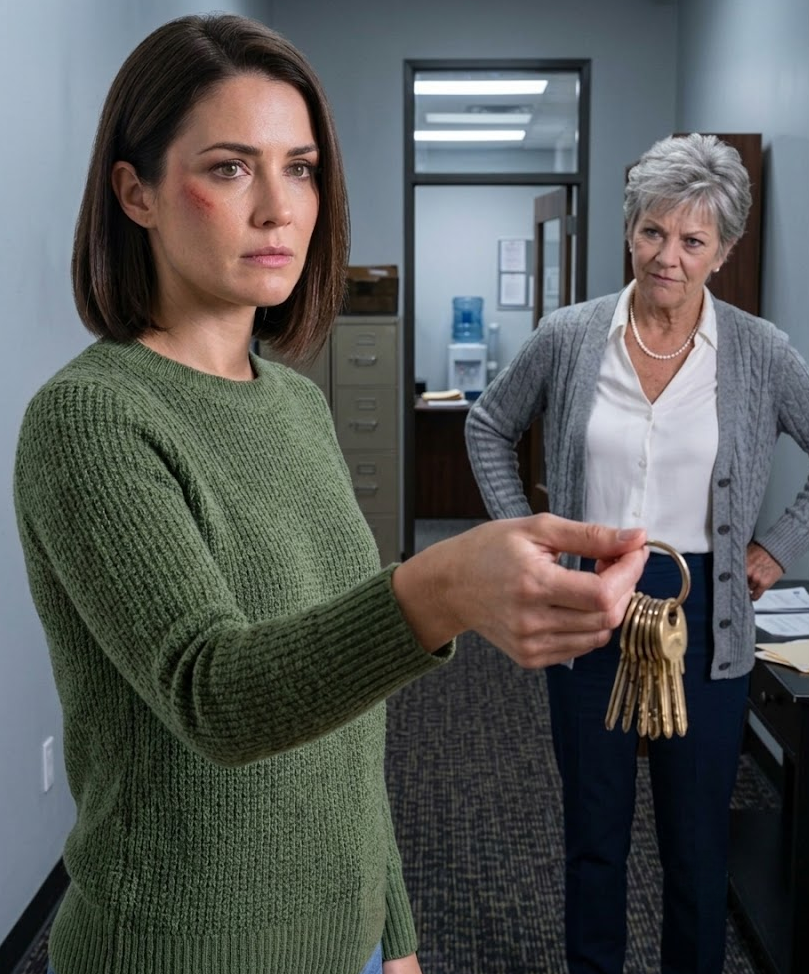
A red mark had already appeared on my cheek. A heavy bunch of brass keys lay on the floor.
I picked it up and simply stared at it for several seconds.
Not because I didn’t know what to do.
It was just that, for the first time in several years, I suddenly understood clearly: it had never been about the keys.
Or even the house.
It was about two people gradually becoming accustomed to treating my kindness as their entitlement.
“All right,” I said calmly. “Then from today, everything will be different.”
Diana smiled mockingly.
She was certain I would back down again.
That was how it had always been.
Three years ago, when I married Mark, I bought this house before the wedding. I received the money from my grandmother, who had practically raised me after my parents died. I had never hidden that fact, and I had never tried to use the house against my husband.
Weddings
Quite the opposite.
I considered it our home.
A few years later, when Diana’s apartment was flooded, we offered without hesitation to let her move in with us.
“For a few weeks,” she had said at the time.
Six months passed.
At first, she asked for permission.
Then she stopped.
At first, she knocked on the door.
Later, she simply walked in.
One day I found her in our bedroom. Another time, she was sitting at my desk, where my documents were lying.
When I asked her not to touch my things, she merely shrugged.
“You want to control everything too much.”
Mark heard her and said nothing.
That was the first time I felt not irritation, but loneliness.
Because sometimes the most painful moment in a marriage doesn’t come when someone argues with you.
It comes when the person who should be standing by your side chooses silence.
After today’s incident, I called a locksmith and replaced all the exterior locks.
“How many keys should I make?” he asked.
I looked at Mark.
“Two.”
One for me.
One for my husband.
Diana stood nearby in silence.
When Mark came home that evening, he stared at the new lock for a long moment.
“You really did this?”
“Yes.”
“Because of my mother?”
I shook my head.
“No. Because of what happened today.”
He looked at me, then at his mother.
“She shouldn’t have thrown those keys.”
It was the first sensible thing he had said that evening.
But a moment later, he added:
“Although replacing all the locks was probably unnecessary.”
I closed my eyes for a second.
And I realized that he was still looking at the wrong thing.
Not at my cheek.
Not at the fact that his mother had barged into our bedroom.
Not at the fact that she had been moving my things around and taking an interest in my documents for months.
He was looking at the lock.
The house.
The fact that his mother had lost the ability to control all of it.
“Mark,” I said quietly, “do you realize that you’re not defending her now?”
He didn’t answer.
“You’re pretending that nothing happened.”
That night, I barely slept.
In the morning, I opened the folder containing the documents related to the house.
The purchase agreement.
The mortgage documents.
The insurance policy.
The tax documents.
The same surname appeared everywhere.
Mine.
I ran my fingers along the edge of the folder and, for the first time, thought not about how to save our marriage.
I thought about how long I had been trying to save something that existed only because of me.
A few days later, I installed a camera in the hallway.
I wasn’t planning to spy on anyone.
I simply didn’t want to argue with people anymore about things they supposedly hadn’t done.
Three days later, the camera sent me an alert.
Someone had entered the house.
I opened the recording.
Diana.
She was holding Mark’s key in her hand.
She went upstairs and stopped in front of our bedroom door.
She pressed the handle.
The door didn’t open.
Then she took out her phone and called Mark.
I turned on the audio.
“She locked everything again,” Diana said.
There was silence for several seconds.
Then I heard my husband’s voice:
“Don’t worry. I know where she keeps the documents.”
I listened to that conversation several times.
Not because I couldn’t believe my ears.
But because I desperately wanted to be wrong.
There was no way I could be.
That evening, I didn’t make a scene.
I simply placed the folder in front of Mark.
“What were you looking for?”
He went pale.
Diana looked at me.
“Don’t make a drama out of this.”
For the first time in many years, I smiled.
Not because I found anything funny.
It was simply that everything suddenly became incredibly clear.
“I’m not making a drama, Diana. I’ve just stopped turning a blind eye.”
Mark remained silent.
I took out of the folder the document he had wanted me to sign a few days earlier.
It concerned transferring his share of the house to him.
I placed it on the table.
And tore it in half.
“This,” I said, “will never be a subject of our conversation again.”
That night, I made the decision to divorce him.
Not because of the house.
The house was simply the place where what had been happening between us for a long time finally became visible.
Sometimes a person realizes that their marriage is over not when love disappears.
But when trust disappears.
And when I closed the door behind them, for the first time in a long while, the house fell silent.
A real silence.
And I understood one simple thing:
sometimes reclaiming your own home means first reclaiming the right to say “no.”