My sister left for Germany 30 years ago and cut off all contact. I found her through social media and sent her a message. Two days later, she replied with a single sentence:
“If you want to know why I left, ask our mother what happened that summer before I left.”
When I read it, I immediately understood one thing: this was not an ordinary grudge. It was the continuation of a story that had never been told to me.
All my life, I had lived with a simple version of events: my sister left, chose a different life, and erased us from it. That’s what my mother said. That’s how my father stayed silent. And that’s what I eventually came to believe.
My name is Renata. I am five years younger than my sister. When she left, I was fifteen years old. I remember the suitcase by the door, an ordinary day, almost devoid of emotion, and a goodbye that didn’t seem important at the time. There were no tears, no explanations—just a moment that was supposed to be ordinary but became a breaking point.
Children do not see the cracks in a family. They live within what they are shown and believe it is the whole world.
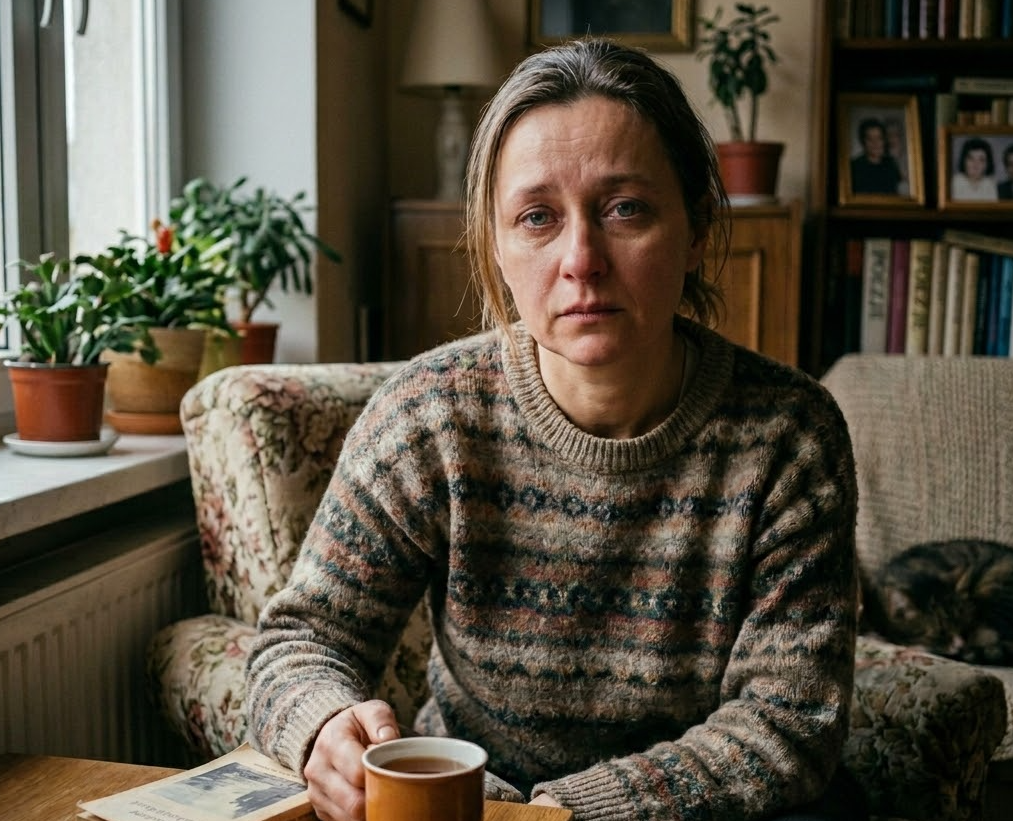
Now I am forty-five years old. My life looks normal: work, children, occasional visits to my mother. My father died long ago. My mother still lives in the same apartment and can still shut down any topic with silence.
But after that message, I realized one thing: silence is also an answer. It is simply stretched across decades.
I searched for my sister for years. Sometimes through friends, sometimes through relatives. Without success. At some point, I accepted the convenient explanation: she had left of her own accord and did not want to return either to the past or to us.
My mother always said the same thing:
“She decided that herself. Don’t bring it up.”
My father simply avoided the conversation.
And I stopped asking.
Until that message arrived.
I found her by chance. A photograph, a familiar face, somewhat changed but still recognizable. I wrote to her almost immediately, without giving myself time to hesitate:
“If this is really you—this is Renata. Your sister. I’ve been looking for you for thirty years.”
Two days of silence.
And then—one sentence.
After that, the whole past began to sound different.
“Ask our mother about the summer before I left.”
The summer before she left.
I tried to remember. At first, nothing seemed unusual. Ordinary days, heat, everyday scenes that had left no trace. But then details began to return: tense silences at the table, sharp glances, and the hush that would fall whenever I entered a room.

At the time, I thought those were just adult problems. Now I understand — I simply was not supposed to know.
The next day, I went to my mother’s house and showed her the message.
She read it for far too long.
And at one point, I saw her face change—not with emotion, but with a defense mechanism that had suddenly stopped working.
She carefully put the phone down.
And walked into the kitchen.
She came back with tea and cookies, as if that could somehow restore normality.
“Eat,” she said.
And then silence.
I asked her directly what had happened that summer.
She did not answer.
Not then. Not later. Every time, she ended the conversation with a single sentence:
“I don’t want to talk about it.”
But now that silence sounded different. Too deliberate. Too heavy.
I began searching for answers on my own.
And little by little, fragments started to emerge—from relatives, from casual remarks that no one had ever connected into a complete picture.
My father was not the man I thought I knew.
There had been another woman. A relationship that had been hidden. A story many people knew about, yet no one ever spoke of openly.
My mother knew.
But she did not leave.
She chose to keep the family together. For the children. For the appearance of peace. For “what people would say.”
Then my sister found out.
Not through a confession. Not through a conversation. By accident—and she put the pieces together faster than the adults could cover them up.
And she demanded the truth.
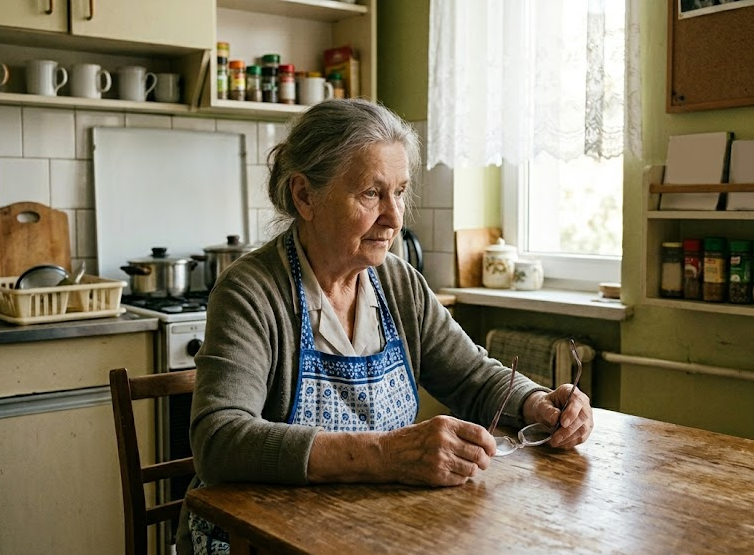
But instead of the truth, she was given a choice: remain silent or destroy the family.
My mother chose silence.
My sister chose the truth.
And she left.
Not because she wanted to disappear.
But because she was made to understand that her voice threatened everything the others were trying to preserve.
When I finally understood that, the first thing I felt was not anger.
It was silence inside me.
As if the entire story of our family had suddenly stopped feeling solid.
My sister did not abandon us.
She was turned into the one who “left.”
And now my mother lives with a choice she cannot speak aloud — because if she did, everything she spent decades building would collapse.
One day, as she stood by the door, she quietly said:
“I thought it would be for the best.”
And then she left before I could reply.
Now I write to my sister every week. She answers cautiously, as if she is testing whether our connection can survive one more step.
She sent me a photo of her children. One of them has my father’s eyes.
I didn’t tell her that.
And I don’t know if I ever will.
Because the most frightening thing is not the past.
It’s the fact that for twenty years we lived inside the same story — yet each of us carried a different version of the truth.