For twenty-eight years, I heard that sentence so often that I stopped noticing it. Edward never said it in anger — calmly, almost tenderly, like a diagnosis uttered in passing. And then one morning, he packed a suitcase, patted the cat, and left for a woman fifteen years younger than him. The door did not even slam.
If someone had told me three years ago that I would be running my own tailoring workshop with six seamstresses and a waiting list two months long, I would never have believed it. Three years ago, I was sitting on the floor of an empty kitchen with a cat on my lap and three hundred rubles in my wallet, not knowing whether they would last me until my husband’s pension arrived.
We met at the birthday party of a mutual friend. I was twenty-three and worked as a pattern cutter in a clothing factory. Edward was a department manager — tall, confident, with the voice of a man accustomed to being listened to. My mother used to say:
— You were lucky, Marta, to find such a reliable man.
The first years were truly good. Then Edward began correcting me. At first, it was small things — how I cooked borscht, how I folded towels, whom I talked to in the courtyard. Later, more important matters — where I could go in the evenings, what I should spend my salary on, and whether I should work at all since he earned enough.
I quit my job two years after our wedding.
— What do you need that factory for? — he said. — There are more duties at home than at work.
I agreed. I almost always agreed.
When our son Denis left to study abroad, only the two of us remained in the apartment — me and Edward. In the silence, I heard myself for the first time in many years. Six months later, I found messages from Alina on his phone — a nail stylist from the salon on the ground floor of our building. Hearts, restaurant photos, and messages that made my cheeks burn.
I said nothing. Twenty-eight years had taught me that in our family, conversations began only when Edward decided the time was right.
He made his decision on a Saturday at breakfast. He said he was leaving. That Alina was younger, lighter, and that he had “finally earned the right to happiness.” He said he was leaving the apartment to me.
— I’m not a scoundrel, after all.
The apartment — a small studio on the outskirts of the city, thirty-eight square meters, with windows facing an electrical substation. An almost empty refrigerator, because he had always done the shopping and paid with his card. Timosha the cat, whom he wanted to give to the neighbors, but I would not allow it. And me — Marta, a fifty-year-old woman without a job for nearly three decades because “a manager’s wife does not sit at a sewing machine.”
I remember the first weeks as if through a fog. Denis came home, brought food, and shouted at his father over the phone. Then he left again — he had exams. I was left alone with the cat, the bills, and my husband’s voice in my head.

At the social welfare office, they explained to me that I was not entitled to benefits — formally, the marriage still existed, and the apartment was jointly owned. I returned home and sat by the window. Timosha jumped onto my lap. We sat there until darkness fell.
The next day, Lara, my neighbor from the fifth floor, called me. She brought a dress for her granddaughter’s birthday that needed to be taken in.
— Marta, you used to sew. Would you do it? I’ll pay you.
I pulled out the old sewing machine that Edward had called “junk taking up space” for twenty years. I altered the dress in one evening. Lara paid me and said she had never seen such neat stitching, even in a professional tailoring shop. She also mentioned that her daughter had an entire wardrobe of clothes needing alterations.
That was how it all began.
Lara’s daughter had a friend, that friend had a coworker with two children who constantly needed clothes shortened, widened, or altered. After a month, I had seven regular clients.
After three months — fifteen.
I sewed for ten hours a day. My back ached, and needles appeared in my dreams at night, but I returned to an apartment whose refrigerator contained food bought with my own money.
Timosha waited for me by the door.
After six months, I registered my business. Denis helped me with the paperwork — in the evenings we sat by the laptop, and I was afraid of every click. Edward had always said I was “hopeless with technology” and that it was better if “he handled those things.” Denis was patient and nothing like his father. He showed me how to keep accounts, reply to customers through messaging apps, and accept card payments.
I bought a new industrial sewing machine. With my own money, without asking anyone for permission. I stood in the store, looking at the boxes and crying — for the first time in thirty years, I was deciding for myself how to spend my money.
After a year, I already had my own small tailoring workshop. I rented a place not far from home and hired two seamstresses. The order list was filled many weeks in advance.
Edward would never have understood it. He would have said that I had simply been lucky, that it was “nothing serious as long as there was a man in the house.”
But Edward never called. For two years — silence. Denis sometimes met with his father and returned home thoughtful. From him, I learned that Alina was fifteen years younger than Edward and that they were renting an apartment on the other side of town.
The divorce went smoothly. There was little to divide. The apartment remained with me — Edward did not object. Apparently, somewhere deep inside, he still had a bit of conscience left.
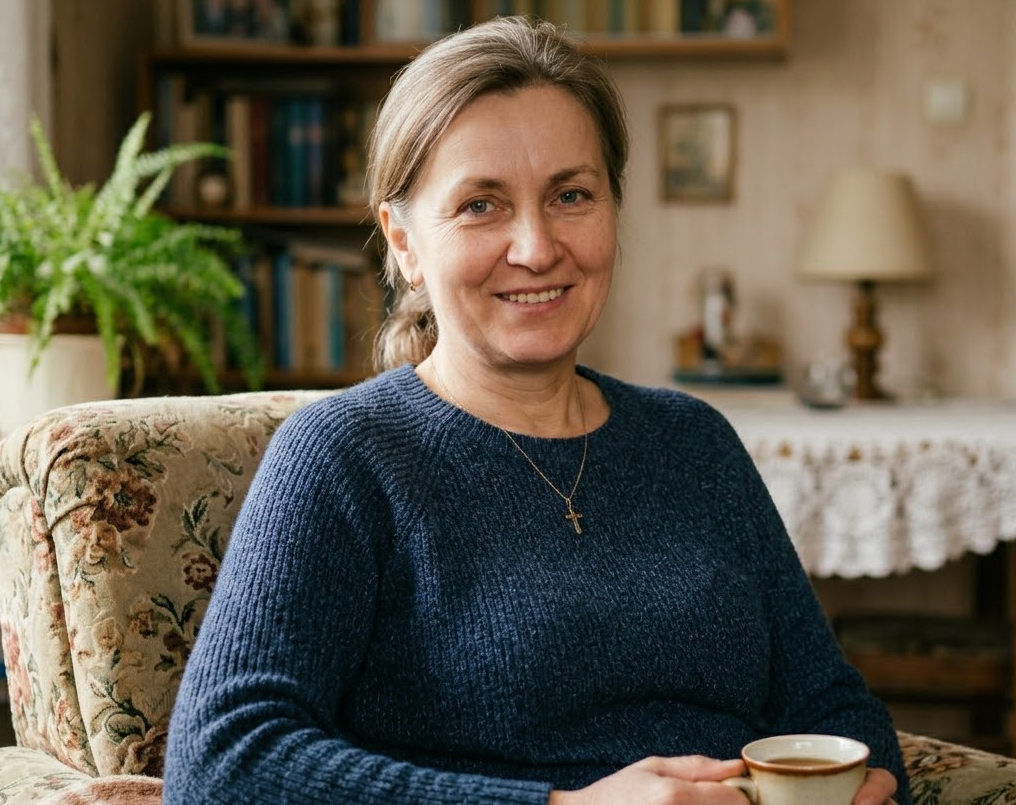
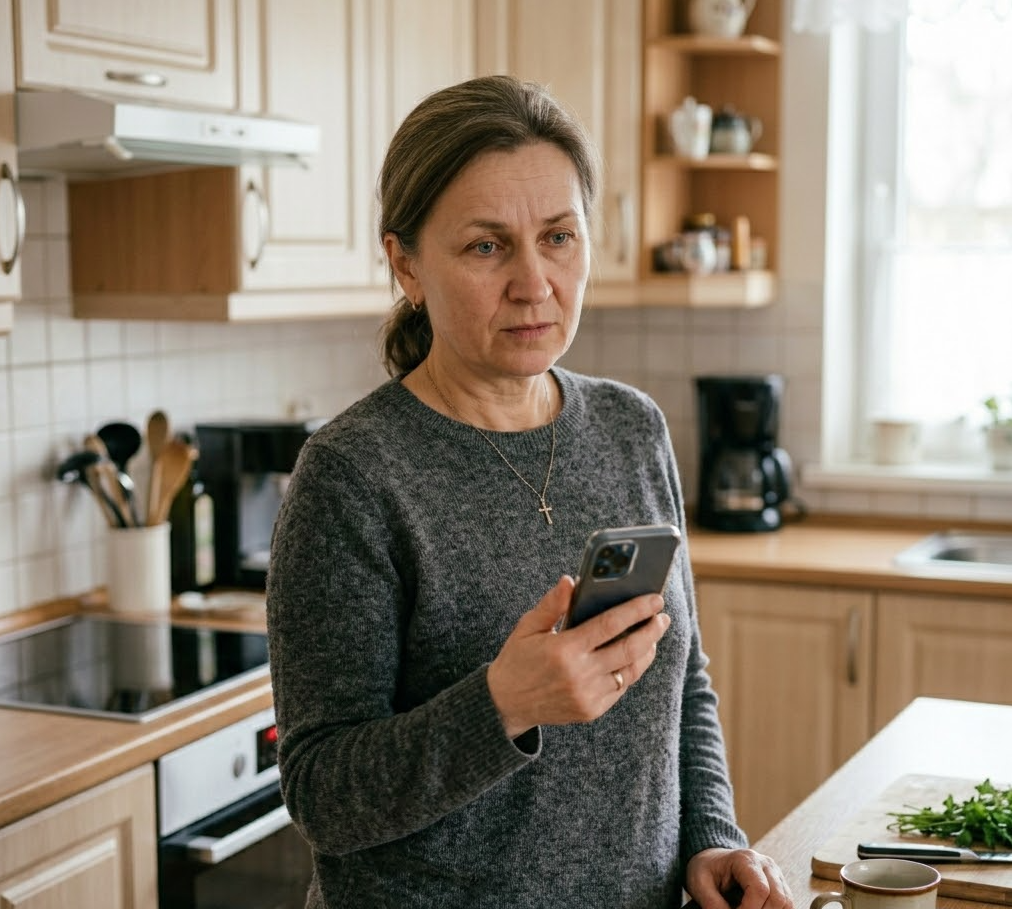
And last Thursday at nine in the evening, I was sitting with a cup of tea. Timosha was sleeping on the armrest of the chair, and a TV series was playing. The phone rang. An unknown number.
— Marta? It’s me.
I recognized him immediately. The same calm, patient tone with which he had spent years explaining to me how I should live my life. Only now there was something new in it.
Uncertainty.
— Listen, I know this is a strange call. But I need help. Alina and I broke up. There were layoffs at the factory, and the new management has been getting rid of people one by one. I have to pay my rent, but I don’t have the money.
I stayed silent. Timosha opened one eye.
— Marta, lend me some money. I’ll pay you back in a month when I find a job. I’ve heard you’re doing pretty well these days.
I’m doing pretty well.
Me. The same woman who, three years earlier, had sat on the floor with only a handful of coins in her wallet. And the man who had spent thirty years telling me that I could do nothing without him was now calling to ask me for money.
I could have reminded him of every evening when he extinguished another piece of my confidence. Every sentence that began with, “You don’t understand this,” or “Give it to me, I’ll do it.” I could have told him that he would not manage without me. It would have been fair. Symmetrical. Exactly what he would have done.
— No, Edward — I said calmly. — I won’t lend you any money.
And I hung up.
Timosha yawned and fell asleep again. The tea was still warm. The series continued. On the surface, nothing had changed.
Only thirty years had ended with one short sentence — and this time, I was the one who said it.