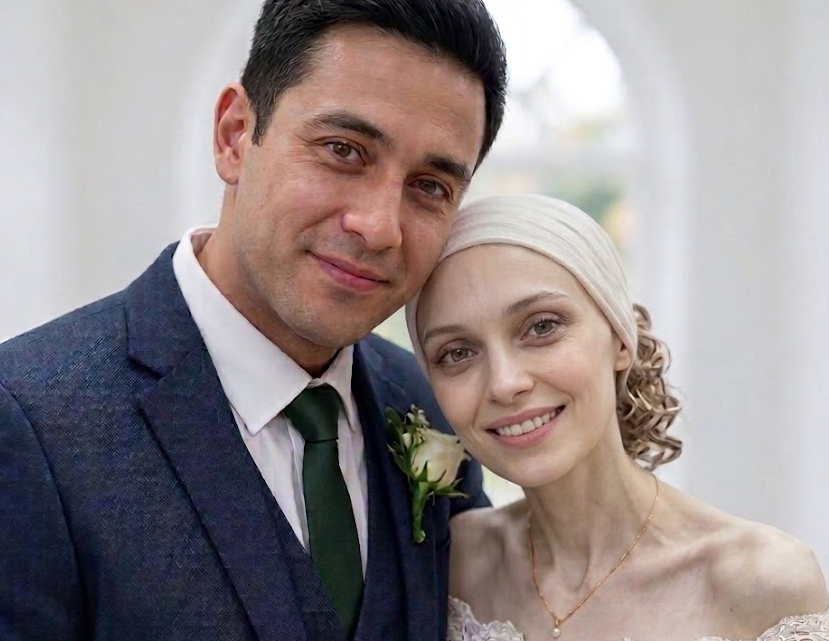
Olivia entered my life during the first week of college — she took my seat in a sociology lecture and refused to move when I asked her to get up.
— You can sit next to me — she said, glancing at my notebook — if your handwriting is actually good for anything.
I sat down. And from that moment on, I was completely lost to her.
For three years, we were inseparable. We cooked terrible food in cramped apartments, argued over crosswords on Sundays, and dreamed of completely different things: she dreamed of an old house with green shutters, while I dreamed of pursuing a PhD and seeing the world.
It seemed like we would have time for everything.
One evening, she asked me when I thought we would have children.
I laughed nervously.
— Not anytime soon. I still have so much to do.
Her expression changed.
I thought she was pressuring me. She thought I wasn’t listening to her.
The argument was intense. Neither of us apologized.
The next morning, half of her belongings were gone from the closet.
She wouldn’t answer her phone. Her social media accounts disappeared. Olivia simply vanished from my life.
I searched for her for ten years. Not every day — but often enough that it poisoned all of my relationships afterward.
Then, one rainy Thursday, someone knocked on my door.
Olivia was standing on the doorstep — thin, pale, barely able to hold herself up against the railing.
But I recognized her immediately.
— Hi — she whispered.
I should have demanded an explanation.
Instead, I let her inside.
We sat across from each other, and then she said something I never expected to hear:
— I’m sick. There’s no hope for me.
— How long do you have?
— A few months. Maybe less.
She took my hand.
— I came to ask you for something.
She wanted me to marry her.
I laughed.
— You disappeared for ten years, came back dying, and now you want a wedding?
— I know how it sounds.
— No, Olivia. You don’t.
She squeezed my hand.
— Please.
I should have said no.
Two days later, we were standing at the registry office.
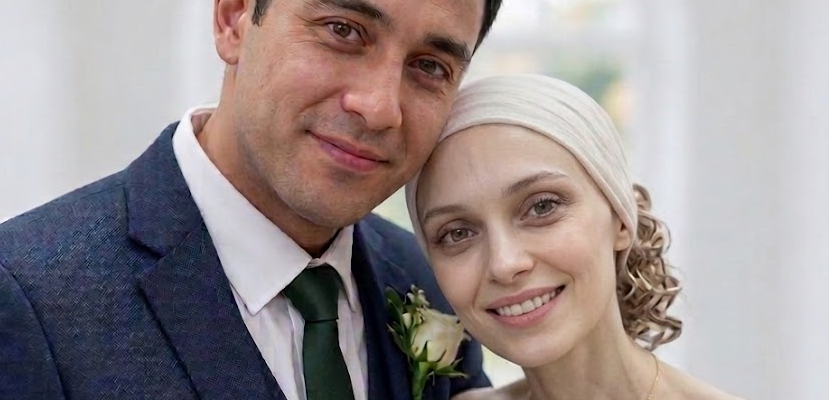
She was wearing a simple blue dress. She was so weak that I had to support her while we exchanged our vows.
When the official pronounced us husband and wife, she smiled exactly the way she had when we were twenty years old.
For ten days, we lived inside some strange, little miracle.
We ate breakfast in bed, watched old movies, and listened to the rain.
Every time I asked why she had come back, she gave me the same answer:
— Later.
There was no later.
Olivia died beside me on the tenth night.
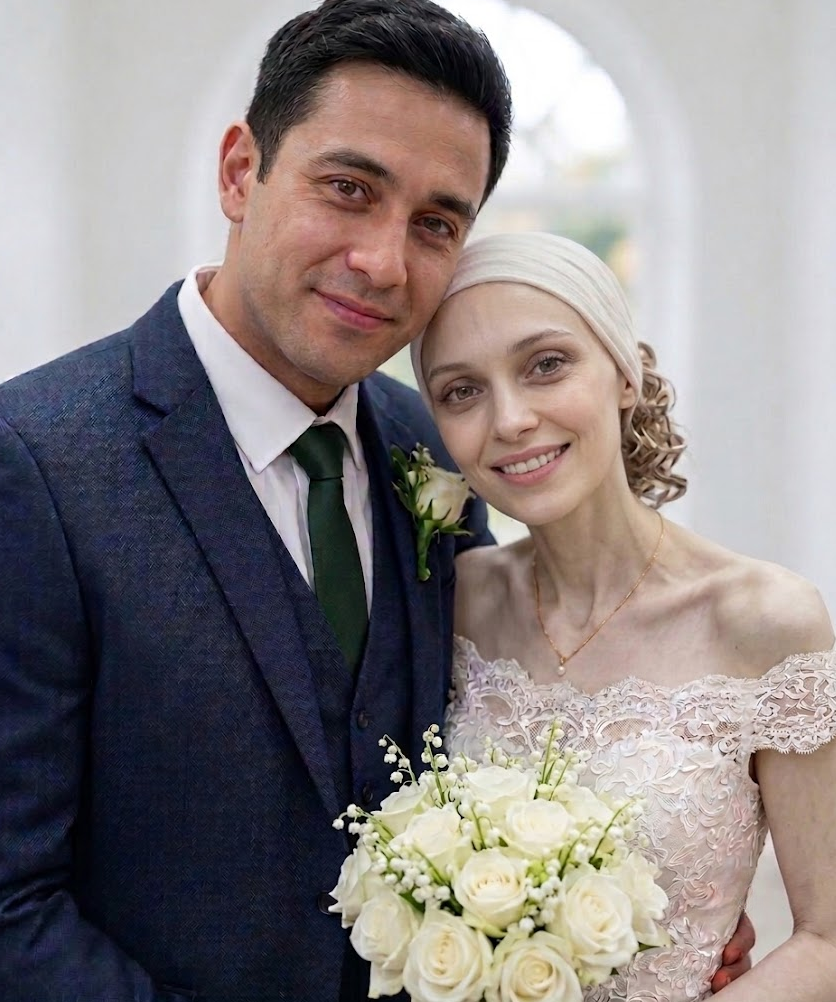
At the funeral, while family and friends were saying goodbye to Olivia, a woman I didn’t know approached me and placed an envelope in my hand.
Inside was a brass key.
— One hundred and twenty-seven letters are waiting for you — she said. — Please start with the first one.
The woman introduced herself as Madison — she had been Olivia’s neighbor.
She took me to the apartment where Olivia had lived all those years and led me to the bedroom.
Beneath a row of coats stood a dark wooden chest.
— She wrote to you for years — Madison said.
— Then why didn’t she ever send anything?
Madison looked at me.
— Because fear became her excuse.
I opened the chest.
Inside were dozens of envelopes, neatly arranged by date.
My name was written on each one in her handwriting.
The oldest letter had been written three days after she disappeared.
The first sentence made me freeze:
“I’m pregnant.”
Olivia had discovered she was pregnant several hours before our final argument.
When I started talking about pursuing my PhD, the years ahead, and how we should probably wait a little longer before having children, panic took hold of her.
She convinced herself that the news would destroy all my plans.
She went to stay with her mother. She thought she would return once she figured out what to say.
She never got the chance.
There were complications, and she lost the baby.
In the next letter, she described the hospital room and how she had been left alone with everything.
One sentence stayed with me:
“I lost our baby. Then I lost myself.”
After that came years of letters about plans she never carried out.
“I’ll call you tomorrow.”
“I bought a train ticket.”
“I found your office number.”
And every time, fear won.
Too much time had passed.
He must hate me.
He must already be living another life.
Reading the next letters became harder and harder.
Olivia knew where I lived.
She knew when I changed jobs.
She even knew when my relationships ended — mutual friends, completely unaware, had passed information on to her.
Twice she came to my city.
Twice she walked almost all the way to my house.
Twice she turned around and left.
— You knew about this? — I asked Madison.
She nodded.
— I tried to convince her to write to you.
— But you let it continue?
— I couldn’t make the decision for her.
Over the next few days, Madison took me to the places described in the letters.
To the bar where Olivia once dialed half of my phone number and then hung up.
To the park bench where she sat with my number written on a napkin.
To the house where, one day, she saw me walking inside with Samantha — the woman I had been dating for eight months.
Olivia assumed I was happy and decided not to interfere.
— She didn’t know Samantha left me because I couldn’t stop thinking about Olivia — I said.
Madison lowered her eyes.
— No. Olivia never found that out.
The last stop was our old campus.
Behind a loose brick near the greenhouse, I found a small metal box.
Inside was an ultrasound photo and Olivia’s final letter.
She wrote that she hadn’t returned earlier not because she was waiting for me to forgive her.
Her diagnosis had simply finally forced her to understand how many years of her life fear had stolen from her.
She didn’t want to let fear make one more decision for her.
She came back because I was still the only man she wanted to spend the rest of her life with — no matter how short that life might be.
“Ten days were never meant to replace ten years,” she wrote. “They were the only honest days I had left to give you.”
I held the letter in my hands.
— I wish she had trusted me.
Madison answered quietly:
— So do I.
It took me three weeks to read all one hundred and twenty-seven letters.
Some of them left me breathless with longing for her.
Others left me breathless with anger.
She loved me.
And at the same time, she hurt me.
One truth didn’t erase the other.
— Do you hate her? — Madison asked me one day.
— Sometimes.
— Do you forgive her?
— Sometimes.
She nodded.
— Anything simpler would probably be a lie.
I transcribed the letters in chronological order into a separate notebook and left the originals in the chest.
On the first page, I wrote one sentence:
“Love can be real — and still fail someone.”
Later, I contacted our college and arranged for a copy of the letters to be preserved in an archive with restricted access.
Not so that anyone could read Olivia’s pain.
I wanted there to be a reminder of the price of fear and silence.
I also created a foundation and named it “Open Doors.”
It helped students who found themselves in difficult situations because of pregnancy, serious illness, or any other problem that made them feel they had nowhere to turn.
A year later, an application came in from a girl named Chloe.
She was pregnant, and her family had threatened to disown her if they found out.
At the very bottom of the form, she had written one sentence:
“I don’t know who I can safely tell.”
The committee approved her application.
A few days later, I met Chloe at the same greenhouse where Olivia and I had spent so much time.
She nervously played with the bracelet around her wrist.
— Am I in trouble? — she asked.
— No.
— Did I do something wrong?
— No.
I handed her the document confirming that her assistance had been approved.
She read it and covered her mouth with her hand.
I didn’t tell her about Olivia.
I didn’t tell her about the baby we lost, the one hundred and twenty-seven letters, or the ten years we lost because Olivia believed she had to handle everything on her own.
I told her only what I wish someone had told Olivia many years earlier:
— You don’t have to solve everything on your own.
Chloe looked at me.
And that was the moment I finally understood what I could do with the years Olivia and I had lost.
I couldn’t change her decision.
I couldn’t get the lost decade back.
I couldn’t give us more than those final ten days.
But perhaps I could make sure someone else learned this sooner:
the door is still open — before fear convinces them to disappear.