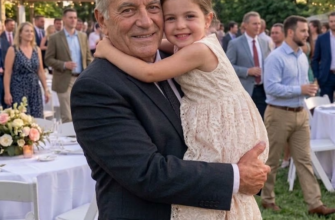

My husband, Marcus Hayes, is a cardiothoracic surgeon at a major city hospital. He is an excellent specialist, a respected physician, and a man completely devoted to his work.
And my name is Clara.
I spent thirty days in the same hospital, fighting for my life after a ruptured appendix caused severe peritonitis. I lost nearly six kilograms. My husband worked just five floors away from me.
For the first three weeks, I defended him.
I told everyone that Marcus couldn’t come to see me because he was involved in a prestigious international transplant project and was under strict quarantine.
— He can’t leave the department — I explained. — He’s saving lives.
For the first twenty days, that was indeed the case.
But during the final ten days, the quarantine had already ended.
And Marcus still didn’t come to see me.
During those ten days, he attended several meetings at the hospital. He gave a television interview. He received an award for outstanding achievements in medicine.
Not once did he call me.
An employee who was in isolation could request temporary exemption from the isolation requirement for up to two hours in the event of an emergency involving the health of a close family member, a life-threatening illness, or an urgent surgical procedure.
After leaving the isolation area, an additional sanitary procedure had to be completed.
And that was it.
There was no absolute prohibition.
There was a procedure.
I checked the records.
Marcus had not submitted a single request for permission to leave isolation because of an emergency involving a family member’s health.
Not one.
I saved the record in PDF format.
I kept his work schedule.
I kept the publicly available information about the events he attended.
And then I ordered a car.
I went to see Sarah — my friend from college, who had become a lawyer specializing in family law.
The moment she saw me, she immediately understood that I hadn’t come just to talk.
—I want you to prepare the divorce papers — I said.
Sarah was silent for a few seconds.
—Are you sure?
—Yes.
We had no children.
I proposed splitting the net value of our house equally, while each of us would keep our own accounts, cars, and personal belongings.
I returned to our brick house.
I took my clothes.
My diplomas.
My books.
I left my wedding ring on the hospital discharge papers.
I rented a furnished apartment for a short period.
I changed my phone number.
And I made sure that all further communication went through Sarah.
Two weeks later, Marcus received the divorce papers at a reception held to celebrate the successful completion of the project.
At first, Marcus assumed there had been some kind of administrative mistake.
He returned home.
When he walked inside, he saw that half of my closet was empty.
Then he found the wedding ring lying on the medical paperwork.
He told his mother and friends that I was emotionally unstable.
That I had decided to destroy a seven-year marriage because of a “missed hospital visit.”
His friend David was even more direct.
He said that surgeons work under enormous pressure and that their spouses should be able to show understanding.

— I am willing to be understanding when my husband is called at two in the morning for an emergency bypass surgery. I am willing to accept that he may come home late because he is operating on a patient. But I cannot accept ten days of meetings, television interviews, and ceremonies while I am lying in the hospital fighting peritonitis, and he cannot find even thirty seconds to find out whether I am alive.
Soon afterward, I was offered the opportunity to lead an external, independent audit at the same hospital where Marcus worked.
I voluntarily removed myself from any assessment related to the cardiothoracic surgery department to avoid a conflict of interest.
Another employee would handle that part.
I was responsible for administrative compliance with requirements, patient safety, and management.
When Marcus found out, he became furious.
He asked Sarah to arrange a meeting.
We met at a small café.
— Withdraw the divorce petition and come home — he said.
I placed our proposed division of assets on the table.
Then I took out my tablet.
— Look.
I showed him Chapter 4, Section B.
I showed him that he had not submitted a single request for permission to leave the isolation area because of an emergency involving a family member’s health.
Then I showed him photographs with the dates and times of his public events.
Marcus lowered his eyes.
— I worked eighty hours a week — he said. — I operated on weekends. I paid for this house. And you spend all day checking spreadsheets.
I looked at him.
— We are not deciding who worked more right now.
— Then what are we talking about?
— Your choice.
I explained that no one had kept him locked up.
The quarantine was over.
The protocol allowed him to request brief permission to leave isolation to visit his wife.
But he didn’t do it.
Why?
Because he was applying for the position of deputy chief of the surgical department.
And he didn’t want his personal problems to damage his professional reputation.
Marcus said it had been a mistake.
— A mistake? — I repeated.
Then I reminded him of what had happened six years earlier.
I had miscarried at ten weeks of pregnancy.
I started bleeding.
I was terrified.
Marcus had promised to take me to the hospital.
But that evening, a group of board members came to the city and offered him a place on an impromptu medical panel.
It wasn’t an emergency surgery.
There was no dying patient.
It was simply a panel involving several influential board members.
Marcus left me alone and told me to take a taxi.
He didn’t come to me until eight the next morning.
I forgave him.
— This isn’t a series of coincidences — I said. — This is who you’ve become.
Marcus refused to sign the documents.
I gave him three business days.
— After that, I will file for divorce, and I will also submit an official request to initiate an administrative proceeding so that the medical board can examine how the isolation protocol was applied.
This time, Marcus was frightened.
Because an investigation would mean that the hospital administration would begin examining the records.
Marcus turned to Dr. Arthur Vance, his former mentor and former director of medical staff, for help.
Dr. Vance believed that doctors’ families should be able to cope with the difficulties associated with the profession.
He called me.
— Clara, you’re making a decision that will change your life forever at a time when you’re particularly vulnerable.
I listened to him.
Then I asked:
— Did Marcus show you Chapter 4, Section B?
There was silence.
— Did he tell you that the quarantine had ended during those final ten days?
Again, silence.
— Did he tell you that during those ten days he attended dinners, gave television interviews, and took part in ceremonies?
Dr. Vance asked me to show him the document.
I sent him the PDF.
He read it.
When he called back, his voice sounded completely different.
— Marcus didn’t tell me everything.
—I know.
— I won’t get involved — he said. — I understand your decision now.
Three days later, Marcus still hadn’t signed the documents.
So I wrote an anonymous analytical article for a national magazine devoted to healthcare management.
I described the story of a surgeon responsible for an important clinical project who, according to the institution’s procedures, had been allowed to visit a loved one during a medical emergency but chose not to do so in order to protect his career.
I did not mention Marcus.
I did not mention the hospital.
I did not mention our marriage.
The article was about institutional ethics.
About how some prestigious organizations claim to value human life while, in the name of “dedication to work,” they begin tolerating a lack of empathy.
The article began being widely shared within forty-eight hours.
It was discussed among healthcare administrators, hospital boards, and professional groups dealing with regulatory compliance.
The operational details turned out to be sufficiently similar to the details of one of the recently publicly discussed transplant projects.
The CEO summoned Marcus.
— The divorce has nothing to do with this organization — he told him.
— But if the organization is being used as a cover for justifying personal neglect, then it starts to concern us as well.
Marcus’s candidacy for deputy chief of the surgical department was suspended pending completion of an internal investigation into the department’s workplace culture and compliance with procedures.
Three nights later, Marcus appeared at the door of my apartment.
He looked disheveled.
Exhausted.
Broken.
— Can I come in?
I let him in.
— The board suspended my candidacy — he said. — Everyone is talking about it. I made a mistake. I failed you. I want one more chance. I’ll change.
I looked at him.
— Would you be here if they were still considering your candidacy?
He didn’t answer.
— Would you be here if no one had read the article?
Silence.
— If your colleagues still thought you were a hero, would you have come here too?
Marcus couldn’t answer.
— That’s what I thought — I said.
— I don’t want to lose you.
— You lost me the moment you decided that five floors was too far to walk up the stairs and see your wife.
I took the final divorce papers and a pen.
I placed them in front of him.
— I’m not trying to destroy your career. I’m simply moving on with my life. Let’s sign them and end this with dignity.
Marcus signed every page.
Then he said he could leave the entire house to me.
As compensation.
I refused.
I received exactly fifty percent, which was legally mine.
I didn’t want money offered out of guilt.
When he reached the door, Marcus turned around.
— Did you ever love me?
I looked at him.
— That’s exactly why I spent seven years with you.
That night, for the first time since the surgery, I slept deeply.
Two weeks later, we appeared in family court.
The property division agreement was approved.
Neither of us asked for reconciliation.
As we left the courthouse, Marcus wished me peace.
I wished that he would learn to see things from a broader perspective.
Then we went our separate ways.
Our marriage ended peacefully.
Because love cannot exist without respect.
After the divorce was officially finalized, a private healthcare network contacted me.
I was offered a position as regional director of healthcare quality and patient safety.
I would lead a review of ethical procedures and patient-care standards across six medical facilities.
One of my former colleagues had sent them my résumé several months earlier.
I accepted.
I sold my share of the house.
I bought a bright apartment.
It had large windows.
Shelves filled with books.
A quiet kitchen.
My health gradually improved.
I regained the weight I had lost.
Every morning, I started running along the waterfront.
For the first time in many years, my life truly belonged to me.
A year later, I received an email from Dr. Vance.
Marcus was still working as a cardiothoracic surgeon.
No one questioned his professional medical skills.
However, the board ultimately excluded him from the program preparing candidates for leadership positions.
According to the board’s decision, leadership at that level required not only professional skills but also the ability to understand people and treat them with humanity.
I didn’t feel satisfaction.
I didn’t feel regret either.
I simply thought:
Consequences are not always a punishment imposed by someone.
Sometimes they are simply what happens when you repeatedly treat people as something secondary, until one day they simply stop waiting for you.
My mother came to visit me.
One afternoon she asked:
— Don’t you regret not giving him one last chance?
I shook my head.
— I gave him chances for seven years.
— You just never called them chances.
Mom took my hand.
— I’m glad that you finally chose to save yourself.
Those words stayed with me.
For a long time, I confused supporting my husband with endlessly tolerating his neglect.
I thought that loving meant always understanding.
Always waiting.
Always forgiving.
But I realized one thing.
Love needs boundaries.
A surgeon can save hundreds of lives in an operating room and, at the same time, be unable to reach out to the person standing only a few steps away.
A woman can respect her husband’s talent while refusing to live on the scraps of time his career leaves for her.
For those thirty days, Marcus was only five floors away from me.
But the real distance wasn’t five floors.
It was the difference between how we understood humanity.
Marcus believed that almost anything could be sacrificed for ambition and that the consequences could later be repaired with apologies.
And I realized: if you neglect something too many times, one day it simply stops waiting for you.